


Navratri fasting often changes what we eat. By and large, buckwheat, water chestnut, potatoes, fruits, and dairy make up a fasting diet. However, if a plate is full of fried snacks, potatoes, and sweet drinks, it can provide many calories but not enough protein, fibre, or variety. A balanced Navratri thali does not have to be hard. By mixing grains, protein foods, fruits, vegetables, and healthy fats, you can make fasting meals nourishing while keeping your family traditions. The key is to watch portions, cooking methods, and the foods allowed in your fast.
Also Read: Navaratri Vrat/ Fasting Guide: Significance and Healthy Food Ideas for Boosting Energy
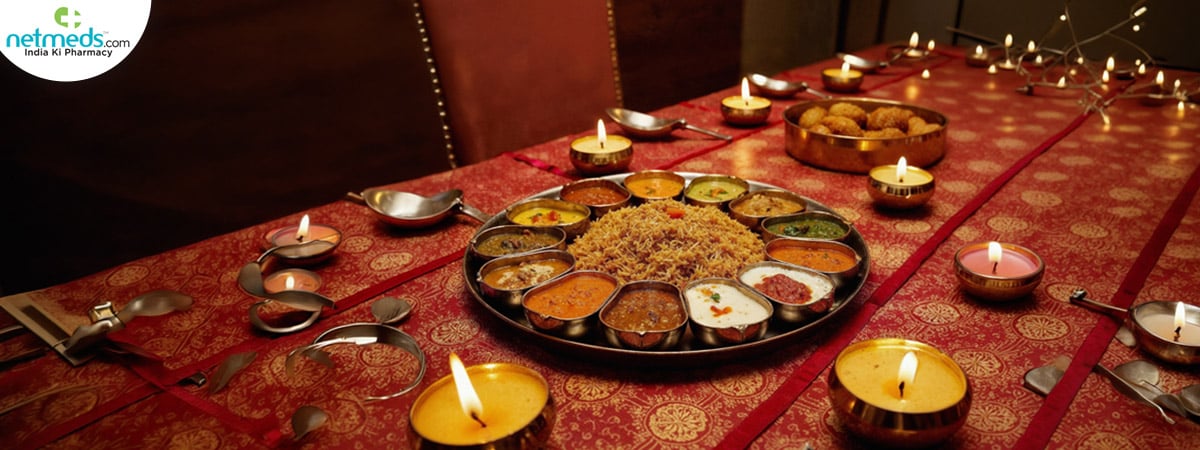
What Does a Balanced Navratri Thali Look Like?
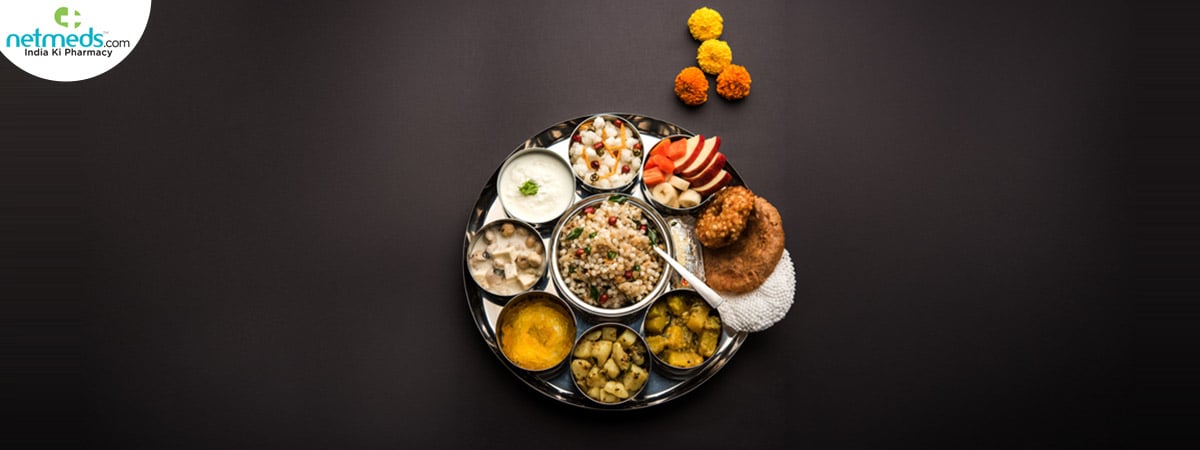
A balanced fasting plate should give you energy, protein, fibre, vitamins, minerals, and enough fluids for your day. The exact mix depends on whether you fast all day eat one or two meals or follow a regional tradition. A practical Navratri thali can include:
An energy source: Kuttu roti, a portion of samak rice or a moderate serving of sabudana.
A protein source: Curd, milk, paneer or other dairy foods allowed during your fast.
Vegetables: Lauki, pumpkin, cucumber or other vegetables allowed by your fasting rules.
Fruit: Fruits such as apples, bananas, guavas or oranges.
Healthy fats: amounts of nuts, seeds, peanuts or cooking oil.
Fluids: Water, unsweetened milk or other suitable drinks.
You do not need every food group in every meal. Aim for variety throughout the day, especially if your fast limits protein and fibre sources. Here are some components your thali typically needs:
Add Protein to Your Fasting Plate
Protein helps keep muscles strong and supports the body’s repair processes. Because many traditional fasting foods are high in carbohydrates protein deserves attention when planning a Navratri thali. For example, pair Kuttu roti with paneer and curd instead of only eating potatoes and puris. If your fast rules allow legumes or other protein-rich foods, you can add them well.
Good options include:
Curd: Serve curd or raita made with fasting-approved ingredients.
Paneer: Add a serving of lightly cooked paneer with permitted spices.
Milk: Have a glass of milk or use it to prepare a less-sweet kheer.
Nuts and peanuts: Add a small handful to fruit bowls or snacks.
Makhana: Roasted fox nuts can provide variety, although they should not be treated as a protein source.
Choose Cooking Methods That Need Oil
Sabudana vada, aloo puri and deep‑fried Kuttu snacks are popular during Navratri. Eating them often can make meals high in fat and calories. Moderation is more useful than treating any cooking fat as healthy. You can retain flavours with a change:
· Bake or air‑fry Sabudana vadas instead of deep‑frying them.
· Prepare jeera aloo with oil. Add permitted vegetables.
· Make kuttu rotis on a tawa rather than serving fried puris regularly.
· Roast makhana with a small amount of ghee instead of preparing heavily coated snacks.
· Choose boiled or baked sweet potato over deep‑fried potato chips.
· Ghee can be part of a fasting diet. It is still a source of fat.Using ghee, butter and oil together in the meal can quickly raise its energy content.
Include Fruits and Fasting‑Approved Vegetables
Fruits and vegetables add fibre, vitamins, minerals and water. They also bring colour and variety to a plate that might otherwise rely heavily on foods.
Choose fruit often than juice
An apple orange, guava or small banana makes a snack while a bowl of fruit can go with a meal.
For vegetables consider lauki, pumpkin, cucumber or other options allowed by your family’s fasting customs. You could serve a cooked vegetable dish, cucumber raita or a simple salad with lemon.
Fibre intake may be lower when whole grains and pulses are excluded from meals. Fruits, vegetables and nuts can help make up some of the difference although the amount of fibre varies by food.
Watch Portions of Sabudana, Potatoes and Sweets
Sabudana khichdi, potatoes and Samak rice can provide energy during fasting. They do not need to be avoided. Eating large servings of starchy foods together may leave little room, for other nutrients.
Try these adjustments:
· Serve a bowl of sabudana khichdi with curd.
· Choose either a potato dish or a sabudana dish as the starch for one meal.
· Use nuts and peanuts in measured portions instead of adding them freely.
· Enjoy vrat‑friendly sweets in smaller portions, especially if they contain sugar condensed milk or a lot of ghee.
Avoid making up for gaps by eating a very large meal at night.
A balanced diet focuses on the pattern of eating not on labelling a food as good or bad. Portion sizes should match appetite, activity level and individual nutritional needs.
Stay Hydrated Throughout the Day
Water can be easy to overlook when fasting routines change. Drink water regularly during the hours when fluids are allowed. Unsweetened drinks and milk can also add to intake depending on fasting rules. Coconut water can be an option. It contains natural sugars and potassium. Packaged fruit drinks and sweetened beverages are less suitable for hydration. Headache, dizziness, unusual weakness, or dark urine may show that fluid intake or fasting needs reassessment. Severe symptoms, fainting or confusion need help.
Sample Balanced Navratri Thali
Here is one combination that can adapt to your household's fasting rules.
Main dish: One or two small kuttu rotis, depending on appetite and individual needs.
Vegetables: A modest serving of paneer with fasting‑approved vegetables.
Dairy: A bowl of plain curd.
Fruit: One serving of fruit.
Optional snack: A portion of roasted makhana or nuts if something is needed between meals.
Beverage: Water or another permitted unsweetened beverage.
However, this is an example, not a meal plan. Adjust portions and ingredients to match appetite, health needs, and religious customs.
Who Should Take Extra Care During Navratri Fasting?
Fasting may need guidance for people with diabetes, kidney disease or other chronic conditions, as well as for those who are pregnant, breastfeeding or taking medicines that must be coordinated with food. People with diabetes may see changes in blood glucose during fasting. Consult a doctor before fasting, especially if insulin or medicines that affect blood sugar are used. Do not change medication doses alone. If fasting causes weakness, dizziness, or other concerning symptoms, seek advice.
Frequently Asked Questions
What should a balanced Navratri thali include?
A balanced Navratri thali can include a grain or starchy food, a protein source such as paneer or curd, permitted vegetables, fresh fruit, and a small amount of fat. Water and other allowed fluids are also important.
Is sabudana healthy during Navratri fasting?
Sabudana gives carbohydrates and energy. It is low in protein and fibre. Pairing a portion of sabudana khichdi with curd, peanuts or another allowed protein can improve the meal’s balance.
Can I eat potatoes every day during Navratri?
Potatoes can be part of a fasting diet. Prefer boiled, baked, or lightly sautéed preparations over deep‑fried dishes. Combine them with protein‑rich foods and permitted vegetables.
How can I avoid feeling weak during Navratri fasting?
Eat food during permitted mealtimes, including protein and a variety of nutrient‑rich foods, and drink fluids when allowed. Persistent weakness or dizziness must not be ignored. People with conditions should discuss fasting with a healthcare professional.
Is it necessary to avoid sweets during Navratri?
No. If sweets are allowed in fasting practice, enjoy them in portions. Because many traditional sweets contain sugar and fat, balance them with nourishing meals of using sweets as the main source of energy.
Conclusion
A Navratri thali makeover starts with changes. Add protein, include fruits and permitted vegetables, reduce frequent deep‑frying, moderate portions of starchy foods, and stay hydrated. You can keep recipes while making meals more varied and nutritionally balanced. The best approach respects customs. Supports health needs.
References:
https://nnwa.in/blog/navratri-fasting-diet-plan/
file:///C:/Users/50062973/Downloads/ayushadmin,+ayush_12322.pdf
Lochtefeld, J. G. (2002). The Illustrated Encyclopedia of Hinduism (Vol. 2, p. 470). Rosen,Publishing Group.
Lad, V. (2002). Textbook of Ayurveda: A complete guide to ancient Indian wisdom for modern living. The Ayurvedic Press.
Frawley, D. (2000). Ayurveda and the Mind: The healing of consciousness. Lotus Press.
Upadhyay, Y., Eds., Vaghbhata Astanghrdayam with Vidyotini commentary of Kaviraja Atridev Gupta, Sutra sthana Chapter 3, Verse No.25 Varanasi: Choukhamba Prakashan 2009
Charaka Samhita, with Charaka Chandrika Hindi commentary, by Dr Brahmanand Tripathi and Dr Pandey Ganga Sahay, Sutra Sthana Chapter 6, Verse No. 22, Chaukhamba Surbharti Prakasan, 2007
Charaka Samhita, with Charaka Chandrika Hindi commentary, by Dr Brahmanand Tripathi and Dr
Pandey Ganga Sahay, Sutra Sthana Chapter 6, Verse No. 23, Chaukhamba Surbharti Prakashan, 2007
Patterson, R. E., & Sears, L. D. (2017). Metabolic Effects of Intermittent Fasting. Annual Review of Nutrition, 37, 371-393.
Longo, V. D., & Mattson, M. P. (2014). Fasting: molecular mechanisms and clinical applications. Cell Metabolism, 19(2), 181-192.
Anton, S. D., Moehl, K., Donahoo, W. T., Marosi, K.,Lee, S. A., Mainous, A. G., & Mattson, M. P. (2018). Flipping the metabolic switch: Understanding and applying the health benefits of fasting. Obesity,
26(2),254–268.https://doi.org/10.1002/oby. 22065
Muller, M., Hernandez, M. A. G., Goossens, G. H., Reijnders, D., Holst, J. J., Jocken, J. W. E., & Blaak, E.E. (2021). Circulating but not faecal short-chain fatty acids are related to insulin sensitivity, lipolysis and GLP-1 concentrations in humans.
 Previous


