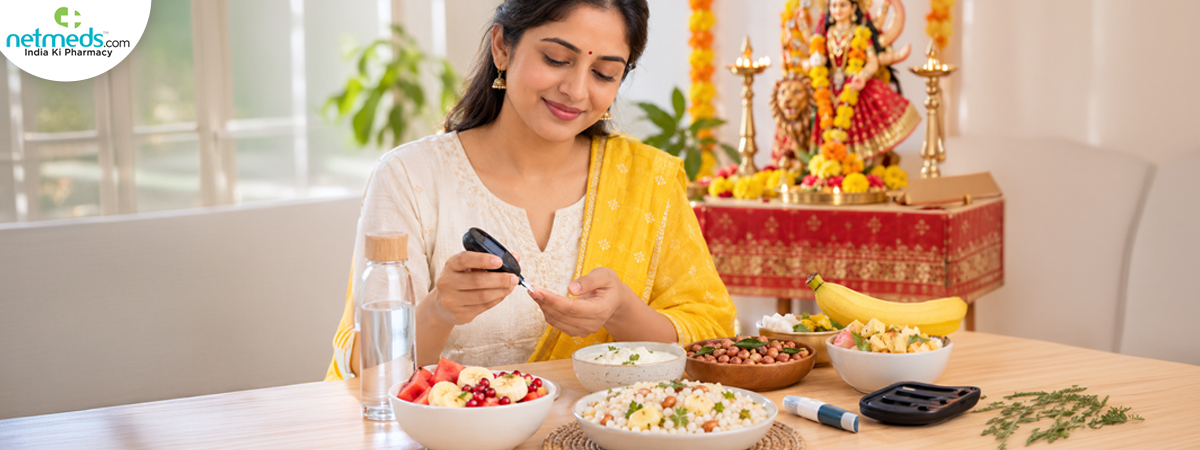
Navratri is a grand festival celebrated across most parts of the country. Most people fast during Navratri to show their devotion to Ma Durga; however, it is important for all individuals who are fasting to take utmost care of their health. However, for individuals with diabetes, fasting needs extra care as extended gaps between meals and sudden changes in food intake can cause fluctuations in blood glucose levels.
(To Manage Diabetes Shop From Our Wide Range Of Diabetes Care Essentials)
Yes, some people with better diabetes control may be able to observe Navratri fasting safely; however, it mostly depends on their blood sugar control, medications, and overall health condition. Those who are on insulin and diabetic drugs are at a higher risk of a sudden drop in blood sugar during fasting and should seek advice from their doctor before starting.
Is There A Right Way Of Fasting?
Generally, people adopt different methods of fasting during Navratri. While some people fast all nine days and just have one meal a day, others consume fruits, tea, and makhana at regular intervals while limiting salt intake. Even if you are fasting the whole day, foods like fruits and nuts can be consumed throughout the day.
Can Diabetics Fast During Navratri?
Diabetics should not start Navratri fasting without considering their health condition. Fasting can result in blood glucose fluctuations, especially when meals are skipped or substituted with high-carb fasting foods.
Those with well-managed diabetes may be able to follow a modified and customised fast under proper medical guidance. Instead of long-duration fasting, they may choose smaller, balanced meals at short intervals while eliminating foods that may cause rapid blood sugar spikes.
Individuals with uncontrolled diabetes may experience frequent episodes of hypoglycaemia or hyperglycaemia, diabetes-related complications, or those using insulin should seek medical care before fasting.
How Can Navratri Fasting Affect Blood Sugar?
Skipping meals may cause blood sugar to fall too low, particularly in people taking glucose-lowering drugs.
Eating large portions of simple carbohydrates like potatoes, sabudana, kuttu preparations, or sweets may cause blood sugar to spike sharply.
Dehydration can affect blood glucose control and overall well-being.
Changes in medication or meal timing can increase the risk of glucose fluctuations.
Excessive fasting followed by a large meal may result in overeating and poor blood sugar control.
Therefore, the main goal is to maintain consistent meal timing, good hydration,n and balanced nutrition intake as much as possible.
Diabetic-Friendly Foods To Eat During Navratri Fasting
Non-Starchy Vegetables
Depending on the fasting rules you follow, include low-carb vegetables such as:
Cucumber
Tomato
Bottle gourd
Pumpkin
Spinach
Capsicum
Carrot
Radish
In addition, go for lightly cooked or raw preparations instead of deep-fried versions.
Paneer
Paneer can provide a quality source of protein and help make a fasting meal more filling. Choose a moderate portion and prepare it with minimal oil.
Curd
Unsweetened curd can be a useful source of protein, probiotics, and calcium. Avoid flavoured or sweetened yoghurt because it may contain added sugar.
Nuts and Seeds
Almonds, walnuts, pumpkin seeds, and flaxseeds offer healthy fats, fiber, antioxidants, minerals, and protein. However, control portion size, because nuts and seeds are calorie-dense.
Kuttu Atta
Buckwheat or kuttu atta is commonly consumed during Navratri. It is a gluten-free grain that offers ample amounts of fibre and micronutrients, but it is still a carbohydrate-containing food.
Choose smaller portions of kuttu roti or dosa and pair them with vegetables, curd, rd or another protein source instead of eating them with sugary foods.
Singhara Atta
Water chestnut flour, or singhara atta, is another popular fasting ingredient. It can be included in moderation, preferably as part of a balanced meal rather than consumed in large quantities.
Makhana
Roasted makhana can be a better snack option than fried fasting foods. Keep the portion moderate and avoid sugar-coated or heavily salted varieties.
Fruits in Moderation
Whole fruits are a healthy addition in Navratri fasting, but they should be included in appropriate portions. Choose fruits such as apples, guava, oranges, or pears rather than fruit juices.
Avoid consuming large quantities of high-sugar fruits at once, particularly if blood glucose is not well controlled.
Also Read:5 Bedtime Snacks for Diabetes That Help Prevent Morning Blood Sugar Spikes
Foods Diabetics Should Limit During Navratri
Foods that are traditionally consumed during fasting periods are high in simple carbohydrates, dense calories, and packed with sugar and unhealthy fats. Hence, it is vital to limit the intake of :
- Sabudana khichdi in large portions
- Sabudana vada
- Potato chips and fried potatoes
- Kuttu puri
- Singhara puri
- Sweetened lassi
- Mithai and fasting desserts
- Sugar, honey and jaggery
- Packaged fasting snacks
- Fruit juices
- Sugary beverages
- Large portions of dried fruits
Tips To Fast Safely During Navratri
Talk with your physician about your fasting plan, especially if you take insulin or other diabetes medicines. Your medication schedule may need adjustment during fasting.
Check your blood glucose levels as advised by your healthcare provider. Self-monitoring becomes particularly important when meal timings or food choices change.
Drink adequate water during non-fasting hours. Avoid sugary drinks and excessive caffeine.
Instead of prolonged fasting, some people may be advised to have smaller, balanced meals at appropriate intervals.
Try combining a moderate portion of carbohydrate-rich fasting foods with protein, vegetables, and healthy fats.
For example, a small portion of kuttu roti with paneer and vegetables can be more balanced than eating several kuttu puris alone.
Never compensate for a long fasting period by eating a large meal. This can cause a sudden spike in blood glucose and digestive discomfort.
Do not skip, reduce, or increase diabetes medication without consulting your doctor.
Also Read: Navaratri Vrat/ Fasting Guide: Significance and Healthy Food Ideas for Boosting Energy
When Should a Person with Diabetes Stop Fasting?
Fasting should be stopped, and one should seek immediate medical care if you experience symptoms such as:
Excessive sweating
Trembling
Dizziness
Confusion
Excessive thirst
Frequent urination
Blurred vision
Nausea or vomiting
Symptoms of very low or very high blood sugar
People with diabetes should follow their healthcare provider's instructions about when blood glucose levels require them to break a fast.
Healthy Navratri Fasting Plate For People With Diabetes
A diabetes-friendly fasting meal could include:
- Protein: Paneer or unsweetened curd
- Vegetables: Cucumber, tomato, spinach or bottle gourd
- Carbohydrate: A small portion of kuttu or singhara atta
- Healthy fats: A small portion of nuts or seeds
- Drink: Water or tender coconut water or chaas
- Personalise portion sizes to your blood glucose levels, medication, calorie needs, and your doctor's advice.
Conclusion
Diabetics with well-managed blood glucose levels may be able to fast safely, but fasting is not suitable for all. The type of diabetes, blood glucose control, medications, and any comorbid complications should all be considered.
If your doctor permits fasting, focus on balanced portion sizes, fiber-rich foods, adequate protein, good hydration, and regular blood glucose monitoring. Limit fried fasting foods, sweets, sugary drinks, and large portions of carbohydrate-rich foods such as sabudana, potatoes, and fasting flours. Most importantly, do not change or stop diabetes medication to accommodate fasting without medical advice.
References:
https://pmc.ncbi.nlm.nih.gov/articles/PMC5240068/
Pragmatic dietary advice for diabetes during Navratris
Lovely Gupta 1, Deepak Khandelwal 1, Rajiv Singla 2, Piyush Gupta 3, Sanjay Kalra 4,✉
Akbani MF, Saleem M, Gadit WU, Ahmed M, Basit A, Malik RA. Fasting and feasting safely during Ramadan in the patient with diabetes. Pract Diabetes Int. 2005;22:100–4
Kalra S, Bajaj S, Gupta Y, Agarwal P, Singh SK, Julka S, et al. Fasts, feasts and festivals in diabetes-1: Glycemic management during Hindu fasts. Indian J Endocrinol Metab. 2015;19:198–203. doi: 10.4103/2230-8210.149314
Birdie AK. Impact of Navratras festival on the subjective well-being of vegetarian customers in the hospitality sector. Int J Soc Sci Manage. 2015;2:333–8.
Sircar AR, Sircar S, Sircar J, Misra S. Patients’ concepts and attitudes about diabetes. J Diabetes Complications. 2010;24:398–403. doi: 10.1016/j.jdiacomp.2009.07.004.
Almalki MH, Alshahrani F. Options for controlling type 2 diabetes during Ramadan. Front Endocrinol (Lausanne) 2016;7:32. doi: 10.3389/fendo.2016.00032.
Al-Arouj M, Assaad-Khalil S, Buse J, Fahdil I, Fahmy M, Hafez S, et al. Recommendations for management of diabetes during Ramadan: Update 2010. Diabetes Care. 2010;33:1895–902. doi: 10.2337/dc10-0896.
Elhadd TA, Al-Amoudi AA. Recommendations for management of diabetes during Ramadan. Diabetes Care. 2006;29:744–5. doi: 10.2337/diacare.29.03.06.dc05-2102.
Last accessed on 2015 Aug 15. Available from: http://www.mcb.org.uk/wp-content/uploads/2014/06/Ramadan-and-diabetes-A-guide-for-patients-2013.pdf
Kelley DE. Sugars and starch in the nutritional management of diabetes mellitus. Am J Clin Nutr. 2003;78:858S–64S. doi: 10.1093/ajcn/78.4.858S.
 Previous