You start your morning with a cup of tea and a couple of slices of toast, feeling ready to take on the day. But just an hour or two later, your stomach starts rumbling, and you find yourself reaching for a snack. Sound familiar?
The secret to staying full for longer may lie in what you put on your breakfast plate. While toast and tea might give you a quick start, a breakfast rich in protein and fibre can help keep hunger pangs at bay and make your mornings more satisfying.
(Shop From Our Wide Portfolio Of Health Essentials To Optimise Your Overall Health)
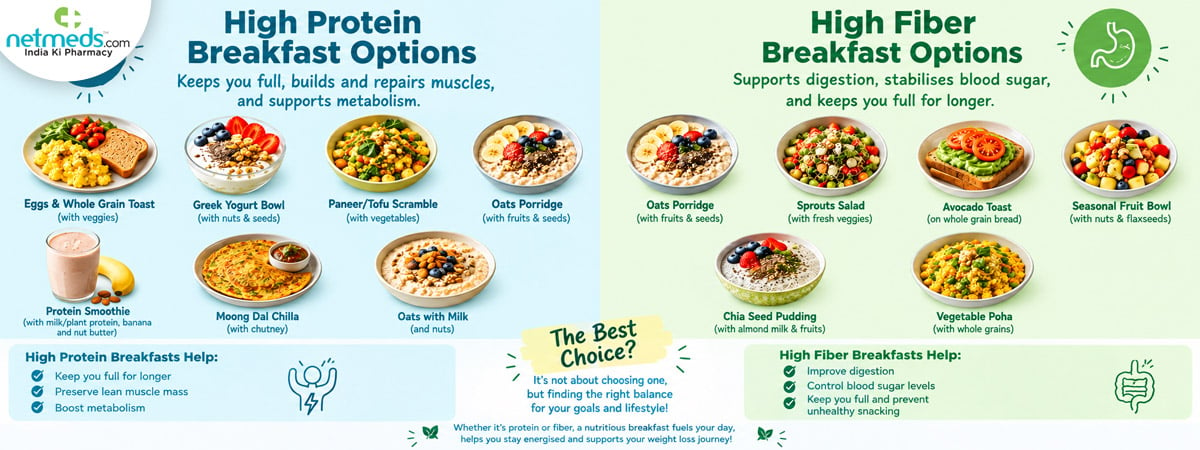
But here’s the interesting part: protein and fibre work differently in your body. A protein-rich breakfast helps you feel full for longer, supports muscle maintenance, and contributes to a healthy metabolism. On the other hand, a fibre-rich breakfast supports digestion, helps regulate blood sugar levels, and promotes lasting fullness.
Both nutrients can be valuable allies on your weight-loss journey. But if your goal is to shed those extra kilos, which is the better choice: a high-protein breakfast or a high-fibre breakfast? Let’s find out!
Why Wholesome Breakfast Matters
Breakfast is the first meal after 10-12 hours of fasting, which sets the rhythm for the rest of the day. When your breakfast fullness is low, you eventually reach out for snacks like biscuits, chips, namkeen, or a tea with sugar before lunch. These snacks are heaped with calories and can leave you hungry again.
A filling and nutritious breakfast keeps you satiated, which helps you stay focused on work, study or other daily chores. The two most essential nutrients that help with this are protein and fiber.
What Is A High-Protein Breakfast?
A high-protein breakfast comprises foods loaded with good-quality protein, which is an important macronutrient needed for muscle maintenance, tissue repair, and other important metabolic processes. Furthermore, protein increases satiety, making you feel fuller for longer and potentially reducing your calorie intake throughout the day.
Also Read: Thepla For Breakfast: Rise And Shine With These Protein-Rich Tasty Desi Flatbread Recipes
Best High-Protein Breakfast Choices
Add these protein-rich foods to your morning meal:
Yoghurt/curd delivers protein and probiotics that support gut health and keep you satiated.
Paneer is a versatile vegetarian protein source that can be added to sandwiches, bhurji, or wraps.
Moong dal chilla provides plant-based protein and pairs well with curd.
Sprouts offer plant protein, fibre, and several essential micronutrients that boost energy and promote weight loss.
Tofu is a plant-based protein and low-fat option that is suitable for vegetarian and vegan diets.
Milk and unsweetened soy milk provide protein along with other vital nutrients like calcium, phosphorus, and vitamin D that improve bone health and overall well-being.
Whey protein is a convenient option when dietary protein requirements are difficult to meet through food alone.
Benefits of a High-Protein Breakfast
Keeps You Satiated
Protein keeps you satiated and may help reduce hunger between meals. This can make it easier to manage portion sizes, reduce overall calorie intake, and avoid frequent snacking.
Preserve Muscle Mass
The body may lose both fat and muscle mass during the weight loss process. Adequate protein intake, combined with regular physical activity and resistance training, helps preserve lean muscle mass.
Energy Expenditure
The body uses energy to digest and process food. The thermic effect of protein is higher than that of carbohydrates and fats, meaning it requires more energy for metabolic actions. However, this effect alone does not guarantee weight loss.
Manage Cravings
A balanced, wholesome, and protein-rich breakfast may help reduce hunger and make it easier to follow a consistent eating routine.
Also Read: 5 Healthy Breakfast Ideas With Bread: Nutrition, Benefits And Easy Recipes
What Is a High-Fibre Breakfast?
A high-fibre breakfast is naturally loaded with dietary fibre and complex carbohydrates that delay gastric emptying time and keeps satiated. Fibre regularises bowel movements, promotes fullness, and helps maintain healthy blood sugar and cholesterol levels.
There are two major types of dietary fibre. Soluble fibre forms a gel-like substance in the digestive tract and may help lower cholesterol and slow glucose absorption. Insoluble fibre adds bulk to stools and supports regular bowel movements.
Best High-Fibre Breakfast Choices
Here are some nutritious foods to include in a fibre-rich breakfast:
Chia seeds offer fibre and healthy fats; they can be added to yoghurt or overnight oats.
Flaxseeds, loaded with fiber and plant-based omega-3 fatty acids, can be added to breakfast cereals or smoothies.
Whole-wheat bread provides more fibre than refined white bread, especially when made with whole grains and seeds.
Ragi and other millets deliver dietary fiber and important minerals as part of a balanced diet.
Fiber-rich fruits and vegetables are heaped with dietary fiber, vitamins, minerals and antioxidants.
Beans and lentils, including moong dal, chickpeas, and other legumes, provide both fibre and plant protein.
Benefits of a High-Fibre Breakfast
Promotes Fullness
Fibre-rich foods can increase meal volume and slow the digestion process, helping you feel satisfied for longer. This may eventually control appetite and reduce overall calorie intake.
Digestive Health
Dietary fibre helps maintain bowel regularity and supports a healthy gut environment. Increase fibre intake gradually and drink plenty of water to minimise gas, bloating, or constipation.
Regulate Blood Sugar
Soluble fibre can slow the absorption of carbohydrates, preventing a surge in blood glucose levels after meals. This benefits people with diabetes and averts blood sugar spikes.
Heart Health
Certain fibres, especially beta-glucan from oats and barley, can help lower LDL (bad) cholesterol when consumed regularly as part of a balanced diet.
Which Is Better for Weight Loss: High Protein or High Fibre?
Both high-protein and high-fibre breakfasts can support weight loss, but neither is universally better for everyone.
A high-protein breakfast may be particularly helpful if you experience frequent hunger, want to preserve muscle mass while losing weight, or engage in regular strength training workouts.
However, total calorie intake, food quality, physical activity, sleep, and consistency matter more than choosing one nutrient over the other. Eating more protein or fibre does not automatically lead to weight loss if your overall calorie intake consistently exceeds your body's needs.
For most people, the most practical approach is to combine both nutrients in a balanced breakfast.
How Much Protein and Fibre Should You Include At Breakfast?
There is no fixed protein or fiber target; typically, requirements depend on age, body weight, physical activity levels, health condition and total calorie intake in a day.
For most healthy adults, the recommended protein intake is around 0.8 gram/kg of body weight/per day; however, individual needs may vary based on age, physical activity and health conditions. Fibre needs also vary; many adults benefit from approximately 25–30 grams of fibre daily, depending on energy intake and individual needs.
Frequently Asked Questions
Is a high-protein breakfast better than a high-fibre breakfast for weight loss?
Neither is always better. Protein helps preserve muscle and promotes fullness, while fibre supports satiety, digestion, and blood sugar regulation. Combining both is a practical strategy for weight loss.
Can I lose weight by eating a high-protein breakfast every day?
A high-protein breakfast may help manage hunger and support muscle maintenance. However, weight loss depends on maintaining an appropriate calorie deficit over time, along with regular physical activity and other lifestyle habits.
Which breakfast keeps you full for longer?
A meal containing both protein and fibre is often a good choice for sustained fullness. Examples include eggs with whole-wheat toast and vegetables or oats with milk, chia seeds, and fruit.
Conclusion
A high-protein breakfast and a high-fibre breakfast offer strong benefits for overall health but differ in how they support weight loss. Protein supports muscle maintenance and satiety, while fibre promotes fullness, digestive health, and better blood sugar management.
Instead of choosing one over the other, plan a balanced breakfast that includes both key nutrients. Simple combinations such as moong dal chilla with curd, oats with milk and seeds, or ragi dosa with sambar can help you stay satisfied and support sustainable weight management.
References:
https://pmc.ncbi.nlm.nih.gov/articles/PMC3105953/
Comparison of high protein and high fiber weight-loss diets in women with risk factors for the metabolic syndrome: a randomized trial
Lisa A Te Morenga 1,4,✉, Megan T Levers 1,4, Sheila M Williams 2, Rachel C Brown 1, Jim Mann 1,3,
https://www.sciencedirect.com/science/article/pii/S0022316622106656
Effects of Dietary Protein and Fiber at Breakfast on Appetite, ad Libitum Energy Intake at Lunch, and Neural Responses to Visual Food Stimuli in Overweight Adults
by R. Drew Sayer 1ORCID,Akua F. Amankwaah 1ORCID,Gregory G. Tamer 2,Ningning Chen 3,Amy J. Wright 1,Jason R. Tregellas 4,Marc-Andre Cornier 5,David A. Kareken 6,Thomas M. Talavage 2,Megan A. McCrory 7 andWayne W. Campbell 1,*
Parikh P, McDaniel MC, Ashen MD, Miller JI, Sorrentino M, Chan V, Blumenthal RS, Sperling LS. Diets and Cardiovascular Disease: An Evidence-Based Assessment. J Am Coll Cardiol. 2005;45:1379–1387. doi: 10.1016/j.jacc.2004.11.068.
Nield L, Summerbell CD, Hooper L, Whittaker V, Moore H. Dietary advice for the prevention of type 2 diabetes mellitus in adults. Cochrane Database Syst Rev. 2008. p. CD005102.
Serra-Majem L, Roman B, Estruch R. Scientific Evidence of Interventions Using the Mediterranean Diet: A Systematic Review. Nutrition Reviews. 2006;64:S27–S47. doi: 10.1111/j.1753-4887.2006.tb00232.x.
Yancy WS Jr, Olsen MK, Guyton JR, Bakst RP, Westman EC. A low-carbohydrate, ketogenic diet versus a low-fat diet to treat obesity and hyperlipidemia: a randomized, controlled trial. Ann Intern Med. 2004;140:769–777. doi: 10.7326/0003-4819-140-10-200405180-00006.
Samaha FF, Iqbal N, Seshadri P, Chicano KL, Daily DA, McGrory J, Williams T, Williams M, Gracely EJ, Stern L. A low-carbohydrate as compared with a low-fat diet in severe obesity. N Engl J Med. 2003;348:2074–2081. doi: 10.1056/NEJMoa022637.
Atkins RC. Atkins' new diet revolution. New York, NY 10017: M. Evans & Co; 2002. Revised.
Sears B, Lawren B. The Zone: A Dietary Road Map to Lose Weight Permanently: Reset Your Genetic Code: Prevent Disease: Achieve Maximum Physical Performance. 1. New York, NY 10022: HarperCollins; 1995.
Noakes M, Clifton PM, CSIRO. The CSIRO total wellbeing diet. Camberwell, Vic.: Penguin; 2005.
 Previous