


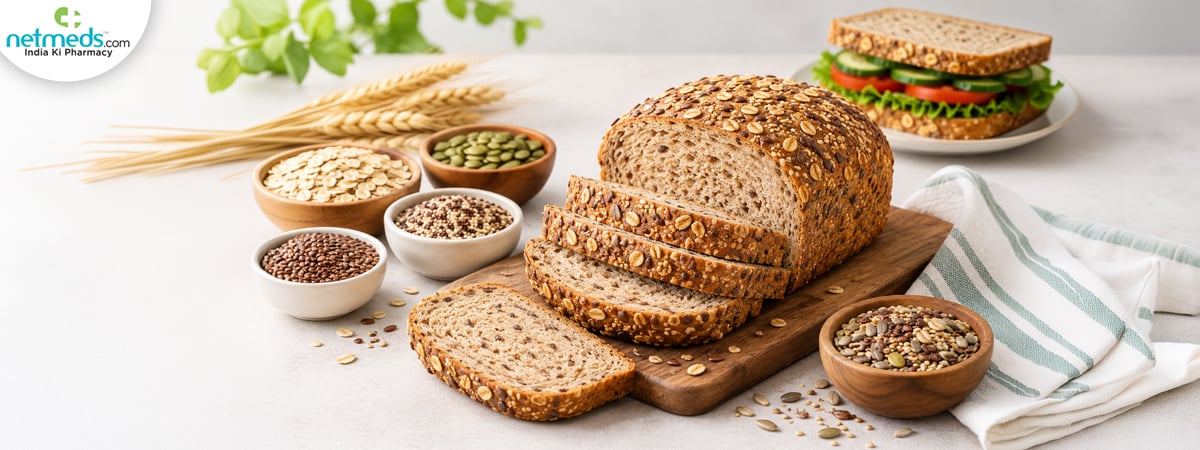
Multigrain breads are often valued as a healthier substitute for refined white bread, as it contains a blend of whole grains like wheat, oats, barley, millets, and other cereals. Multigrain breads are heaped with good-quality plant protein and dietary fiber that keeps you satiated, promotes digestion and stabilises blood sugar. But is multigrain bread good for weight loss? The answer depends largely on the ingredients, portion size and overall diet.
(Shop From Our Wide Portfolio Of Health Essentials To Optimise Your Overall Health)
Though multigrain bread can offer fiber, complex carbohydrates, vitamins and minerals, not every bread labelled multigrain is necessarily made with whole grain cereals. Thus, choosing bread made chiefly with whole grains and consuming it in moderate portions can make it a wholesome addition to a balanced and varied weight-loss diet regimen.
What Is Multigrain Bread?
Multigrain bread is made by blending two or more varieties of whole grains, mostly including whole wheat, oats, cornmeal, millets, flaxseeds, pumpkin seeds and other seeds. The primary purpose of mixing multiple grains is to offer a broad spectrum of nutrients, rich flavour and textures compared to traditional white bread.
While white bread is usually made from refined flour, multigrain bread retains its outer bran and germ layers, making it a rich source of dietary fiber, B vitamins and vital minerals. Though, multigrain bread does not completely mean whole grain, as some breads may still contain refined flour along with other whole grain cereals. Therefore, check the ingredient list and look for whole grains as the main ingredients.
Also Read:5 Healthy Breakfast Ideas With Bread: Nutrition, Benefits And Easy Recipes
Is Multigrain Bread Good for Weight Loss?
Yes, multigrain bread can be added as part of a weight-loss meal plan, especially when it is made chiefly from whole grains and offers an impressive amount of dietary fiber.
Dietary fiber promotes satiety after meals, which helps to reduce overall calorie intake and prevent unwanted binge eating. In addition, multigrain breads also deliver other essential nutrients than breads made chiefly with refined flour.
Remember, just adding multigrain bread alone will not cause weight loss. Weight loss depends on maintaining an appropriate calorie deficit through a combination of balanced eating, physical activity and other healthy lifestyle habits.
How to Choose Multigrain Bread for Weight Loss?
When buying multigrain bread:
Look for whole grains or whole wheat as the first ingredient.
Choose bread with high dietary fiber content.
Compare added sugar and sodium between products.
Do not rely on words such as "multigrain", "healthy" or "high fibre" on the front of the pack. Check the ingredients list on the food label.
Check the serving size and calorie content.
Prefer bread containing whole grains, seeds or nuts where appropriate.
Keep portions moderate and pair bread with protein and vegetables.
Multigrain Bread Nutrition
The nutritional profile of multigrain bread varies considerably between brands and recipes. A typical slice may provide carbohydrates, protein, fibre and small amounts of healthy fats, along with nutrients such as B vitamins, iron, magnesium and other minerals.
The exact nutrition depends on the grains used and whether the bread contains seeds, nuts, added sugar or other ingredients.
Nutrients Commonly Found in Multigrain Bread
Multigrain bread is primarily a source of good carbohydrates, which provide a sustained source of energy for the body.
Whole-grain multigrain bread can provide fibre that supports digestive health and helps promote fullness.
Whole grains can contribute B vitamins involved in energy metabolism and other bodily functions.
Depending on the ingredients, multigrain bread can provide minerals such as iron, magnesium and zinc.
Breads containing seeds such as flaxseeds, sunflower seeds or pumpkin seeds may provide small amounts of unsaturated fats.
Health Benefits of Multigrain Bread
Manages Weight
Whole-grain multigrain bread can be a valuable option for people trying to manage their weight. Loaded with dietary fibre content it may help improve satiety and reduce overall calorie intake. Eating a fibre-rich slice with a protein source can make a meal more filling.
Promotes Digestive Health
The dietary fibre in whole grains can regularise bowel movements, prevent constipation and contribute to a healthy digestive system. Increasing fiber gradually while drinking enough fluids is generally recommended to prevent unwanted digestive issues.
Sustained Energy
Whole grains contain complex carbohydrates and fibre, which can contribute to a steadier release of energy compared with highly refined carbohydrate foods.
Improves Whole-Grain Intake
For people who regularly eat bread, switching from refined white bread to a whole-grain multigrain option can be one practical way to increase whole-grain consumption.
Provides Micronutrients
Depending on the whole grains and seeds used, multigrain bread can contribute nutrients such as magnesium, iron, zinc and B vitamins to the diet.
Healthy Ways to Add Multigrain Bread
Vegetable Sandwich
Use two slices of whole-grain multigrain bread with vegetables such as cucumber, tomato, lettuce, carrot and capsicum. Add a protein source such as paneer, tofu, egg or grilled chicken.
Avocado Toast
Egg Sandwich
Combine multigrain bread with boiled or scrambled eggs and vegetables for a protein-rich meal.
Peanut Butter Toast
Spread a moderate amount of unsweetened peanut butter over multigrain toast. Add sliced banana or berries for additional fibre and flavour.
Paneer Grilled Sandwich
Use grilled paneer or tofu with plenty of vegetables to create a filling vegetarian meal.
How Much Multigrain Bread Can You Eat for Weight Loss?
There is no recommended portion that is suitable for all, since calorie requirements vary according to age, body size, physical activity and individual health goals. For most people, 1-2 slices can be included as part of a balanced meal regimen that can fit into a weight management regimen. The key is to consider what you add on the bread and what else you eat during the day.
For instance, two slices of multigrain bread with vegetables and a protein source can make a more balanced meal than several slices with butter, sugary spreads or highly processed fillings.
Are There Any Side Effects of Multigrain Bread?
Multigrain bread is generally safe for most people when consumed as part of a balanced diet. However, some people may experience:
A sudden increase in dietary fiber intake may cause gas, bloating or abdominal discomfort. Increase fibre gradually and drink adequate fluids.
Many multigrain breads contain wheat, rye or barley and therefore contain gluten. Thus, people with celiac disease or certain gluten-related health conditions should choose certified gluten-free alternatives when appropriate.
Some breads contain ingredients such as wheat, sesame, soy, nuts or dairy. People with food allergies should carefully check the ingredient and allergen information.
Although multigrain bread can be nutritious, eating large portions or pairing it with high-calorie spreads and fillings can increase total calorie intake and potentially interfere with weight-management goals.
Some packaged breads can contain considerable amounts of sodium. People who need to limit sodium should compare nutrition labels and choose lower-sodium options where possible.
Frequently Asked Questions
Is multigrain bread good for weight loss?
Yes, whole-grain multigrain bread can be included in a weight-loss diet because its fibre content may promote fullness. However, weight loss depends on overall calorie intake and lifestyle rather than one food.
Is multigrain bread healthier than white bread?
Whole-grain multigrain bread is generally a more nutrient- and fibre-dense choice than bread made mainly from refined flour. However, always check the ingredient list because some multigrain breads contain substantial amounts of refined flour.
Can I eat multigrain bread every day?
Yes. You can eat multigrain bread regularly as part of a balanced diet, as long as portions are appropriate and you pair it with nutritious foods.
Is multigrain bread good for digestion?
Yes, multigrain bread can support digestion because it offers dietary fibre. However, increasing fibre too quickly may cause temporary bloating or gas.
Conclusion
Multigrain bread can be a valuable choice for a weight-loss diet regimen when it is made from whole grains. It offers ample dietary fibre and other vital nutrients in moderate portions and serves as a convenient base for a wholesome meal.
However, don't choose bread solely because it says "multigrain" on the package. Read the ingredient list, check the nutrition label and look for whole grains as a primary ingredient. For better satiety and nutrition, pair multigrain bread with protein-rich foods and vegetables rather than relying on bread alone.
References:
https://pmc.ncbi.nlm.nih.gov/articles/PMC12125146/
Bread, wholegrain consumption and weight change from middle to late adulthood: a prospective cohort study
Ingrid Revheim 1, Zoya Sabir 1, Jutta Dierkes 1, Anette E Buyken 2, Rikard Landberg 3, Inka Alten 1, Ulrike Spielau 1, Hanne Rosendahl-Riise 1
Bautista-Castaño I, Sánchez-Villegas A, Estruch R, Martínez-González MA, Corella D, Salas-Salvadó J et al (2013) Changes in bread consumption and 4-year changes in adiposity in Spanish subjects at high cardiovascular risk. Br J Nutr 110(2):337–346
De La Fuente-Arrillaga C, Martinez-Gonzalez MA, Zazpe I, Vazquez-Ruiz Z, Benito-Corchon S, Bes-Rastrollo M (2014) Glycemic load, glycemic index, bread and incidence of overweight/obesity in a mediterranean cohort: the SUN project.
Reynolds A, Mann J, Cummings J, Winter N, Mete E, Te Morenga L (2019) Carbohydrate quality and human health: a series of systematic reviews and meta-analyses.
Aune D, Norat T, Romundstad P, Vatten LJ (2013) Whole grain and refined grain consumption and the risk of type 2 diabetes: A systematic review and dose-response meta-analysis of cohort studies. Eur J Epidemiol 28
Aune D, Keum N, Giovannucci E, Fadnes LT, Boffetta P, Greenwood DC et al (2016) Whole grain consumption and risk of cardiovascular disease, cancer, and all cause and cause specific mortality: systematic review and dose-response meta-analysis of prospective studies. BMJ 353:i2716
O’Neil CE, Zanovec M, Cho SS, Nicklas TA (2010) Whole grain and fiber consumption are associated with lower body weight measures in US adults: National health and nutrition examination survey 1999–2004. Nutr Res 30(12)
Albertson AM, Reicks M, Joshi N, Gugger CK (2016) Whole grain consumption trends and associations with body weight measures in the united States: results from the cross sectional National health and nutrition examination survey 2001–2012. Nutr J 15
 Previous