Navratri marks the start of the season of festivity, religious rituals, and fasting. Most people observe a nine-day fast, just relying on mildly spiced, sattvic foods like kheer, khichdi, and ample servings of fruits. People who are fasting need energizing foods to maintain strength and discipline throughout the day, and one superhero is sabudana that saves.
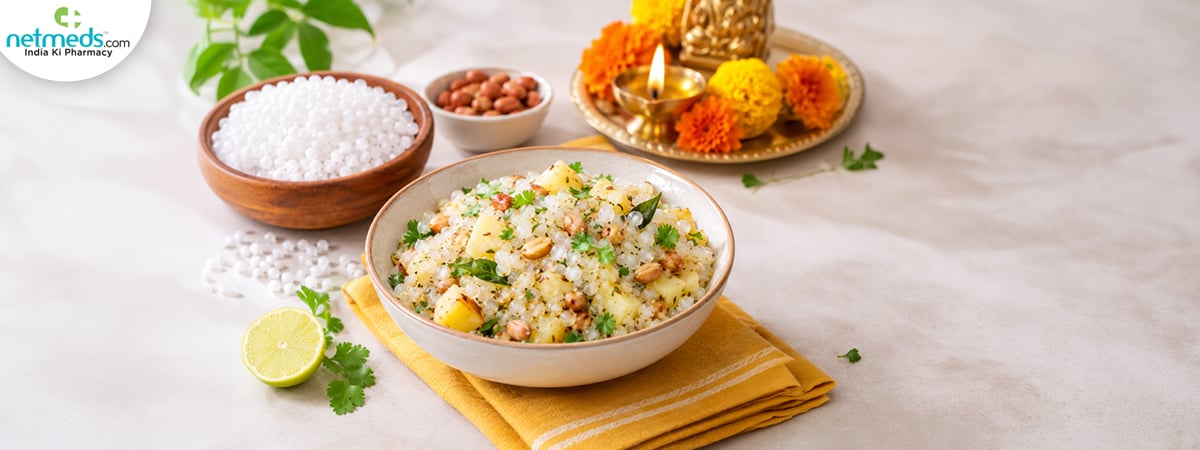
What makes this humble ingredient so special that it’s valued as the most popular “fast” food during Navratri vrat? Dive into this blog to know more.
Sabudana, also called tapioca pearls or sago, is a very famous fasting food relished during Navratri. It is obtained from tapioca starch and is naturally gluten-free and offers carbohydrates that can help replenish energy during fasting. Sabudha is a versatile ingredient that is used to prepare sabudana khichdi, sabudana vada, and sabudana kheer.
As sabudana is a major source of carbs and is relatively low in protein, fiber, and micronutrients, choosing the right ingredients and cooking process can make sabudana a more balanced and wholesome meal.
What Is Sabudana?
Sabudana is small, white pearls made from the starch obtained from cassava or tapioca. It is most used in Indian fasting dishes because it is considered suitable for traditional Navratri fasting diets. When soaked and cooked, sabudana becomes soft, chewy, and slightly translucent. Its mild flavour makes it versatile for preparing both sweet and savoury dishes.
Sabudana Nutrition
The nutritional value of 100 g of dry sabudana provides a high amount of carbohydrates and calories, while containing relatively small amounts of protein and fibre.
Nutrient Approximate amount per 100 g dry sabudana*
Calories ~350 kcal
Carbohydrates ~87 g
Protein ~0.5 g
Fat ~0.2 g
Fibre ~0.9 g
Since sabudana is carbohydrate-rich, portion size and the other ingredients added to the dish are important, particularly for people managing blood sugar or calorie intake.
Benefits Of Eating Sabudana During Navratri
Provides Energy
Sabudana is loaded with carbohydrates, which are the body’s chief source of energy. Including a moderate amount in a fasting meal plan can help offer a sustained source of fuel when regular foods are avoided. In addition, it can also replenish stored glycogen after physical activity. Combining sabudana with protein-rich fasting foods can make the meal more balanced and wholesome.
Easy To Digest
Well-cooked sabudana is soft and generally easy on the tummy. This makes it a popular choice when people prefer simple, light foods during fasting.
Gluten-Free
Sabudana is naturally gluten-free, making it suitable for those with gluten intolerance. However, always check packaged ingredients and preparation methods if you have celiac disease or a gluten sensitivity.
Versatile Fasting Food
Sabudana can be prepared in several ways, including khichdi, upma-style dishes, kheer and steamed or shallow-cooked snacks. This makes it easy and readily incorporate into numerous varieties of Navratri meal plans.
Also Read: Navaratri Vrat/ Fasting Guide: Significance and Healthy Food Ideas for Boosting Energy
Is Sabudana Good For Weight Loss?
Sabudana can be added rarely in a weight-loss diet plan; however, controlling portions is important. As it is dense in calories and carbohydrates and relatively low in protein and fiber, it is essential to have it in measured quantities.
A bowl of sabudana khichdi prepared with potatoes, peanuts and oil is considerably high in calories. For better satiety and nutrient value, combine a moderate portion of sabudana with ingredients such as peanuts, curd, vegetables permitted during fasting, and other protein sources suitable for your dietary needs.
Healthy Ways To Eat Sabudana During Navratri
Prepare sabudana khichdi using a moderate quantity of sabudana and add peanuts, coriander, lemon juice, and suitable vegetables. Avoid using excessive oil or ghee.
Since sabudana is low in protein, pair it with plain curd, Greek yoghurt, milk or other fasting-friendly protein sources according to your dietary preferences.
Instead of eating a large plate of sabudana-based food, stick to a moderate serving and include other nutritious foods in the meal.
Homemade preparations allow you control the amount of oil, sugar and salt added. This is especially beneficial when preparing sabudana vada or other snacks.
Sabudana vada is traditionally deep-fried, which can significantly increase its calorie and fat content. Shallow cooking or air-frying can be a better alternative.
Peanuts and nuts provide protein, healthy fats, and other nutrients. However, they are also calorie-dense, so adding them in reasonable quantities is preferable.
Sabudana kheer can be delicious, but adding large quantities of sugar can increase its calorie content. Use less added sugar and rely on the natural sweetness of ingredients where possible.
Is Sabudana Good For Diabetes?
Sabudana is relatively high in carbohydrates and can cause a significant spike in blood glucose, particularly when eaten in large portions or without combining other nutrient-rich foods.
People with diabetes should be mindful while adding sabudana. Talk with your doctor or dietitian about recommended portion size and meal combinations while including sabudana. Pairing carbohydrate-rich foods with protein, healthy fats and fibre may help improve overall meal balance, but it does not eliminate the carbohydrate content of sabudana.
Healthy Sabudana Recipe Ideas For Navratri
Here are some simple and quick ways to make sabudana more balanced during fasting:
Use a smaller portion of cooked sabudana with curd, nuts, and permitted vegetables to prepare a nutritious one-pot meal.
Prepare delicious kheer by combining sabudana with milk and limit the amount of added sugar.
Try shallow-frying or air-frying instead of deep-frying sabudana vada.
Combine sabudana with peanuts, herbs, and suitable vegetables for a savoury, delicious sabudana upma.
Tips To Soak Sabudana Properly
Proper soaking helps sabudana cook evenly and prevents it from becoming excessively sticky.
Wash sabudana gently until the water becomes clear.
Add an adequate quantity of water to soak the pearls without leaving excessive water.
Soak for several hours or overnight, depending on the type of sabudana.
Drain any excess water before cooking.
Check that the pearls have softened before preparing the dish.
Frequently Asked Questions
Is sabudana healthy during Navratri?
Yes, sabudana can be included in moderate amounts. It provides carbohydrates and energy but is relatively low in protein and fibre.
Can I eat sabudana during Navratri fasting?
Yes. Sabudana is commonly consumed during Navratri fasting, although fasting rules can vary by individual and tradition.
Is sabudana good for weight loss?
Sabudana is not particularly high in protein or fibre and is calorie-dense, so portion control is important when trying to lose weight.
Conclusion
Sabudana is a highly revered food during Navratri fasting as it offers a sustained source of fuel and is a versatile food. Sabudana is mainly loaded with carbohydrates and is low in protein and dietary fiber; hence, it should be enjoyed in moderate portions and paired with protein-rich and nutrient-dense foods.
A balanced fasting diet should have a variety of foods like fruits, vegetables allowed during fasting, dairy products, nuts, seeds and other healthy sources of protein and fats.
References:
Pragmatic dietary advice for diabetes during Navratris
Lovely Gupta 1, Deepak Khandelwal 1, Rajiv Singla 2, Piyush Gupta 3, Sanjay Kalra 4
https://pmc.ncbi.nlm.nih.gov/articles/PMC5240068/
Sago supplementation for exercise performed in a thermally stressful environment: Rationale, efficacy and opportunity
Mohd Rahimi Che Jusoh 1, Stephen R Stannard 1, Toby Mündel 1,✉
hristensen EH, Hansen O. Arbeitsfahigkeit und Ernahrung. Scand Arch Physiol 1939; 81:160-71; http://dx.doi.org/ 10.1111/j.1748-1716.1939.tb01320.
Cermak NM, van Loon LJ. The use of carbohydrates during exercise as an ergogenic aid. Sports Med 2013; 43:1139-55; PMID:23846824; http://dx.doi.org/ 10.1007/s40279-013-0079-0
Burke LM, Hawley JA. Carbohydrate and exercise. Curr Opin Clin Nutr Metab Care 1999; 6:515-20; http://dx.doi.org/ 10.1097/00075197-199911000-00015
Vandenbogaerde TJ, Hopkins WG. Effects of acute carbohydrate supplementation on endurance performance A Meta-Analysis. Sports Med 2011; 41:773-92; PMID:21846165; http://dx.doi.org/ 10.2165/11590520-000000000-00000
Rodriguez NR, Di Marco NM, Langley S. American College of Sports Medicine position stand. Nutrition and athletic performance. Med Sci Sports Exerc 2009; 41:709-31; PMID:19225360; http://dx.doi.org/ 10.1249/MSS.0b013e31890eb86
Burke LM. Nutritional needs for exercise in the heat. Comp Biochem Physiol A Mol Integr Physiol 2001; 128:735-48; PMID:11282317; http://dx.doi.org/ 10.1016/S1095-6433(01)00279-3
Wendt D, van Loon LJ, Lichtenbelt WD. Thermoregulation during exercise in the heat: strategies for maintaining health and performance. Sports Med 2007; 37:669-82; PMID:17645370; http://dx.doi.org/ 10.2165/00007256-200737080-00002
Aaspelkis BB, Ivy JL. Effect of carbohydrate supplements and water on exercise metabolism in the heat. J Appl Physiol 1991; 71:680-7; PMID:1938742
Jentjens RL, Wagenmakers AJ, Jeukendrup AE. Heat stress increases muscle glycogen use but reduces the oxidation of ingested carbohydrates during exercise. J Appl Physiol 2002; 92:1562-72; PMID:11896023;
Jentjens RL, Underwood K, Achten J, Currell K, Mann CH, Jeukendrup AE. Exogenous carbohydrate oxidation rates are elevated after combined ingestion of glucose and fructose during exercise in the heat. J Appl Physiol 2006; 100:807-16; PMID:16282436; http://dx.doi.org/ 10.1152/japplphysiol.00322.2005
Pitsiladis YP, Maughan RJ. The effects of exercise and diet manipulation on the capacity to perform prolonged exercise in the heat and in the cold in trained humans. J Physiol 1999; 517:919-30; PMID:10358130; http://dx.doi.org/ 10.1111/j.1469-7793.1999.0919s.x
Carter J, Jeukendrup AE, Mundel T, Jones DA. Carbohydrate supplementation improves moderate and high-intensity exercise in the heat. Pflug Arch 2003; 446:211-9; http://dx.doi.org/ 10.1007/s00424-003-1020-4
Harding S. The tropical agenda. J Tropical Psychol 2011; 1:2-5; http://dx.doi.org/ 10.1375/jtp.1.1.2
 Previous