The right kind of cooking oil not only adds taste and flavour to the food but plays a vital role in improving overall health and well-being. Cooking oil affect the lipid profile, metabolic syndrome, trigger immunity and also lessen inflammation which makes it all more essential to choose the right one. People these days are more health-conscious and at the same time willing to experiment with new varieties of oils. One such cooking oil which has earned a good reputation among health experts in unison owing to its indispensable wellness incentives, is Rice Bran Oil.
Also Read: Cooking Oils: How To Choose The Right One
Rice bran oil is latest in the category of cooking oils and valued as one of the healthiest owing to its right proportion of heart-healthy unsaturated fatty acids-Polyunsaturated fats (PUFA) and monounsaturated fats (MUFA) in the ratio 1:1, the high smoke point of 232 C and bestowed with a rich array of essential nutrients and antioxidants.
Rice bran oil is obtained by processing the extreme outer layer of rice called chaff. The high smoking quality makes this oil ideal for all types of cooking from stir-frying and deep-frying. It is one of the famous cooking oil used widely in Asian countries like India, Japan, Bangladesh and China. It is highly recommended by the American Heart Association and the World Health Organization (WHO) as effective cooking oil to maintain cholesterol levels.
Rice Bran Oil Extraction Process
Rice bran is the very thin layer of brown rice and most nutritious part. It is bestowed with high amounts of vitamins and minerals. Rice bran oil is also used in cosmetics because of its moisturising properties. Rich in vitamin E, it flows smoothly and penetrates well and does not stick on to the skin. It is greatly valued as an excellent carrier oil. Rice bran oil is manufactured from the inner husk and germ of brown rice. It has a mild nutty and neutral taste and stable when exposed to high temperature.
Also Read: Soybean Oil: 5 Healthy Reasons To Add This Vegetable Oil In Your Daily Meal Plan
Rice bran oil is extracted by chemical solvent process or pressed directly from rice bran. For a minimal amount of oil extraction expelling pressing method can be used while large scale manufacturing uses solvent making technique. Hot extraction process gets more oil yield and pure edible oil than the cold processing. The three main steps involved in rice bran oil extraction include:
Raw material preparation – Rice bran oil extraction- Crude oil refining
Raw Material Preparation
Rice bran is initially screened, graded and sorted which are then heated at a temperature higher than 100 C by steam to prevent lipase hydrolysis reaction in rice bran before the extraction process.
Oil Extraction
The crude rice bran oil is extracted either by mechanical method with oil presser or by chemical method with solvent extraction. The rice bran is completely stabilized where oil is removed producing two products a high-quality crude rice bran oil and defatted rice bran.
Rice Bran Oil Refining
The crude rice bran oil obtained is further processed to remove the free fatty acids and offers an oil with less processing suitable for agricultural purposes. Edible oil which is bleached leaves mild flavour and smell and it must be removed by steam distillation before final packaging.
Steam Distillation
This is the final step in the process of extracting edible oil where residual free fatty acids and any undesirable flavours are removed from the oil. The fully processed oil is ready for packaging into retail bottles, food service pails or large storage container.
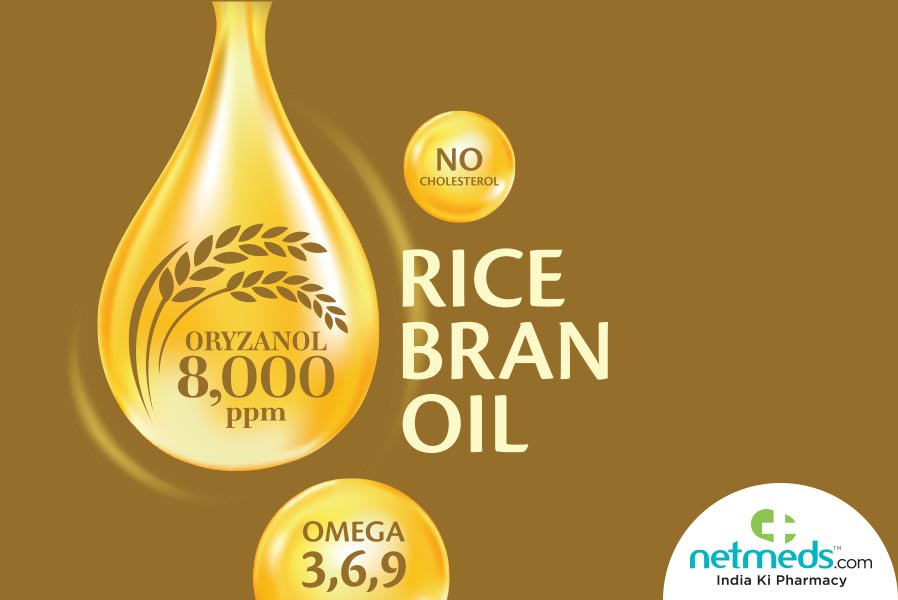
Rice Bran Oil Nutritional Composition
In recent days rice bran oil is gaining popularity and used widely as cooking oils due to its quality, extended shelf-life and the balanced proportion of fatty acids as well as the abundance of antioxidants. It has a low viscosity and high smoke point which also makes it a healthy cooking oil.
Rice bran oil is extracted from the outer layer of rice such as white rice, brown rice and all other varieties of rice which are remarkable sources of carbohydrate, however, the rice bran oil contains zero grams of carbohydrate. Rice bran oil is loaded healthy unsaturated fatty acids –monounsaturated fatty acids (5grams) and polyunsaturated fatty acids (4.8 grams) per serving which help to increase the HDL (good) cholesterol levels and lower the LDL (bad) cholesterol and 2.7 grams of saturated fatty acids.
It is bestowed with vitamin E –tocopherols and tocotrienols and vast reserves of bioactive phytonutrients like phytosterols, γ-oryzanol, squalene and triterpene alcohols. Addition of rice bran oil in the diet has been shown to significantly reduce LDL cholesterol, blood pressure and blood sugar levels and also reduce risk of inflammation and metabolic disorder. Besides these, it is well-known to bolster the immune system and slow down premature ageing and age-related neurodegenerative diseases.
Also Read: Go for Cold Pressed Oils for Amazing Health Benefits
The nutritional composition of rice bran oil as per USDA for one tablespoon:
Calories: 120
Fat: 14g
Sodium: 0mg
Carbohydrates: 0g
Fiber: 0g
Sugars: 0g
Protein: 0g
Health Benefits Of Rice Bran Oil
Heart Healthy
The rich array of cardiac friendly phytochemicals and antioxidants present in rice bran oil is valued as a healthy edible oil for regular consumption and has also achieved the status of “heart-healthy oil”. Evidence has reported that daily addition of rice bran oil together with lifestyle modification and healthy eating habits is beneficial in reducing the risk of cardiovascular diseases. The presence of oryzanol a potent antioxidant in rice bran oil helps to lower cholesterol absorption and increase the cholesterol excretion. The Indian Council of Medical Research (ICMR) and the National Institute of Nutrition (NIN) recommended that oil which have an equal proportion of saturated fatty acids, monounsaturated fats and polyunsaturated fats are best to improve cardiac health and rice brain oil is almost close to this ratio.
Regulates Blood Sugar Levels
Rice bran oil supports to manage the blood sugar levels under control by improving insulin resistance. The richness of antioxidants in rice bran oil combat free radical damages and neutralise the free radical that may lead to oxidative stress and lowers insulin resistance. The perfect proportion of fatty acids levels in rice bran oil is beneficial for diabetic patients. As per the study published in the Journal of Nutritional Biochemistry it has been disclosed that the consumption of rice bran oil had significantly lowered the blood sugar spikes by 30 % in type 2 diabetes patients.
Also Read: How Cooking Oils Help Keep Blood Sugar Levels Under Control
Potent Anti-inflammatory Effects
Rice bran oil is imbued with a host of plant compounds possess powerful anti-inflammatory effects. Oryzanol and tocotrienols are active compounds in rice bran oil are well-known to suppress the action of several enzymes that are known to cause inflammation which can damage the blood vessels and heart membrane. The powerful inflammatory properties of rice bran oil can reduce the risk of chronic diseases and lowers the post-menopausal effects like hot flashes.
Prevents Cancer
Tocotrienols, a group of antioxidants in rice bran oil possess strong anti-cancer effects. Studies have revealed that tocotrienols control the growth of cancer forming cells in the breast, lung, ovary, liver, brain and pancreas. Apart from these, it also minimises the harmful effects of ionising radiation exposure.
Bolsters The Immune Health
Rice bran oil is valuable in triggering the immune response, which is the body’s first-line defence against disease-causing agents like bacteria, viruses and other microorganisms. It is believed that the storehouse of antioxidants and potent plant compounds like phytosterols, polysaccharides, minerals and trace minerals including magnesium, selenium, zinc, vitamin E and omega-3 fatty acids are well-known to bolster immunity and keep infections at bay.
Combats Bad Breath
Oil pulling is a time tested practice which involves swishing oil in the mouth to thwart off bacteria and improve dental hygiene. Oil pulling with rice bran oil is effective in killing harmful bacteria in the mouth, prevent cavities, reduce inflammation and bad breath and promote gum health.
Rice Bran Oil For Enhanced Skin Health
The goodness of powerful antioxidants and being imbued with essential nutrients, rice bran oil supports enhancing skin health and glow. The richness of B complex vitamins such as Thiamine (B1) and Niacin (B3), as well as Vitamin B5 (Pantothenic Acid) and B6 (riboflavin) aids to soothe the skin and treats skin conditions like rosacea, sunburn, eczema and hyperpigmentation by enhancing the skin's moisture, shields the skin cells from oxidative damage and nurtures the skin’s barrier.
An ample amount of vitamin E in rice bran oil aids in soothing and softening skin cells and improving the skin's complexion and youthfulness. The antioxidant properties are used as anti-ageing properties in many skincare products. It is also used as a suntan product to revamp skin cells and ease redness and irritation. Besides this, vitamin E also helps to enhance the working of SPF products and prevent wrinkles and fine lines.
The wealth of plant esters, sterols and powerful oryzanol with antioxidant and anti-inflammatory properties lessens puffiness, uneven skin tone and also fades away dark circles under the eyes. Furthermore, it also slows down the progression of melanin pigmentation.
Fatty Acids function as the building blocks of our skin membrane and shield the skin by retaining the skin's hydration and moisture. Rich bran oil abundant in linoleic and oleic fatty acids protects the skin against UV rays, environmental pollutants and helps to lessen skin irritation, acne and fades away wrinkles and fine lines. While being also rich in oleic acid rice bran oil helps promote skin firmness, elasticity and makes the skin look youthful and radiant.
Additional Health Benefits Of Rice Bran Oil
Augments Cellular Regeneration
Rice bran contains potent antioxidants that help fight oxidative stress in the body. The oil also increases Vitamin E levels, which speeds up the wound healing process, smoothens dry skin, delays wrinkle formation, and increases cellular regeneration of the body.
Prevent Allergies
Rice bran oil is hypoallergenic in nature. This implies that this oil will not cause any allergic reactions when used in cooking and will minimise allergic attacks on the body. By preventing hypersensitivity to many unusual allergens, it is considered safe for consumption for people who are generally get affected by minor to major food allergies.
Reduces Kidney Stone Formation
Rice bran oil is one of the healthiest forms of oil for kidney stone patients. Excess calcium is one of the main causes of kidney stone formation. The oil potentially helps the body to reduce calcium absorption, which in turn reduces the formation of various types of kidney stones.
Rice Bran Oil Vs Olive Oil
Rice bran oil is known to have more health benefits than olive oil, which include:
Rice bran oil contains more vitamin E, the active two forms tocopherol and tocotrienol while olive oil contains a very small amount of vitamin E. Tocopherol, the potent antioxidants in rice bran oil, lowers oxidative stress, slows down ageing, and averts skin issues like acne and pigmentation.
Rice bran oil is abundant in beneficial compound oryzanol, while it is not present in olive oil but contains a good amount of DHA and EHA, which is known to improve heart health. The special compound oryzanol in rice bran oil is well-known to reduce LDL cholesterol and lower inflammation.
Rice bran oil has a longer shelf life when compared to all other cooking oils; olive oil is very delicate and gets spoiled quickly.
The high smoking point of rice bran oil makes it suitable for all types of cooking when compared to olive oil. It is even suitable for baking due to its subtle taste, which does not overpower a dish.
Though rice bran oil seems to be a better option than olive oil, it is always best to use rice bran oil for frying and sautéing and olive oil for salad dressing and drizzling overcooked vegetables.
Ways To Add Rice Bran Oil To Your Diet
The unique nature of rice bran oil makes it perfect for deep frying and baking, owing to its mild and neutral taste that doesn't take over the dish, unlike olive and canola oils. It has a nutty, earthy flavour and aroma very similar to that of groundnut oil. Rice bran oil has a high smoking point, which makes it suitable for high-temperature cooking, while it also preserves the beneficial compounds oryzanol and tocotrienols and nutritive quality even at a higher temperature. Moreover, foods cooked at high temperature absorbs less oil. Rice bran oil is less viscous and doesn't stick to food, and also feels less oily while tasting on the tongue.
Consuming rice bran oil in moderate amounts as part of a well-balanced diet helps you take in less oil. It is an ideal choice of oil for people who have food allergies. Apart from this, it doesn't go rancid or spoil as quickly as other cooking oils.
This heart-healthy oil notches up several wins on the health front, which is largely used for making nutritious stir-frying, salad dressing and grilling. It's also easy to add to hot breakfast cereals, porridges, etc. For a healthy twist, you can mix rice bran oil with other vegetable oils, such as olive or canola oils that are best to manage diabetes and cardiac wellness.
Rice Bran Oil Vs Sunflower Oil
Well, both these oils are valued as healthy sources of cooking oil. Sunflower is prized for its goodness of monounsaturated fat, whereas rice bran oil is popular as a versatile hypoallergenic oil.
The Key Difference Between Rice Bran Oil And Sunflower Oil
Saturated Vs Unsaturated Fatty Acids
The monounsaturated fat content in sunflower and rice bran oil is 6g and 5g respectively per serving, also both oils are low in saturated fat. Thus, these oils are great options for enhancing heart health and maintaining lipid profile.
Omega 3 Fatty Acids Vs Omega 6 Fatty Acids
Omega 3 and omega 6 fatty acids are the main unsaturated fatty acids, both oils contain immense amounts of omega-6 unsaturated fatty acids and lack omega 3 fatty acids. However, it is essential to maintain a lower omega 6 to omega 3 ratio in the diet regimen, this can be balanced by adding nuts, seeds, and fish.
Cooking
Both these oils are ideal for cooking at higher temperatures with a smoke point of 450 degrees.While sunflower oil's mild flavour and taste makes it more suitable for frying and baking, but not for drizzling. Likewise, rice bran oil may be used for drizzling, salad dressing and all other cooking purposes.
Side Effects
Rice bran oil is generally safe for consumption for most people when used in moderate amounts. However excessive usage of rice bran oil can lead to irritable bowel movements, flatulence and abdominal discomfort due to increasing amount of fibre. People with digestive problems like intestinal ulcers, adhesions, conditions that cause narrowing of the digestive tract and other intestinal disorders it is best to avoid, as the fibre in rice bran oil may block the digestive tract. Health experts suggest that it is best to avoid rice bran oil during pregnancy and lactation as it may affect the health of the baby.
Frequently Asked Questions
Mild digestive discomfort if consumed in excess.
Allergic reactions in rare cases.
Weight gain if overused due to high-calorie content.
When used on skin, it may irritate sensitive individuals. Moderation is key.
Is Rice Bran Oil Good Or Bad For Skin?
Rice bran oil is generally good for the skin when used externally. It is rich in vitamin E, fatty acids, and antioxidants that help moisturise the skin, improve elasticity, and protect against environmental damage. It is suitable for dry and mature skin types. However, people with very sensitive or acne-prone skin should do a patch test before regular use.
What Are The Side Effects Of Rice Bran Oil?
Rice bran oil is safe for most people, but possible side effects include:
Is Rice Bran Oil Good For Heart Patients?
Yes, rice bran oil is considered heart-healthy. It helps lower LDL cholesterol and maintain HDL cholesterol due to its balanced fatty acid profile and presence of gamma-oryzanol. It is recommended as a healthier cooking oil for people with heart problems; however, it should be used in moderation.
Is Rice Bran Oil Good For Diabetes?
Rice bran oil can be beneficial for people with diabetes. It may help improve insulin sensitivity and support better cholesterol control, which is important for diabetic patients.
Which Oil Is Good For Heart Patients?
Rice bran oil
Olive oil (especially extra virgin)
Canola oil
Groundnut /peanut oil
Mustard oil in limited amounts
Rotating oils rather than relying on a single type is often recommended for a balanced proportion of fat intake.
Conclusion
Rice bran oil made from the outer layer of the rice kernel is a versatile and easy-to-add vegetable oil in the diet owing to its high smoke point and gentle flavour. It is gaining huge popularity in recent days due to its umpteen health benefits, including improved heart health, regulating blood glucose and blood pressure, preventing cancers, enhancing immunity and skin health. Furthermore, it renders powerful antioxidant, anti-inflammatory and anti-cancer effects, so reap the wellness incentives by adding this nourishing oil to your regular cooking.
References:
Rice Bran Oil: Emerging Trends in Extraction, Health Benefit, and Its Industrial Application
, Manoj Kumar b, Anil Kumar Siroha, Sukhvinder Singh Purewal c
https://www.sciencedirect.com/science/article/pii/S1672630821000226
Phytosterols in rice bran and their health benefits
Zhaoguo Liu 1, Xiaoxiao Liu 2, Zheng Ma 3,, Tianzhu Guan 2,
https://pmc.ncbi.nlm.nih.gov/articles/PMC10600523/
 Previous