Author: Soumita Basu
Reviewer: Sowmya Binu
That prickly little herb growing wild across parts of India may not look particularly impressive, but Kantkari has a long history in Ayurveda. Also known as Kantakari, Vyaghri or yellow-berried nightshade, this traditional medicinal plant has been used particularly in formulations intended to support respiratory health.
Kantkari juice, prepared from fresh plant material, is traditionally known as Kantkari Swarasa. Ayurveda describes Kantkari as particularly useful in conditions involving cough, breathing difficulty, excess Kapha and certain digestive and urinary complaints. Modern research has also investigated Solanum xanthocarpum for antioxidant, anti-inflammatory, antimicrobial, bronchodilatory and other biological activities. However, much of the evidence comes from laboratory or animal research, while robust human clinical evidence remains limited.
So, is Kantkari juice worth adding to your routine? What does Ayurveda say about it, how is it prepared, and how much should you take?
Let us explore Kantkari juice benefits, ingredients, preparation, Ayurvedic properties, dosage, side effects and precautions in detail.
Note: Kantkari is a medicinal herb, not a substitute for prescribed treatment. If you have asthma, breathing difficulty or another chronic condition, speak with a qualified healthcare professional before using Kantkari preparations.

What Is Kantkari Juice?
Kantkari juice is a traditional Ayurvedic preparation made from the fresh plant material of Kantkari (Solanum xanthocarpum Schrad. & Wendl.), a prickly herb belonging to the Solanaceae family.
It is also known by names such as:
Kantakari
Vyaghri
Nidigdhika
Katali
Ringani
Bhatkataiya
Yellow-berried nightshade
Wild eggplant
Different Ayurvedic and botanical references may use Solanum xanthocarpum, Solanum virginianum or Solanum surattense in relation to Kantakari, so accurate botanical identification is important when sourcing the herb.
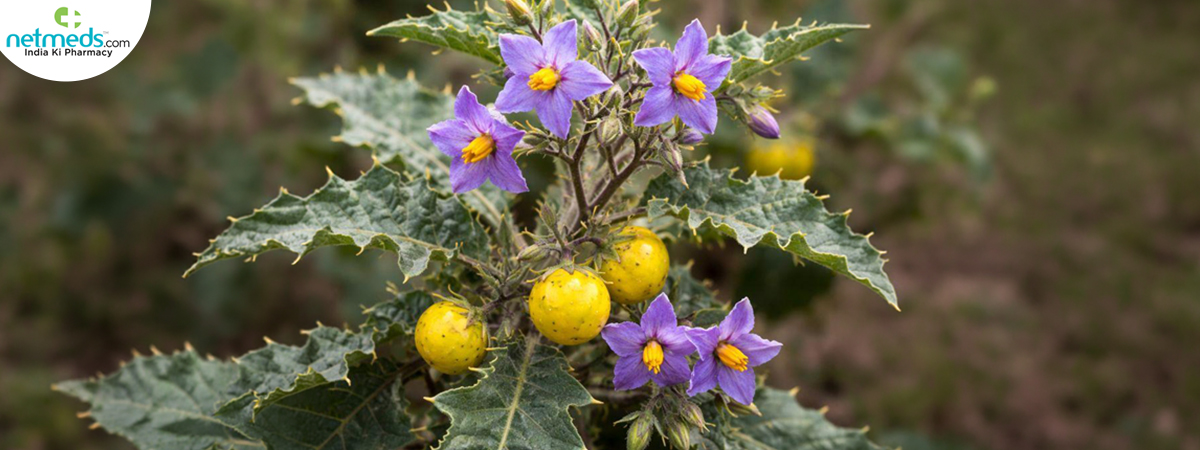
The plant is characterised by sharp prickles, lobed leaves, purple or bluish flowers and small fruits that become yellowish when mature. Ayurveda uses different parts of the plant, including the root, fruit and whole plant, depending on the preparation.
Kantkari juice is essentially the fresh expressed juice (Swarasa) of the plant rather than a dried powder or decoction.
Kantkari Juice Product Description
Commercial Kantkari juice is generally sold as a liquid herbal preparation containing an extract or expressed juice of Solanum xanthocarpum. However, products marketed as "Kantkari juice" may differ considerably in their formulation.
When choosing a commercially prepared product, look for:
Clearly stated botanical name
Ingredient list
Recommended serving size
Batch number
Manufacturing and expiry dates
Appropriate quality testing
Manufacturer information
Storage instructions
Some products may contain additional herbs, sweeteners, preservatives or other ingredients. Therefore, always check the label rather than assuming that every Kantkari juice contains only Kantkari.
Ingredients In Kantkari Juice
A traditional single-herb Kantkari Swarasa may contain:
Fresh Kantkari (Solanum xanthocarpum) plant material
Commercial preparations may additionally contain water, preservatives or other herbal ingredients depending on the formulation.
Kantkari contains a variety of phytochemicals, including steroidal alkaloids, steroidal saponins, flavonoids, phenolic compounds and other plant constituents. Reported constituents include solasodine, solasonine and related compounds.
The exact chemical composition can vary according to the plant part used, harvesting stage, growing conditions and processing method.
How Is Kantkari Juice Prepared?
In Ayurveda, Swarasa refers to the expressed juice obtained from fresh plant material.
Method Of Preparation
Traditionally, preparation involves:
Select fresh Kantkari plant material that has been correctly identified.
Remove soil, damaged portions and other visible impurities.
Wash the plant material thoroughly with clean water.
Chop or crush the fresh material into smaller pieces.
Triturate or grind it to release the plant juice.
Press the crushed material through a clean cloth or suitable filter.
Collect the expressed liquid.
Use fresh juice according to traditional or practitioner-directed dosage.
When choosing a commercially prepared product, look for:
Clearly stated botanical name
Ingredient list
Recommended serving size
Batch number
Manufacturing and expiry dates
Appropriate quality testing
Manufacturer information
Storage instructions
Some products may contain additional herbs, sweeteners, preservatives or other ingredients. Therefore, always check the label rather than if every Kantkari juice contains only Kantkari.
Note: Preparing medicinal plant juices at home isn't always advisable because incorrect plant identification, contamination or inappropriate dosage can create health risks. A commercially prepared product from a reputable manufacturer or guidance from a qualified Ayurvedic practitioner is generally safer.
Medicinal Qualities Of Kantkari
Kantkari has attracted interest because of both its traditional Ayurvedic applications and its phytochemical composition.
Research reviews have reported several biological activities associated with Solanum xanthocarpum, including:
Antioxidant activity
Anti-inflammatory activity
Antimicrobial activity
Bronchodilatory activity
Potential anti-allergic activity
Potential hepatoprotective activity
Potential nephroprotective activity
However, it is important to distinguish traditional medicinal use and experimental pharmacological activity from proven clinical efficacy in humans. Many modern studies on Kantkari are preclinical, and more well-designed human trials are needed.
Ayurvedic Properties Of Kantkari
In Ayurvedic pharmacology, Kantkari is traditionally described using the Rasa Panchaka framework.
Ayurvedic Property
Kantkari
Rasa
Tikta (bitter), Katu (pungent)
Guna
Laghu (light), Ruksha (dry), Tikshna (sharp/penetrating)
Virya
Ushna (heating)
Vipaka
Katu (pungent)
Dosha action
Traditionally Kapha-Vata balancing
Classical and Ayurvedic sources particularly associate Kantkari with Kasa (cough), Shwasa (breathing difficulty), Hikka (hiccups), digestive activity and Kapha-Vata-related conditions.
Some Ayurvedic references also describe it as Deepana and Pachana, indicating traditional use for supporting digestive function.
10 Extraordinary Health Benefits Of Kantkari Juice
Supports Respiratory Health
One of the best-known traditional uses of Kantkari is respiratory support.
Ayurvedic literature describes Kantkari as Kasahara and Shwasahara, traditionally indicating its use in cough and breathing-related complaints. Modern reviews have also reported bronchodilatory and anti-inflammatory activity in experimental research.
Kantkari is therefore traditionally included in several Ayurvedic respiratory formulations.
However, Kantkari juice should not be considered a treatment for asthma or an acute breathing attack.
If you experience sudden wheezing, severe breathlessness or chest tightness, seek urgent medical care rather than relying on herbal remedies.
Manages Cough
Kantkari has traditionally been associated with Kasa, the Ayurvedic concept broadly corresponding to cough.
Its traditional Kapha-targeting properties have made it an ingredient in several Ayurvedic preparations used for respiratory complaints.
Experimental research has also investigated possible antitussive and respiratory effects.
That said, persistent cough can have numerous causes, including allergies, asthma, infections, acid reflux and other conditions, so a recurring cough deserves proper evaluation.
Also Read: Respiratory Health: 5 Incredible Herbs To Boost Your Lung Power
Improves Healthy Airway Function
Research into Solanum xanthocarpum has reported possible bronchodilatory activity, meaning potential effects on airway smooth muscle.
This is one reason Kantkari has attracted scientific interest as a traditional respiratory herb.
However, experimental bronchodilatory activity doesn't mean Kantkari juice can replace inhalers, bronchodilators or other prescribed respiratory medicines.
Offers Antioxidant Support
Kantkari contains several phytochemicals that have demonstrated antioxidant activity in experimental studies.
Antioxidants help neutralise reactive molecules and are part of the body's natural defence against oxidative stress.
The presence of flavonoids, phenolic compounds and other bioactive constituents may contribute to this activity.
However, drinking Kantkari juice shouldn't be viewed as a substitute for eating a varied diet containing fruits, vegetables, legumes, nuts and whole grains.
Also Read: 5 Essential Antioxidants To Add To Regular Diet For Enhanced Overall Health
May Have Anti-Inflammatory Potential
Inflammation is involved in numerous physiological processes, and researchers have investigated Kantkari for potential anti-inflammatory activity.
Laboratory and preclinical research suggest that compounds found in Solanum xanthocarpum may influence inflammatory pathways.
While these findings are interesting, human evidence remains insufficient to recommend Kantkari juice as a treatment for chronic inflammatory diseases.
Aids Digestion
Ayurvedic texts traditionally describe Kantkari as Deepana and Pachana, properties associated with supporting digestive activity.
Its pungent and bitter profile is also traditionally considered useful for Kapha-related digestive sluggishness.
However, there is limited clinical evidence specifically evaluating Kantkari juice for common digestive disorders. Persistent acidity, abdominal pain, diarrhoea or constipation should not be self-treated indefinitely with herbal products.
Also Read: Indigestion? 7 Powerful Herbal Digestive Supplements You Should Try For Instant Relief
Improves Urinary Health
Traditional Ayurvedic references describe Kantkari as Mutrala, or supportive of urinary elimination. Some sources also associate it with traditional use in urinary difficulties and stone-related conditions.
However, evidence from modern human studies is limited.
If you experience painful urination, blood in urine, fever or severe flank pain, seek medical evaluation rather than relying on Kantkari juice.
Prevents Microbial Infections
Laboratory research has investigated extracts of Solanum xanthocarpum for antimicrobial activity.
Various phytochemicals in the plant may contribute to these effects, but laboratory antimicrobial activity does not mean Kantkari juice can treat an infection in humans.
Antibiotics and other antimicrobial medicines should only be used when medically indicated and prescribed appropriately.
Remedies Inflammation
Kantkari's antioxidant and anti-inflammatory phytochemicals have led researchers to investigate its broader role in maintaining normal physiological responses.
This potential is particularly interesting because oxidative stress and inflammation are involved in many chronic conditions.
However, it would be premature to claim that Kantkari juice prevents or treats chronic diseases. More clinical evidence is needed.
Complements Traditional Wellness Routines
Perhaps the most realistic way to look at Kantkari juice is as a traditional herbal preparation that may complement, not replace a healthy lifestyle and appropriate medical care.
Ayurvedic use has traditionally focused strongly on respiratory and Kapha-Vata-related complaints.
When used appropriately and under professional guidance, it may have a place within an individualised Ayurvedic wellness plan.
Kantkari Juice Dosage
There is no universally established modern therapeutic dose for Kantkari juice.
An Ayurvedic educational source lists Kantkari Swarasa at approximately 10–15 mL, while other sources provide different doses for powders and decoctions.
Because dosage can vary according to:
Plant part used
Fresh juice versus commercial preparation
Concentration
Age
Health status
Intended use
Other medicines being taken
it is best to follow the dosage printed on a reputable product or the recommendation of a qualified Ayurvedic practitioner.
Do not assume that taking more will provide greater benefits.
How To Take Kantkari Juice?
If you are using a commercially prepared Kantkari juice, follow the manufacturer's directions.
Depending on the formulation, it may be consumed:
Directly in the recommended quantity
Diluted with water
As directed by an Ayurvedic practitioner
Avoid mixing multiple herbal preparations indiscriminately. Combining several products can make it difficult to determine which ingredient is responsible if you develop an adverse reaction.
Kantkari Juice Side Effects
High-quality clinical safety data for Kantkari juice are limited. This means the absence of extensive reports shouldn't be interpreted as proof that the product is completely risk-free.
Possible concerns with herbal preparations may include:
Stomach discomfort
Loose stools or digestive upset
Allergic reactions
Irritation or intolerance
Interactions with medicines
Kantkari contains biologically active steroidal alkaloids and other phytochemicals, so concentrated extracts should not automatically be considered harmless simply because they are plant-derived.
If you develop rash, swelling, breathing difficulty, severe stomach pain or another concerning symptom after taking it, discontinue use and seek medical advice.
Precautions When Using Kantkari Juice
Pregnancy And Breastfeeding
There isn't enough reliable evidence to establish the safety of medicinal doses of Kantkari during pregnancy or breastfeeding.
Avoid concentrated Kantkari supplements unless specifically recommended by a qualified healthcare professional.
Children
Don't routinely give Kantkari juice to young children without advice from a paediatrician or qualified practitioner.
Asthma Or Breathing Problems
Kantkari has a traditional respiratory role, but it must not replace prescribed inhalers or other asthma medicines.
Anyone experiencing severe breathing difficulty requires immediate medical attention.
Chronic Health Conditions
If you have liver, kidney, gastrointestinal, cardiovascular or other chronic disease, speak with your healthcare provider before taking concentrated herbal preparations.
Medicines
If you are taking prescription medicines, discuss Kantkari supplementation with your doctor or pharmacist. This is particularly important when you are taking several medicines or have a chronic condition.
Allergies
Avoid the product if you know you are allergic to Kantkari or related plants.
Quality Matters
Use products from reputable manufacturers that provide clear ingredient, batch and quality information. Avoid unidentified plants collected from roadsides or contaminated areas.
Is Kantkari Juice A Treatment For Asthma And Cough?
No, not by itself. Kantkari has a strong traditional association with Kasa and Shwasa, and experimental research has explored possible antitussive and bronchodilatory properties.
But asthma, chronic bronchitis, pneumonia and other respiratory illnesses require appropriate diagnosis and treatment.
If you are experiencing a persistent cough, recurrent wheezing, chest tightness, shortness of breath, high fever or coughing up blood, consult a healthcare professional promptly.
Kantkari Juice Vs Kantkari Powder: What Is The Difference?
Both preparations originate from the same medicinal plant, but they aren't interchangeable.
Kantkari Juice/Swarasa: Traditionally prepared from fresh plant material and consumed as a liquid.
Kantkari Powder: Made from dried plant material and generally used in smaller quantities.
Kantkari Decoction/Kwatha: Prepared by processing the plant material with water and reducing the liquid.
The concentration of active compounds can differ significantly between preparations. Therefore, don't use the dosage of one preparation for another.
Conclusion
Kantkari juice, traditionally prepared from Solanum xanthocarpum, is an interesting Ayurvedic herbal preparation with a particularly long history of use for cough, respiratory complaints and Kapha-Vata-related conditions.
Its phytochemicals, including steroidal alkaloids, saponins, flavonoids and phenolic compounds have attracted modern research interest for potential antioxidant, anti-inflammatory, antimicrobial and respiratory effects.
However, it's important not to confuse traditional use and promising laboratory findings with proven human clinical benefits. More high-quality clinical studies are required to establish its effectiveness and safety for specific health conditions.
If you choose to use Kantkari juice, select a reputable preparation, follow the recommended dosage and consult a qualified healthcare professional, particularly if you are pregnant, breastfeeding, taking medicines or managing a chronic illness.
Most importantly, never use Kantkari juice as a substitute for prescribed treatment, especially for asthma, severe cough or other potentially serious respiratory conditions.
References:
- Sri Jayendra Saraswathi Ayurveda College & Hospital – Kantakari: Botanical identity, Ayurvedic properties, traditional indications and dosage.
- Journal of Pharmacognosy and Phytochemistry – Kaṇṭakārī (Solanum xanthocarpum): An Ayurvedic review with contemporary correlation: Traditional properties, phytochemistry and contemporary research.
- Therapeutic potentials of Kantakari (Solanum xanthocarpum): Review of traditional uses and experimental pharmacological activities.
- Ayurwiki – Solanum surattense / Kantakari: Botanical information and Ayurvedic pharmacological properties.
- Journal of Ayurveda and Integrative Medical Sciences – Composition of Kanakasava and medicinal properties: Ayurvedic properties and pharmacological actions associated with Kantakari.
- Charaka Samhita Online – Kantakari: Classical Ayurvedic references and pharmacological properties.
 Previous