


Two of the familiar herbs in traditional Indian wellness practices, Giloy and Tulsi, are often linked to improving immunity and promoting general health. Containing naturally occurring compounds that scientists have studied for their biological effects, Giloy and Tulsi are wonderful plants for human health but certainly are not the same herb. Their traditional uses, plant characteristics, and potential health effects differ in several ways.
Wondering which one is better when you ask about Giloy vs Tulsi? The answer depends on what you want to use Giloy or Tulsi for, how it is prepared, and your individual health circumstances.
In this article, let’s explore the key differences, similarities, health benefits, and precautions associated with both these traditional herbs.
(Boost Your Immunity With Our Wide-Range Of Ayurvedic Supplements Today!)
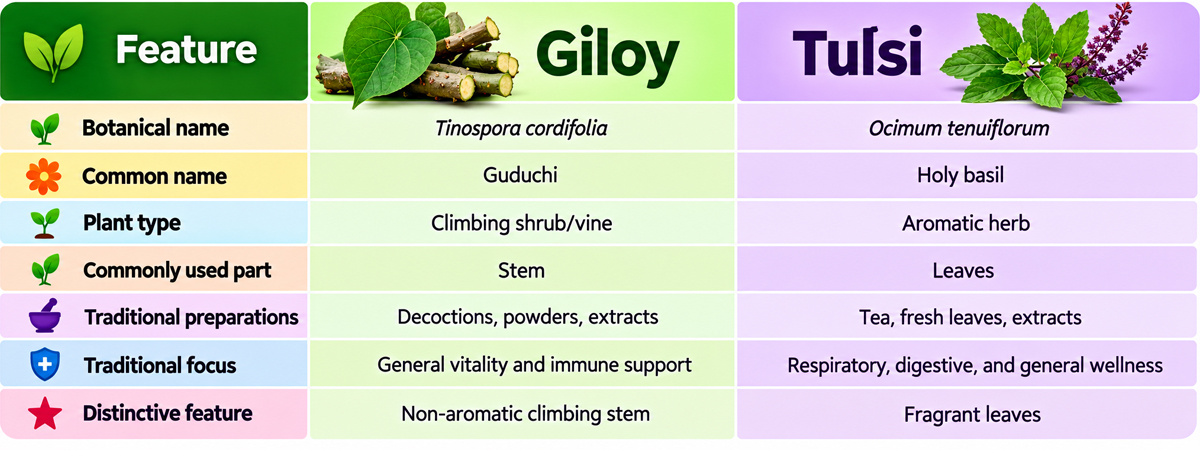
Giloy, also known as Guduchi, is botanically named Tinospora Cordifolia. It is a climbing shrub whose stem is used in preparations. Tulsi or holy basil generally refers to Ocimum tenuiflorum, also known as Ocimum sanctum. It is a herb whose leaves are used in traditional preparations and home remedies for seasonal ailments.
Giloy vs Tulsi: What Is the Difference?
Not just basic characteristics, traditional applications of both herbs also differ. Giloy has traditionally been used in formulations that support general vitality, immune function, and inflammatory conditions. Tulsi has traditionally been used for a range of concerns, including respiratory health, digestion, stress, and general wellbeing.
Ayurvedic Herbs For Kids: Top 5 Natural Supplements To Boost Your Child’s Immunity Naturally
What Are the Potential Health Benefits of Giloy?
Supports Immune Function
Giloy has been described as an immunity-supporting herb and has great potential to influence the activity of the immune system. However, this should not be interpreted as Giloy can prevent infections or make a person immune to disease, and it is not a replacement for vaccination, infection-prevention measures, or appropriate medical treatment.
Has Inflammatory Properties
Certain compounds present in Giloy have demonstrated anti-inflammatory activity in experimental research. This has generated interest in Giloy’s role in inflammatory conditions. But it should not be considered a treatment for an inflammatory disease without appropriate medical advice. Giloy can be used as an additional measure after consultation with a health practitioner.
May Have Antioxidant Activity
Giloy contains plant compounds and antioxidants that can help protect cells from stress, a process involving unstable molecules known as free radicals. Although this is an area of interest, more human research is required to establish what practical health benefits and side effects Giloy supplementation may provide if used in the long run.
Traditional Use for General Wellness
In Ayurveda, Guduchi or Giloy is classified as a Rasayana herb. It has traditionally been used in preparations intended to support general vitality and well-being. Modern research is investigating some of these uses, but not every traditional indication has been clinically established.
Also Read: Giloy Satva Powder: Benefits, Uses, Ingredients, Method, Dosage and Side Effects
What Are the Potential Health Benefits of Tulsi?
Tulsi has a history of use in Indian households and Ayurvedic practice. Tulsi has been known to show positive results in improving metabolic health, easing psychological stress, promoting immunity, and helping with cardiovascular issues. However, many of the studies have methodological limitations, so the findings need to be interpreted cautiously.
May Help With Stress and Mental Wellbeing
Tulsi is known to have adaptogens. These substances are traditionally believed to help the body cope with psychological stress, mood, and similar outcomes. Still, the evidence is not strong enough to say that tulsi can completely treat anxiety, depression, or any other diagnosed mental health condition.
Contains Antioxidant and Anti-Inflammatory Compounds
Tulsi contains active substances, such as eugenol and rosmarinic acid. These substances show antioxidant and anti-inflammatory power. Lab work shows ample benefit for the human body, but it is advisable to seek advice from medical professionals rather than only relying on herbal medicine.
May Promote Respiratory Wellness
In Indian homes, tulsi is a regular ingredient in herbal drinks and old recipes that aim to help breathing and overall wellness. Tulsi can also fight germs and support the immune system. But one must not trust tulsi alone to treat an infection or skip a doctor when symptoms are severe or last a long time.
Also Read: Giloy Juice: 5 Powerful Ways This Wonder Herb Boosts Immunity-Infographic
Frequently Asked Questions
How Are Giloy and Tulsi Commonly Used?
Tulsi is often eaten as leaves brewed into tea, ground into powder, or added to many old recipes. You can also buy tulsi extracts or capsules. Giloy comes in forms like fresh stem mixes, powders, juices, decoctions, tablets, and capsules. The amount of ingredients can differ a lot in each type.
Is Giloy Safe?
Giloy needs caution because of reports that Giloy products can cause liver injury. A big Indian study during COVID-19 found cases of liver injury, while some people also showed signs of autoimmune hepatitis. The source and exact plant identity of a Giloy product are very important. If you already have liver disease, autoimmune problems, or you take medicines, talk to a health professional before using strong Giloy preparations.
Is Tulsi Safe?
Tulsi seems to be generally safe. Most studies had only a few participants, who displayed that long-term use of strong preparations may not be safe. It is important to know the difference between using tulsi leaves in a normal drink and taking a strong extract or supplement. If you are pregnant or nursing, or have a long-term health issue, ask a health professional before starting strong tulsi supplements.
Can You Take Giloy and Tulsi Together?
Some traditional recipes mix Giloy and tulsi. But using herbs at once also makes it harder to know which one caused a bad reaction if one occurs. If you think about a combo supplement, read the ingredient list and stick to the suggested dose. If you take prescription medicines. Have a long-term condition, talk with your doctor or a qualified health expert.
Also Read: Tulsi - Immune Booster For This Monsoon Season
Giloy vs Tulsi: Which One Is Better?
In conclusion, there is no science that says Giloy is always better than tulsi or the other way around. Each herb has its traditional uses and its own science. Studies show tulsi might help with stress and metabolic health. Giloy can help with the immune system and inflammation. Thus, the real question isn’t just ‘which is the better herb’ but ‘is this herb right for me in this form and for this purpose’?
References:
https://ayush.gov.in/resources/pdf/quality_standards/Advisory-on-Guduchi-for-General-Public.pdf
https://pubmed.ncbi.nlm.nih.gov/35037744/
https://pmc.ncbi.nlm.nih.gov/articles/PMC5376420/
https://www.nccih.nih.gov/health/safety
https://echarak.ayush.gov.in/knowledge_resources
https://pubmed.ncbi.nlm.nih.gov/36400639/
https://pmc.ncbi.nlm.nih.gov/articles/PMC4296439/
https://www.plantsjournal.com/archives/2018/vol6issue2/PartB/6-2-12-979.pdf
https://informaticsjournals.co.in/index.php/jnr/article/view/50284
https://jaims.in/jaims/article/view/4554/7819
 Previous


