Protein is one of the most hyped nutrients in modern nutrition. From gym enthusiasts to health-conscious individuals, everyone seems concerned about their protein intake. But here’s the real question: are you actually getting enough protein, or are you worrying unnecessarily?
According to experts, 1 in 3 adults in India under-eats protein daily. The World Health Organisation recommends a protein requirement for adults is 0.8g per kg body weight/per day. The optimal protein range is 1.6-2.2g per kg body weight for active adults.
Want To Build Lean Muscle And Maintain Body Weight, Shop From Our Best Selling Protein supplements
Dive into this article to know more about science, myths, requirements and warning signs that indicate you are protein-deficient and sources.
What is Protein and Why Does It Matter?
Protein is a key macronutrient made of amino acids, referred to as the building blocks of life. There are about twenty amino acids your body uses; nine are considered essential, meaning your body cannot produce them on its own. These must be met from dietary sources.
Some of the key functions of protein include
:
Repairs and builds tissues, muscles, skin, hair, nails, organs, and cartilage, which are all protein-based structures.
It is vital for enzyme and hormone production, including insulin, growth hormone, and digestive enzymes. These enzymes are all made from amino acids.
It produces antibodies that fight infection.
Produces haemoglobin, the molecule that carries oxygen in your red blood cells.
Protein is the most filling macronutrient, reducing hunger and maintaining body composition.
Unlike carbohydrates and fats, protein is not stored efficiently in the body, so regular intake is essential.
How Much Protein Do You Actually Need?
The Recommended Dietary Allowance (RDA) is 0.8 grams per kg of body weight (minimum requirement).
However, the actual needs vary depending on the activity and lifestyle of a person:
Category Protein Requirement
Sedentary adults 0.8 – 1.0 g/kg
Active individuals 1.2 – 1.6 g/kg
Athletes/muscle gain 1.6 – 2.2 g/kg
Elderly 1.0 – 1.5 g/kg
For instance, if you weigh 60 kg, your body needs around 48g to 96g of protein/day depending on activity.
Are Most People Protein Deficient?
Well, researchers reveal that in many urban diets, severe protein deficiency is rare. However, suboptimal intake is very common, especially in India.
Why?
The diets are carb-loaded, mainly dominated by wheat and rice. And a low intake of pulses, dairy and protein-rich foods.
Lack of awareness
Many people think they are eating enough, but science says they actually fall short by 20–40%.
Also Read: Why Should You Start Your Day With A Protein-Rich Breakfast? Find Out Here
Protein Sources
Remember that not all protein sources are equal; the bioavailability varies widely, and some of the rich sources of protein include:
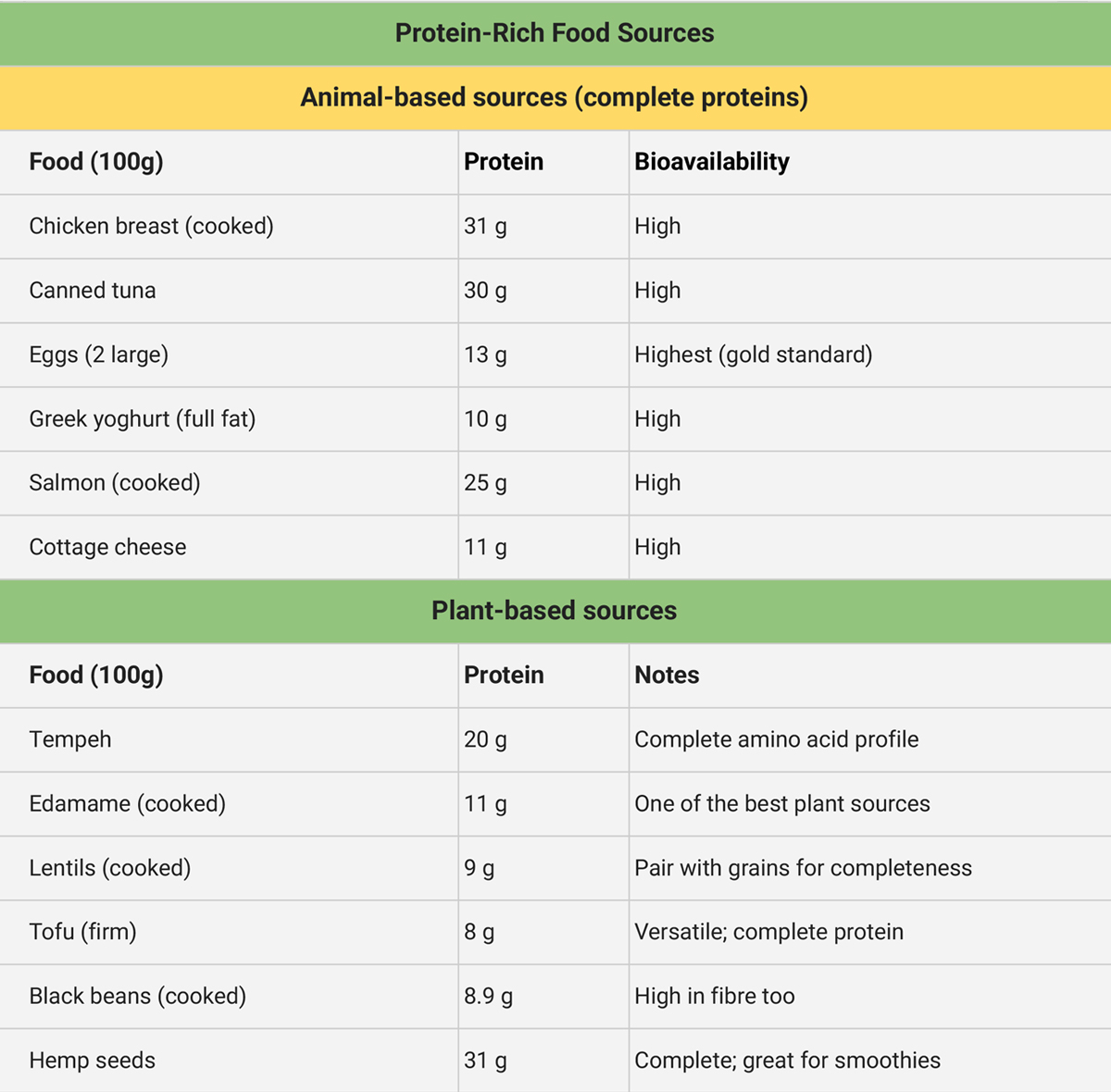
Vegetarians can meet their protein targets without any worry, but it needs informed food choices and a combination of attention to lysine, which is mostly limited in plant sources.
Signs You Might Not Be Getting Enough Protein
It is important to watch out for these subtle symptoms of protein deficiency:
Hair fall or brittle nails
Slow muscle recovery
Constant hunger
Poor immunity
These signs are mostly ignored or misattributed.
Common Protein Myths (Debunked)
Myth 1: Only gym-goers need protein.
Fact: Every cell in your body needs protein daily. And the requirements are based on individual body needs, physical activity and lifestyle.
Myth 2: Vegetarians can’t get enough protein.
Fact: Vegetarians can absolutely meet their demands with proper meal planning. Making informed food choices and pairing, vegetarians can easily get adequate protein from their daily diet.
Myth 3: More protein means more muscle mass.
Fact: Overconsumption of protein doesn’t automatically help build muscle mass without proper training. A scheduled workout combined with the right type and quality of protein promotes muscle mass.
Myth 4: Protein powders are necessary.
Fact: Whole natural foods are abundant in amino acids and can meet most needs; however, supplements are optional.
Also Read: 5 Plant-Based Proteins With More Protein Than Eggs: Nutrition, Health Benefits And Uses
Effective And Simple Ways To Boost Your Protein Intake
Include one protein source per meal on a regular basis.
Combine foods such as rice and dal to make them a complete protein source.
Snack smart like roasted chana, peanuts, curd, cottage cheese and makhana.
Start your day with protein, not just carbs.
Are You Overestimating or Underestimating Protein?
Generally, people fall under two categories:
Under Estimators: They think just eating dal and rice is enough to meet their needs, resulting in overeating and ignoring portion control.
Over Estimators:
Assume that they are eating healthy and getting enough protein. Often mostly rely on marketing claims.
However, tracking intake for just 2–3 days can reveal the truth.
Should You Need Protein Supplements?
Supplements are essential only for a few people who cannot meet their needs through natural food sources:
Those with high fitness goals and who engage in strenuous physical activity.
People recovering from injuries.
Elderly adults.
Vegans
People with poor appetite or a hectic lifestyle, which makes it difficult to intake adequate amounts of protein.
Those on a weight loss diet.
When don’t you need supplements?
If your diet is balanced and includes whole foods rich in quality proteins.
Those who lead a sedentary or moderately active lifestyle.
Verdict: Preferring whole foods should always be your foundation.
So, Are You Getting Enough Protein?
Probably not as much as you think, but also not dangerously low. The real issue is not deficiency, but optimisation. Protein needs vary as per the lifestyle of a person, and most people need to mildly increase their intake based on their activity level. Traditional foods can easily meet protein requirements, and awareness is more important than supplements.
Frequently Asked Questions
How Do I Know If I Am Getting Enough Protein?
Monitor your food intake for a few days and compare it with your body weight-based requirements.
Is 50g Of Protein Enough Per Day?
The protein needs completely depend on your weight and physical activity level. For adults who are leading a sedentary lifestyle, this may be the bare minimum to prevent deficiency.
Can I Get Enough Protein Without Meat?
Yes, right with a mix of pulses, dairy, nuts, and grains, you can meet your demands easily.
What Is The Best Time To Consume Protein?
The ideal time to consume protein is throughout the day, across all meals for better absorption and to maximise muscle protein production. Including protein at breakfast supports to control hunger pangs, while having 30 grams of protein post-workout promotes faster recovery. Additionally, including a slow-digesting protein food before bed is valuable for building muscle mass.
Conclusion
Protein is an essential nutrient that everyone needs, not just athletes. The real challenge is not extreme deficiency, but consistent, adequate intake. Making small changes to your daily meal regimen can help you easily meet your needs, without supplements or drastic diet modifications.
References:
Common questions and misconceptions about protein supplementation: what does the scientific evidence really show?
Jose AntonioORCID Icon,Cassandra Evans,Arny A. Ferrando,Jeffrey R. StoutORCID Icon,Brandi Antonio,Harry P. Cintine
https://www.tandfonline.com/doi/full/10.1080/15502783.2024.2341903
The protein deficit myth
Ricardo Abramovay I,Correspondence:, Nadine Marques Nunes-Galbes II, Fernanda Helena Marrocos-Leite II, Eduardo Augusto Fernandes Nilson III, Maria Laura da Costa Louzada IV
https://pmc.ncbi.nlm.nih.gov/articles/PMC12204648/
 Previous