With the seasonal shift and increased humidity, H1N1 influenza cases are rising significantly across the country. According to National Centre for Disease Control (NCDC) statistics, infections are nearly eight times higher than last year in states like Delhi, Karnataka, Maharashtra, Gujarat, and West Bengal. While the Indian Council of Medical Research (ICMR) assures that there is no new strain causing this rise, the reality remains challenging, and recovering from swine flu is not a quick process.
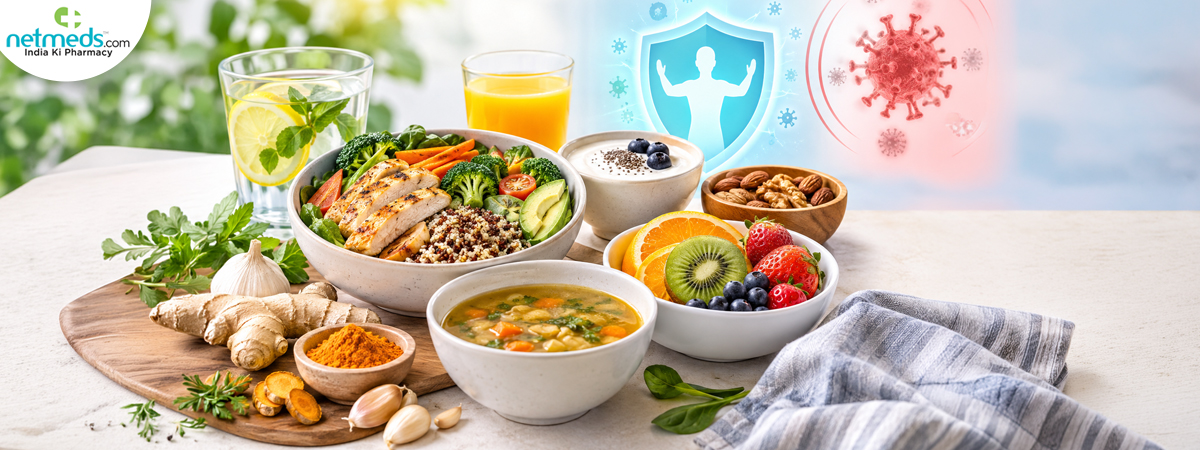
(To Combat Infections and Boost Your Immune System, Shop From Our Best-selling Nutritional supplements & Immune Boosters)
After the primary viral infection clears, post-viral sequelae that range from crippling fatigue and muscle catabolism to persistent dry cough and gut dysbiosis can linger for weeks. To help you navigate your recovery smoothly, here is a symptom-by-symptom clinical guide to post-H1N1 recovery eating.
H1N1 is a strain of influenza A virus that can result in respiratory illness ranging from mild symptoms to more serious complications. After the primary viral infection settles, post-viral sequelae that range from intense fatigue and muscle catabolism to continuous dry cough and gut dysbiosis can last for several weeks. To support you navigate smoother recovery, here is a guide to post H1N1 recovery nutrition.
Also Read: Swine Flu: Know About The Causes, Symptoms And Treatment Of This Deadly H1N1 Virus
Post-H1N1 Virus Recovery Diet Plan
Good rest and taking prescribed antiviral medications are key during the acute phase; however, targeted nutrition therapy plays an equally important role during convalescence. Post-viral recovery needs customised nutrient interventions rather than a generic diet regimen. Increased inflammation and cell damage need high-quality proteins, electrolytes, and short-chain fatty acid precursors to repair tissue and reset the immune response.
Diet To Combat Fatigue and Brain Fog
Fatigue develops when cellular mitochondria experience transient oxidative damage following an acute viral infection. Skipping meals or just having simple carbs can result in rapid glucose fluctuations, aggravating further energy dips.
Nutrients To Include: Complex carbohydrates combined with key nutrients like magnesium, B-complex vitamins, and CoQ10.
Foods: Soaked pumpkin seeds, roasted makhana, steamed sweet potatoes, cooked steel-cut or rolled oats, and dark leafy greens.
Ease Sore Throat, Dry Cough, and Mouth Ulcers
Inflammation along the upper respiratory tract and oral mucosa makes swallowing solid foods very difficult, leading to inadequate caloric intake during healing time.
Nutrients to Include: Vitamin C, omega-3 fatty acids, zinc, probiotics, and antioxidants like flavonoids can ease inflammation and heal ulcers.
Foods: Warm, soothing vegetable and non-veg broth packed with ginger and turmeric, soft, cooked khichdi with ghee, stewed apples, bananas, and warm water with honey.
Foods to Avoid: Highly acidic fruits (citrus), crunchy, deep-fried snacks, processed dry biscuits, and excessively spiced curries.
To Treat Nausea and Improve Appetite
Post-H1N1 viral fever anosmia (loss of smell) and ageusia (loss of taste) accompanied by medication-induced nausea can regularly lead to poor food intake.
Nutrients to Include: Zinc-rich foods play a key role in cell regeneration and immune signalling. Include easily digestible, energy-dense foods in small, frequent portions served at room temperature.
Foods: Boiled eggs, well-cooked dals and legumes, cooked sprouted moong, ginger-lemon tea, and plain curd.
Relieve Digestive Distress
Antiviral medications, pain relievers, and antibiotics may disrupt the gut microbiome balance, leading to post-viral gut dysbiosis.
Nutrients To Include: Prebiotic fibres, resistant starches, and natural fermented probiotics may help restore gut flora balance.
Foods: Homemade curd, buttermilk with a dash of roasted cumin, tender coconut water, and soft-cooked rice porridge.
Also Read: H1N1 Cases Rise in India in 2026: Symptoms, Prevention and Foods for Recovery
Alleviate Muscle Aches And Joint Weakness
Swine flu can cause generalised muscle breakdown and systemic cytokine release, leaving muscle weak and sore.
Nutrients to Include: Superior quality protein sources rich in branched-chain amino acids (BCAAs) and omega-3 fatty acids.
Foods: Lentil soup, paneer, cooked fish or chicken stew, soaked almonds, and walnuts.
Foods to Avoid
Ice cream, chilled beverages, and drinks can worsen throat irritation and congestion.
Deep-fried and oily foods are hard to digest when gut health is weak.
Sugar-loaded food impairs immune function.
Alcohol consumption dehydrates the system and weakens the immune system.
Legumes and pulses such as rajma, chole, and urad dal may cause gas and bloating when digestion is weak.
Packaged and processed food is high in sodium and low in nutrition.
Excess intake of caffeinated beverages may result in dehydrating, interferes with rest and sleep.
Sample H1N1 Recovery Diet Plan
Early Morning: 1 glass of turmeric tea with honey and soaked almonds and walnuts 3-5.
Breakfast: Oat porridge with banana and chia seeds or 2-3 pieces of idlis with homemade mint chutney.
Mid-Morning: Tender coconut water or 1 bowl of clear vegetable soup.
Lunch: 1 cup of Soft-cooked rice or 1 soft roti with ghee, with 1 cup of moong dal and a bowl of fresh homemade curd.
Evening Snack: A warm cup of ginger tea with ½ cup of roasted makhana
Dinner: 1cup of khichdi with bottle gourd, pumpkin, or carrot, served warm with 1 boiled egg.
Bedtime: 1 cup of warm haldi milk or golden milk with a pinch of black pepper.
Conclusion
Recovering from H1N1 virus needs a well-planned and structured, symptom-focused approach to medical nutrition therapy. Though acute fever and viral load may settle within a week, complete physical recovery depends on how systematically one can revamp one's body’s reserves. Focus on soft, nutrient-dense, and easily digestible foods while maintaining gut health and easing inflammation; you can lessen your convalescence period and bolster your immune system. Always listen to your body, stay well-hydrated, and seek help from your healthcare provider or dietitian if symptoms persist.
In addition, according to WHO recommendations, vaccination is the best way to reduce the risk of influenza, while other preventive measures such as hand hygiene, avoiding close contact with sick people, and improving indoor ventilation can remarkably decrease transmission.
References:
https://pmc.ncbi.nlm.nih.gov/articles/PMC7090844/
The effect of dietary intake of the acidic protein fraction of bovine colostrum on influenza A (H1N1) virus infection
Mei Ling Xu 1, Hyoung Jin Kim 1, Don Yong Chang 1, Hong-Jin Kim 1,✉
https://www.mdpi.com/2304-8158/13/19/3079
Tsai, S.-Y.; Segovia, J.A.; Chang, T.-H.; Morris, I.R.; Berton, M.T.; Tessier, P.A.; Tardif, M.R.; Cesaro, A.; Bose, S. DAMP molecule S100A9 acts as a molecular pattern to enhance inflammation during influenza A virus infection: Role of DDX21-TRIF-TLR4-MyD88 pathway. PLoS Pathog. 2014, 10, e1003848. [Google Scholar] [CrossRef] [Scilit] [PubMed]
Herold, S.; Becker, C.; Ridge, K.M.; Budinger, G.S. Influenza virus-induced lung injury: Pathogenesis and implications for treatment. Eur. Respir. J. 2015, 45, 1463–1478. [Google Scholar] [CrossRef] [Scilit] [PubMed]
Zhang, S.; Wei, T.; Tianv, H.; Cheng, J.; Xiao, J.; Wang, M.; Hu, Y. Small intestinal injury in mice infected with respiratory influenza A virus: Evidence for virus-induced gastroenteritis.
Troeger, C.; Blacker, B.; Khalil, I.A.; Rao, P.C.; Cao, J.; Zimsen, S.R.M.; Albertson, S.B.; Deshpande, A.; Farag, T.; Abebe, Z.; et al. Estimates of the global, regional, and national morbidity, mortality, and aetiologies of lower respiratory infections in 195 countries, 1990–2016: A systematic analysis for the Global Burden of Disease Study 2016. Lancet Infect. Dis.
Vogel, A.B.; Lambert, L.; Kinnear, E.; Busse, D.; Erbar, S.; Reuter, K.C.; Wicke, L.; Perkovic, M.; Beissert, T.; Haas, H.; et al. Self-Amplifying RNA Vaccines Give Equivalent Protection against Influenza to mRNA Vaccines but at Much Lower Doses. Mol. Ther.
Wypych, T.P.; Wickramasinghe, L.C.; Marsland, B.J. The influence of the microbiome on respiratory health. Nat. Immunol.
 Previous