Walking is valued as one of the simplest workout regimens that confer several health benefits. It is the most effective, easily accessible, and sustainable form of physical activity that anyone, regardless of age or fitness level, can incorporate into their daily routine
. Most of us try to walk 10,000 steps daily, owing to their incredible health benefits. But during the summer months, timing your walk can make the difference between a refreshing, productive workout and a dangerous encounter with heat exhaustion.
Understanding when to walk in summer is not just about comfort; it is about safeguarding your cardiovascular health, maintaining exercise consistency, and optimising overall health outcomes.
Dive into this article to know more about when to walk during summer, what science says about heat and performance and how to effectively adapt your routine to the climatic conditions.
Why Timing Matters More in Summer
During the summer season, temperatures, UV radiation and humidity peak significantly. These factors directly affect how your system controls core temperature during physical activity.
When you exercise in the heat, your body diverts blood flow to the skin to facilitate cooling, which means less oxygen is delivered to your working muscles. Your heart rate climbs higher for the same pace, your perceived effort increases, and your risk of heat-related disorders rises sharply. According to the American College of Sports Medicine, exercising in temperatures above 32°C (90°F) with high humidity substantially elevates the risk of heat cramps, heat exhaustion, and heat stroke. Hence, choosing the right time of day to walk evades these risks completely.
Also Read: Walking 10,000 Steps A Day: Discover How This Simple Habit Optimises Your Overall Health
The Best Time to Walk in Summer: Early Morning
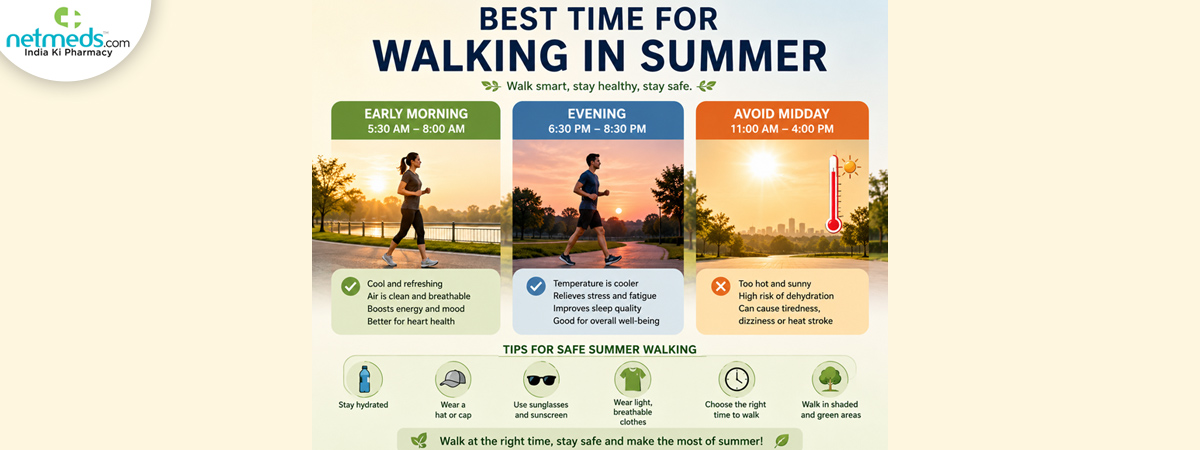
The optimal time window is 5:30 AM – 8:00 AM; for most people, early morning is the best time to walk during hot summer months. Know how science and practical evidence strongly support this window.
Cooler Temperatures
Generally, early morning temperatures are at their lowest point and cooler than peak afternoon heat. The ground and surrounding surfaces have had the entire night to cool down, meaning radiant heat, which can make conditions feel even hotter, is at its minimum.
Lower UV Index
The sun's UV radiation is lowest before 9:00 AM. The UV index typically peaks between 10:00 AM and 2:00 PM, and a high UV index does not just increase your risk of sunburn; it accelerates dehydration and places additional thermal stress on the body. Walking early keeps your UV exposure well within safe limits.
Better Air Quality
In most urban and suburban regions, air quality is at its purest in the early morning hours before peak traffic and industrial work. For people with respiratory disorders or anyone who just wants to breathe cleaner air during exercise, the early hours are considered superior.
Also Read: Want To Walk Daily? Here’s How You Get Motivated and Stay Consistent
Mental/ Metabolic Benefits
Several pieces of evidence suggest that morning exercise can improve attention, decision-making and mental well-being all through the day. In addition, walking at a fast pace in the morning may help burn fat, thereby making early morning walks effective for people to attain their fitness goals
The Second-Best Option: Evening Walks
Recommended Time is 6:30 PM – 8:30 PM
If early mornings are not possible, evening walking offers a viable and healthy alternative, provided you time it correctly.
Temperatures Have Dropped
By late evening, temperatures typically begin to fall from their afternoon peak. However, it is important to verify that the temperature has genuinely cooled, as this varies by location and heatwave conditions. A dependable rule: if the temperature is still above 30°C (86°F) at 7:00 PM, wait or shorten your walk.
Muscle Performance
Studies have shown that muscle performance, flexibility and reaction time are slightly higher in the late afternoon and early evening compared to early morning. Your core body temperature is naturally elevated at this time of day, which may mitigate the risk of injury and make walking feel more comfortable and flexible.
Wind Down Without Overdoing It
Evening walks can also support sleep quality when kept at a moderate, steady-state pace. Avoid very vigorous walking within 60–90 minutes of bedtime, as this can temporarily elevate cortisol and interfere with sleep onset.
The Time to Avoid: 10:00 AM – 4:00 PM
During peak summer heat, walking between 10:00 AM and 4:00 PM carries high risks that no amount of hydration or sunscreen can help mitigate.
During this window:
UV ray index is at its highest, increasing your risk of sunburn and heat-related skin disorders. Ground temperatures can go beyond ambient air temperature by 20°C or more, intensely increasing radiant heat.
Humidity peaks in many regions, impairing your body's ability to cool itself through sweat evaporation.
The risk of heat exhaustion is highest, particularly for older adults, those with diabetes, cardiovascular conditions, and children.
If you have to walk during these for occupational reasons, do so in shaded regions, decrease your pace, carry ample water and wear light, breathable, and UV-protecting clothing.
Summer Walking Hydration: What the Evidence Recommends
Hydration is the single most important practical factor in summer walking safety. The following evidence-based guidelines apply:
Before your walk: Drink 400–600 ml of water in the 1–2 hours before walking.
During your walk: Aim for 150–250 ml every 15–20 minutes, more in extreme temperatures.
After your walk, it is important to replenish the fluids lost with water or a refreshing natural drink.
Electrolytes: If your walks exceed 60 minutes in the heat, drinking plain water may not be sufficient. Consider a low-sugar natural electrolytes to replace sodium and potassium lost through sweat.
Avoid alcohol and caffeine immediately before a summer walk, as both accelerate fluid loss.
What to Wear for Summer Walking
Your clothing choices directly affect your body's thermoregulation. Choose:
Lightweight, moisture-absorbing fabrics that draw sweat away from the skin like polyester-nylon blends or merino wool.
Go for mild colours, which reflect rather than absorb solar radiation.
Choose loose-fitting garments that allow airflow around the body.
Wear a wide-brimmed hat to shade your face and neck.
Wear UV-protective sunglasses with full UVA/UVB coverage to safeguard your eyes.
Use broad-spectrum sunscreen SPF 30 or higher on all exposed skin and reapply every 90 minutes.
Avoid cotton in hot, humid conditions. Cotton absorbs and retains sweat, becomes heavy quickly, and can contribute to chafing and skin irritation on longer walks.
Frequently Asked Questions
Is It Safe To Walk Every Day In Summer?
Yes, provided you walk during the cooler parts of the day, early morning or evening, stay well-hydrated, and avoid extreme heat. Daily walking is one of the most beneficial habits you can maintain year-round.
How Early Is Too Early To Walk?
There is no lower limit from a safety perspective. If you prefer walking before sunrise, that is perfectly safe and carries the added benefit of even cooler temperatures and lower UV exposure.
Does Walking In The Heat Burn More Calories?
Slightly, your body expends additional energy on thermoregulation. However, the increased cardiovascular strain and dehydration risk make intentional heat exposure a poor strategy for weight loss. A comfortable, sustainable walk will consistently outperform an uncomfortable one in the long run.
Can I Walk During A Heatwave?
During a heatwave, restrict outdoor walking to the early morning (before 8:00 AM) and keep sessions under 30 minutes. On days when the temperature exceeds 38°C (100°F), indoor alternatives such as a treadmill in an air-conditioned space are advisable.
Conclusion
The best time to walk in summer is early morning, between 5:30 AM and 8:00 AM, when temperatures are at their lowest, UV radiation is minimal, and air quality is at its best. Evening walking between 6:30 PM and 8:30 PM is a sound second choice once the day's heat has dissipated. With the right timing, appropriate clothing, and consistent hydration, summer can be one of the most enjoyable and productive seasons for regular walking.
References:
https://pmc.ncbi.nlm.nih.gov/articles/PMC9566432/
Seasonal Differences in Physiological Responses to Walking in Urban Parks
Chorong Song 1, Harumi Ikei 2, Yoshifumi Miyazaki 2,*
https://www.sciencedirect.com/science/article/pii/S2214157X25000693
 Previous