


As the summer peaks, staying hydrated becomes more than just a comfort; it’s a key necessity to maintain good health status. Well, water has long been the excellent choice for quenching thirst, and drinking water is the ideal way to stay hydrated. But some people rely on electrolyte drinks, which have become quite popular for their potential to replenish minerals lost through perspiration.
(To Stay Hydrated And Maintain Fluid Balance, Shop From Our Best-Selling Electrolytes)
We all know that staying hydrated is important to keep our bodies functioning at their best, but with so many options available, it can be confusing to know what to drink.
Explore this article to unravel the differences between electrolytes and water, and determine the right choice for your health.
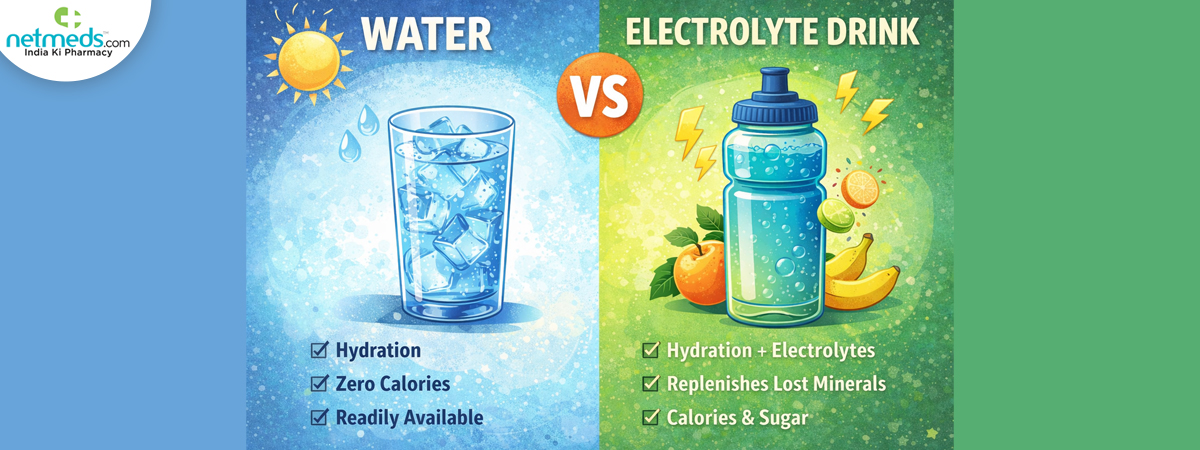
Understanding Hydration
Good hydration is not just about drinking water, but it’s about maintaining the right balance of fluids and minerals in the system. When you sweat, you don’t actually lose water, but also vital electrolytes such as sodium, potassium, magnesium and chloride. These minerals are essential for proper nerve functioning, muscle contraction and fluid balance.
What Does Water Do?
Water is the most basic and essential fluid for life. It performs incredibly well to regulate body temperature, promotes digestion and proper nutrient transport, keeps the joints well lubricated and flushes toxins out of the system.
For regular activities like sitting, light walking, or other simple daily tasks, plain water is sufficient to maintain hydration. Water is considered to be the right choice during:
Low to moderate heat exposure
Minimal sweating
Regular daily routine
Spending short periods outdoors
Also Read: Types Of Water: From Tap To Infused, Know About All 8 Variants
In these situations, your body doesn’t lose enough electrolytes to require replacement. Drinking water consistently throughout the day is adequate.
What Are Electrolytes?
Electrolytes are key minerals that carry an electric charge and help regulate several vital bodily functions. Common electrolytes include:
Potassium
Calcium
Magnesium
Electrolyte drinks like ORS, sports drinks, or natural options such as coconut water, buttermilk, help replenish both fluids and minerals lost through perspiration.
Why Electrolytes Matter in Summer?
In this scorching heat or while doing strenuous physical activity, we naturally perspire a lot. This leads to:
Loss of sodium and potassium
Fatigue and dizziness
Risk of dehydration
In these cases, drinking water alone may dilute remaining electrolytes in the body, sometimes even worsening fluid imbalances. Additionally, electrolytes are essential during:
Prolonged exposure to the hot sun.
Excessive sweating while playing any sports, exercising, or heavy labour work.
Illness with vomiting or diarrhea.
Symptoms like weakness, cramps, or dizziness.
Electrolytes help restore balance faster and more effectively in these conditions.
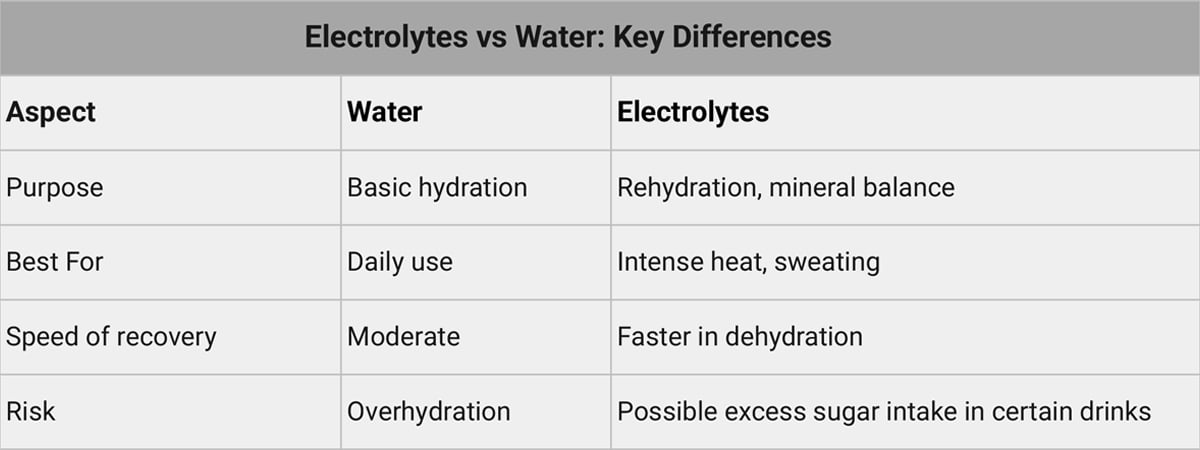
What is The Right Approach?
Well, it’s not all about going for one over the other; it's about making informed decisions at the right time. Use water as your primary hydration source throughout the day. Add electrolytes when your body is under stress from heat, sweat, or illness
Right Approach In Summer:
Water is the perfect choice from morning to evening, for a normal routine.
Prefer electrolytes after heavy sweating or outdoor exposure.
Natural Sources of Electrolytes
Instead of relying only on commercial drinks, you can choose natural sources loaded with nutrients:
Coconut water
Lemon water with a pinch of salt
Buttermilk
Fresh fruits like watermelon, bananas, and oranges
Conclusion
Water is adequate for daily hydration for most adults. However, during summer and hot climates, electrolytes become essential to prevent dehydration and maintain energy levels. Remember water keeps, and electrolytes keep you balanced, and both play a vital role, and the best choice depends upon your physical activity level, environment and how much you sweat.
References:
https://www.ncbi.nlm.nih.gov/books/NBK234935/
https://pmc.ncbi.nlm.nih.gov/articles/PMC8465972/
The Beverage Hydration Index: Influence of Electrolytes, Carbohydrate and Protein
Mindy Millard-Stafford 1,*, Teresa K Snow 1, Michael L Jones 1, HyunGyu Suh 1
Editor: Yugo Shibagaki1
 Previous