Tulsi and basil leaves are aromatic herbs that belong to the Lamiaceae family and are often confused because of their similar appearance. However, they are distinct in their flavour, aroma, and cultural significance. Lamiaceae is the mint family, a group of flowering plants that includes Tulsi and Basil, among more than 7000 species.
Tulsi, also known as “Queen of Herbs”, is a highly revered herb with green or purplish leaves, often grown in Indian households for its auspicious significance and protective qualities. While basil is a flavourful herb with glossy green, oval-shaped leaves. It is used widely in Italian, Thai and Cambodian cuisines. It offers a sweet fragrance and a mildly peppery taste.
While tulsi is widely used in Ayurveda and traditional Indian wellness practices, basil is commonly used as a culinary herb in Italian, Mediterranean and other cuisines. Understanding the difference between tulsi and basil can help you choose the right herb for your dietary and culinary needs.
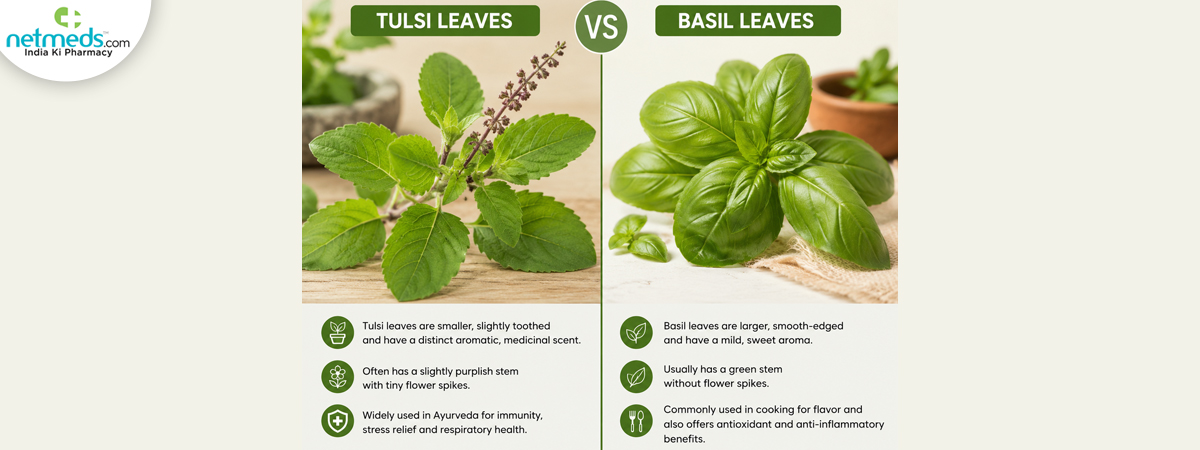
What Is Tulsi?
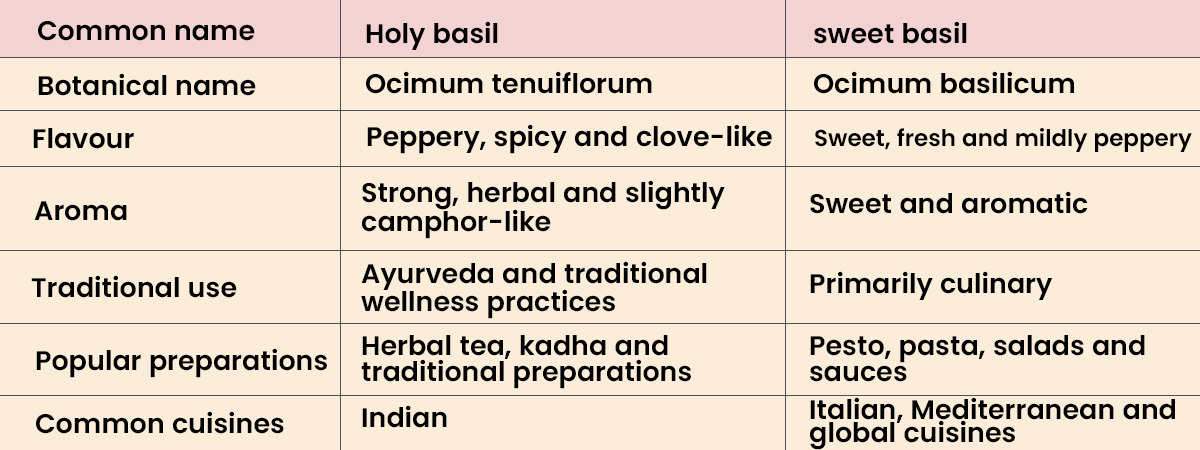
Tulsi, commonly called holy basil, is an aromatic medicinal herb scientifically known as Ocimum tenuiflorum (also referred to as Ocimum sanctum). It is widely grown in India and holds an important place in Ayurveda and traditional Indian households. The leaves have a strong, mildly peppery and clove-like flavour with a unique herbal aroma. Different varieties of tulsi, such as Rama tulsi, Krishna tulsi and Vana tulsi, are commonly found.
Tulsi is often consumed as fresh leaves, herbal tea, kadha or as an ingredient in traditional herbal formulations.
What Is Basil?
Basil, especially sweet basil, is scientifically known as Ocimum basilicum. It is one of the most popular culinary herbs and is widely used in Mediterranean and Western cuisines. It has a sweeter, milder flavour when compared to tulsi and is generally used in pesto, pasta, pizza, salads, soups and sauces.
Fresh basil leaves are green and tender, while a few varieties may have purple or reddish leaves.
Also Read: Tulsi - Immune Booster For This Monsoon Season
Tulsi vs Basil: What Is the Difference?
Although both belong to the same plant genus, they are not the same herb.
Nutritional Benefits of Tulsi Leaves
Antioxidant Plant Compounds
Tulsi contains bioactive compounds that have antioxidant activity. Antioxidants help protect cells from oxidative stress caused by free radicals and lower the risk of chronic diseases.
Respiratory Wellness
Tulsi has traditionally been used in Indian households in herbal teas and kadhas for improving respiratory health, particularly during seasonal changes.
Supports Metabolic Health
Several studies have explored the potential role of tulsi in blood glucose and lipid metabolism. However, more high-quality human research is needed before drawing firm conclusions.
Nutritional Benefits of Basil Leaves
Provides Vitamin K
Basil contains vitamin K, which plays an important role in normal blood clotting and bone health.
Loaded with Antioxidants
Basil is a storehouse of polyphenols and other plant compounds with potent antioxidant properties, making it a useful addition to a plant-rich diet.
Vitamins and Minerals
Fresh basil offers a fair amount of nutrients such as vitamin A, vitamin C, vitamin K and manganese. Since basil is generally eaten in small amounts, it should complement rather than replace nutrient-dense foods.
Uses of Tulsi Leaves
Tulsi is commonly used in Indian households in several ways:
Tulsi tea is a highly valued herbal drink. Fresh or dried leaves can be steeped in hot water. Tulsi may be combined with ingredients such as ginger and spices in traditional Kadha preparations.
Tulsi can be used sparingly to add a distinctive herbal flavour in a few traditional Indian dishes.
Tulsi is available in powders, extracts and other formulations.
Uses of Basil Leaves
Basil is primarily valued for its culinary applications.
Fresh basil is one of the main ingredients in traditional pesto.
Chopped or torn basil can be added to pasta dishes.
Fresh basil pairs particularly well with tomato-based pizzas.
Basil works well with tomatoes, mozzarella, cucumber and other fresh vegetables.
It can provide a fresh, aromatic flavour to soups and gravies.
Basil leaves can be added to infused water, lemonade and other refreshing beverages.
Can Tulsi and Basil Be Used Interchangeably?
Although tulsi and basil belong to the same genus, they do not taste the same and may not work as direct substitutes in recipes.
Sweet basil has a softer, sweeter flavour that works particularly well in pesto, pasta and tomato-based dishes. Tulsi has a stronger, spicier and more distinctive flavour, making it better suited to herbal teas and traditional Indian preparations.
If a recipe specifically calls for sweet basil, replacing it with tulsi can significantly change the flavour.
Tulsi vs Basil: Which One Is Better?
Both herbs have their unique bioactive compounds and benefits. However, the choice depends on how you use the herb and individual needs.
Choose tulsi if you want an aromatic herb traditionally used in Indian wellness practices, herbal teas, and kadhas.
Choose basil if you want a versatile culinary herb for pesto, pasta, salads, pizza and sauces.
Frequently Asked Questions
Is Tulsi The Same As Basil?
No. Tulsi, or holy basil, and sweet basil belong to the same Ocimum genus but are different species with different flavours, aromas and common uses.
Can You Eat Basil Leaves Every Day?
Fresh basil can generally be included as part of a varied diet. It is commonly used as a culinary herb in small amounts.
Can You Eat Tulsi Leaves Every Day?
Tulsi leaves are traditionally consumed in small amounts, including in herbal teas. However, concentrated tulsi extracts or supplements may have different effects and should be used with professional guidance, particularly if you take regular medication.
Is Tulsi Good For Immunity?
Tulsi contains several bioactive plant compounds and has traditionally been used for overall health and wellness. However, it should not be considered a treatment or replacement for medical care.
Conclusion
Tulsi and basil leaves may look similar, but they have several key differences. Tulsi, or holy basil, is traditionally associated with Ayurveda and Indian herbal preparations, while sweet basil is primarily used as a culinary herb. Both contain beneficial plant compounds and can add flavour and variety to a healthy diet.
References:
https://pmc.ncbi.nlm.nih.gov/articles/PMC5376420/
The Clinical Efficacy and Safety of Tulsi in Humans: A Systematic Review of the Literature
Negar Jamshidi 1, Marc M Cohen 1,*
https://pmc.ncbi.nlm.nih.gov/articles/PMC4296439/
Tulsi - Ocimum sanctum: A herb for all reasons
Marc Maurice Cohen 1,✉
 Previous