


Every part of your body, each organ, continuously works to keep itself functioning. A well-balanced diet rich in vitamins, minerals, antioxidants, protein, fibre and healthy fats assists your organ function. While no single food can detox or heal an organ in a jiffy, various factors play their part in supporting the body’s natural repair and maintenance processes. Eating a varied, nutrient-dense diet is one powerful way to help keep your organs functioning optimally. Let’s understand what else can be a part of your meal and promote a healthy lifestyle, and five foods that can be a part of your food platter for overall well- being.
Is Organ-Specific Nutrition Important?
Yes. It works quite well! Every organ performs a different function, and various nutrients have their own specific role. Our brain depends on healthy fats to maintain its structure and function, while the heart needs fibre and unsaturated fats. Similarly, calcium supports bones, protein is for muscles, while fibre and fermented foods work together to promote healthy digestion and gut health. Cruciferous veggies have fibre and plant compounds that support the body's natural metabolic processes. Instead of focusing on one single superfood, why not aim for an array of nutrients?
Also Read: What Is A Balanced Diet? Key Components, Benefits, And Sample Vegetarian Food Chart
Beyond Food, What Else Helps?
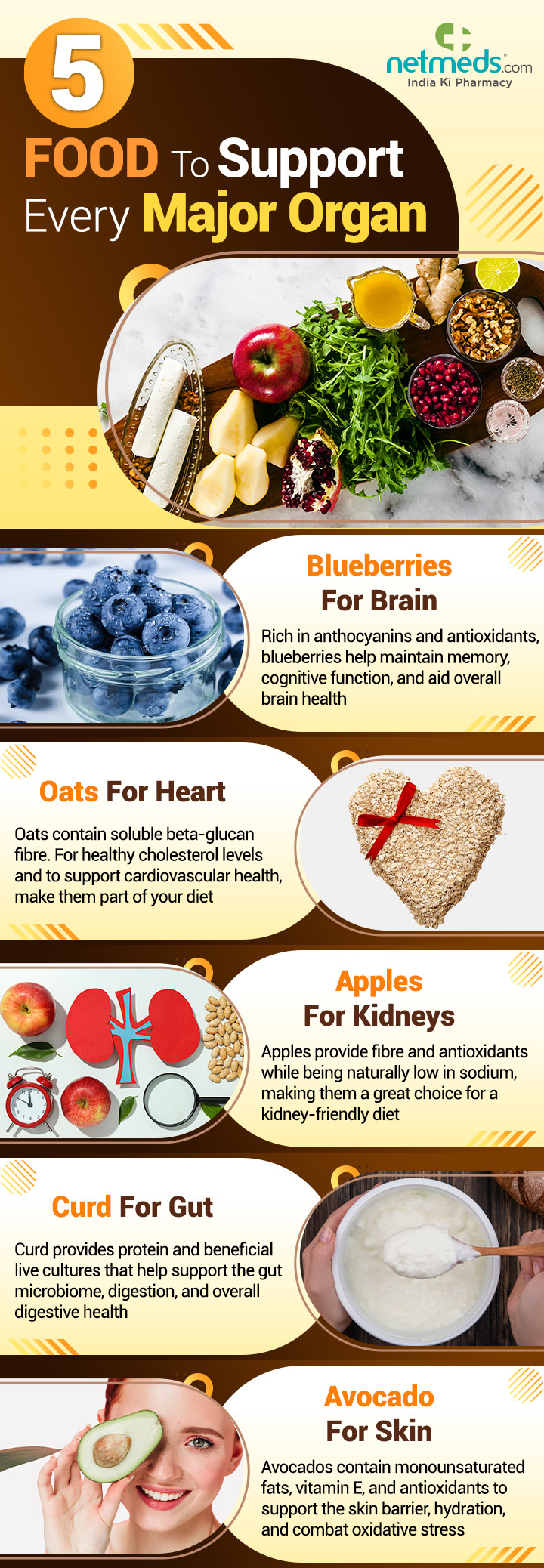
Nourishing your organs starts with building healthy eating habits rather than relying on one food. Drinking adequate water, regular physical activity, and good sleep can work together to support whole-body health and organ function. Include organ-supporting foods, reduce stress, maintain an active lifestyle, and eat well to provide your body with the nutrients it needs. You can add these foods too; they work for one specific organ in your body and may give its health a quick boost. Check the infographic to learn more:
References:
https://journalhss.com/
https://journalofcomprehensivehealth.co.in/
 Previous


