


Ever come across a tree bursting with gorgeous orange flowers in the dry landscapes of Rajasthan and wondered what it was? Meet Rohitaka (Tecomella undulata), a beautiful desert tree that has been valued not just for its striking appearance and durable timber but also for its long-standing place in Ayurveda.
Also known as Rohida, Roheda, Rohira, Desert Teak or Marwar Teak, Rohitaka is traditionally associated with the health of the liver and spleen. Its stem bark is the principal medicinal part used in Ayurveda. Traditional applications have also included digestive complaints, abdominal disorders, skin problems, urinary concerns, and certain metabolic conditions.
Interestingly, modern scientific research has started investigating several of these traditional claims. Studies have reported hepatoprotective, antioxidant, antimicrobial, anti-inflammatory, analgesic, and blood-glucose-lowering activities in experimental models. However, much of the evidence is still preclinical, meaning these findings should not be interpreted as proof that Rohitaka can treat diseases in humans.
In this comprehensive guide, let us explore what Rohitaka is, how to identify the Rohitaka plant, its medicinal qualities, Ayurvedic properties, 10 potential health benefits, dosage, side effects and important precautions.
What Is Rohitaka (Tecomella undulata)?
Rohitaka (Tecomella undulata (Sm.) Seem.) is a small to medium-sized deciduous tree belonging to the Bignoniaceae family. It is native to dry and arid regions extending from Oman and southwestern Iran through Pakistan and northwestern India. In India, it is particularly associated with Rajasthan and other dry regions of northwestern India.
The Ministry of AYUSH identifies Tecomella undulata as Rohitaka and lists its stem bark (Tvak) as the useful medicinal part. Ayurveda traditionally associates the herb particularly with Pleeha Roga, or disorders involving the spleen, and Pleehodara, while describing it as Kapha- and Pitta-pacifying.
Rohitaka has also attracted scientific interest because extracts of its stem bark contain a variety of phytochemicals and have demonstrated biological activities in laboratory and animal studies.
One important point: Rohitaka should not be confused with other plants that may share similar vernacular names. Correct botanical identification is particularly important when purchasing bark powder, extracts or Ayurvedic formulations.
How To Identify Rohitaka Plant?
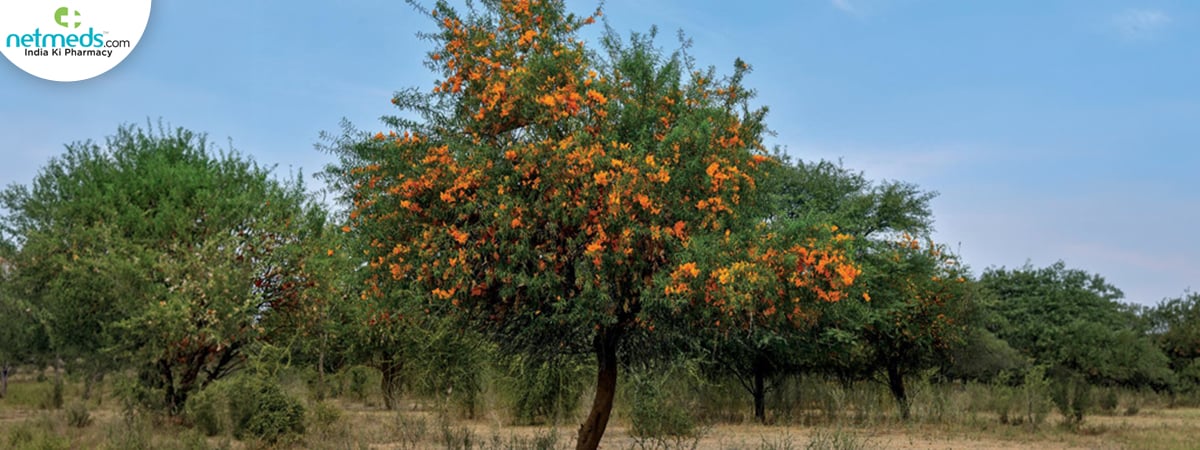
Rohitaka is an attractive tree adapted to harsh, dry environments. Its key identifying features include:
Tree: It is generally a small to medium-sized deciduous tree with a somewhat curved trunk and drooping branches. Depending on growing conditions, it can reach several metres in height.
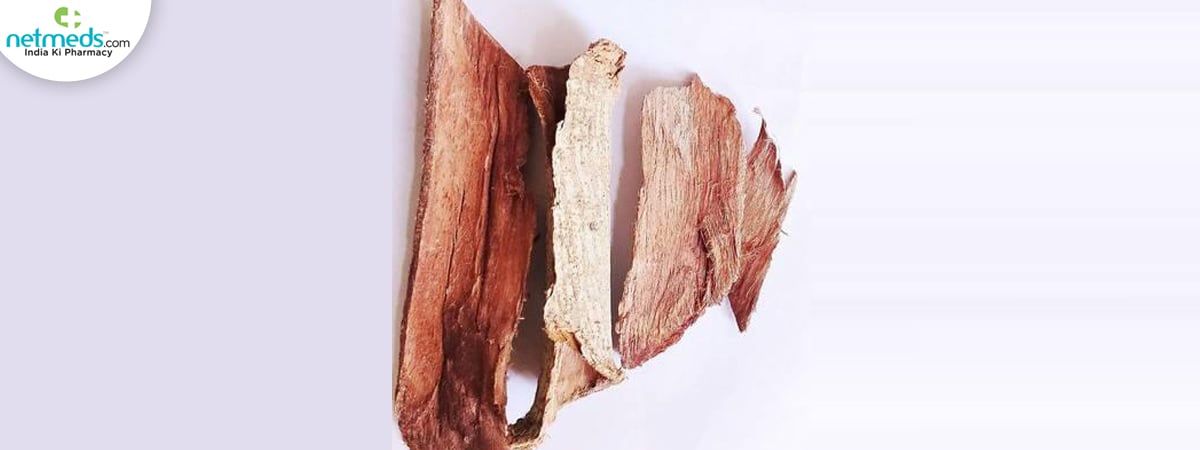
Bark: The bark is greyish-brown and develops longitudinal furrows and irregular cracks as the tree matures. The medicinal drug used in Ayurveda is primarily the dried stem bark.
Leaves: The leaves are simple, generally narrow and oblong to lance-shaped, with distinctive wavy or undulate margins.
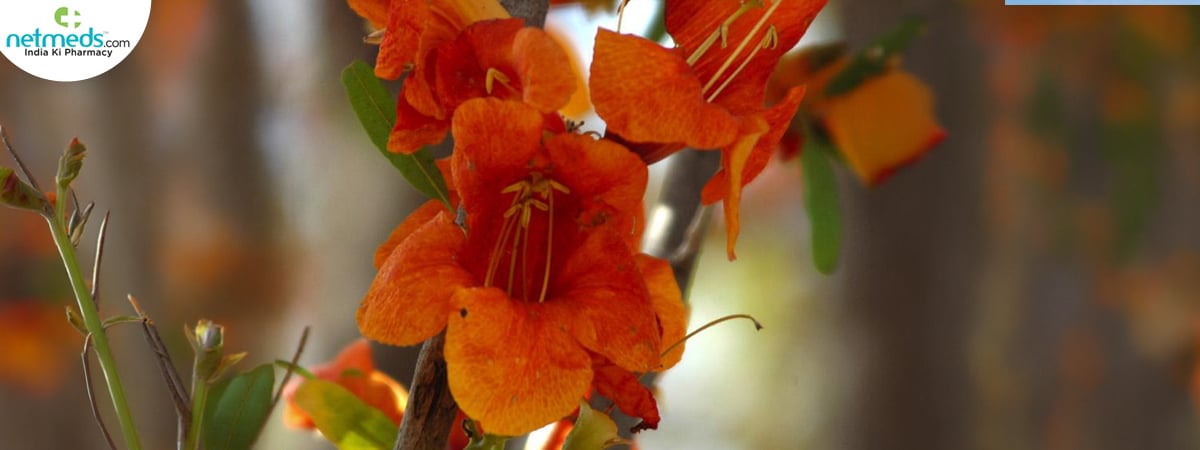
Flowers: The tree produces large, attractive tubular flowers ranging from yellow-orange to deep orange or reddish shades. The flowers usually occur in small clusters on short lateral branches.
Fruit: The fruit is a slender, slightly curved capsule containing winged seeds.
Habitat: Rohitaka is well adapted to arid and semi-arid regions, including parts of Rajasthan, Gujarat, Haryana and Punjab.
Rohitaka Synonyms And Names
Rohitaka is known by several names:
Botanical name: Tecomella undulata (Sm.) Seem.
Family: Bignoniaceae
Ayurvedic name: Rohitaka/Rohitak
Hindi: Rohida, Roheda, Rohitaka
Marathi: Rohida, Rakhtarohida
Gujarati: Rohido
Punjabi: Rohira
English: Rohituka Tree, Desert Teak, Marwar Teak
Sanskrit: Chalachhada, Dadimacchada, Dadimapuspaka
The Ayurvedic Pharmacopoeia identifies the medicinal drug Rohitaka as the dried stem bark of Tecomella undulata.
Phytochemical Profile Of Rohitaka
The medicinal potential of Rohitaka has been linked to a diverse collection of naturally occurring plant compounds.
Research has identified several classes of constituents, including:
Naphthoquinone derivatives: Compounds such as lapachol-related constituents have been reported from the bark and investigated for biological activity.
Iridoid glucosides: Compounds including tecomelloside and related glycosides contribute to the plant's phytochemical profile.
Flavonoids: Flavonoid compounds such as quercetin have demonstrated antioxidant and other biological activities in experimental research.
Phytosterols: β-sitosterol and related sterols have been reported in Rohitaka.
Triterpenoids: These compounds have also been identified and may contribute to some of the plant's pharmacological effects.
Phenolic compounds: Phenolic metabolites are associated with antioxidant activity and may help explain some traditional applications.
Fatty acids and their derivatives: Several lipid-related compounds have been identified in different plant parts.
The exact chemical composition can vary depending on the plant part, geographical origin and extraction method.
Medicinal Qualities Of Rohitaka
Traditional Ayurvedic use and experimental research suggest that Rohitaka may possess several potentially useful medicinal properties:
Hepatoprotective: May help protect liver cells against certain forms of experimental injury.
Antioxidant: May help counter oxidative stress.
Anti-inflammatory: Extracts have demonstrated anti-inflammatory potential in experimental studies.
Antimicrobial: Laboratory research has reported activity against certain microorganisms.
Analgesic: Experimental studies suggest potential pain-relieving activity.
Antihyperglycaemic: Leaf extracts have demonstrated glucose-lowering activity in diabetic animal models.
Metabolic-supportive: Experimental research has investigated possible effects on cholesterol, triglycerides and metabolic health.
Wound-supportive: Traditional medicine has used the bark for certain wound and skin-related applications.
Spleen-supportive: Ayurveda traditionally considers Rohitaka particularly useful for spleen-related disorders.
Digestive-supportive: Traditional applications include abdominal and digestive complaints.
Importantly, these properties should be viewed as traditional uses or research findings, not established treatments for medical conditions.
Rohitaka Ayurvedic Properties
The Ayurvedic properties of Rohitaka are described through the classical Rasa Panchaka framework.
Rasa (Taste): Katu (pungent), Tikta (bitter), Kashaya (astringent)
Guna (Qualities): Laghu (light), Ruksha (dry)
Virya (Potency): Shita (cooling)
Vipaka (Post-digestive effect): Katu (pungent)
Dosha action: Traditionally described as Kapha-Pitta shamak.
Karma: Rochana, Saaraka and particularly Pleehaghna, reflecting its traditional association with appetite, bowel movement and spleen-related disorders.
Useful part: Stem bark.
The Ministry of AYUSH's Ayusoft database specifically lists Rohitaka as Kapha- and Pitta-reducing, with a special action on spleen disorders.
These traditional descriptions belong to the Ayurvedic framework and should not be interpreted as direct equivalents of modern pharmacological classifications.
10 Potential Health Benefits Of Rohitaka
Supports Liver Health
One of the most widely researched Rohitaka benefits is its potential role in supporting liver health. Rohitaka stem bark has traditionally been used in Ayurveda for liver-related complaints. Modern experimental research has also investigated its hepatoprotective effects. In animal studies, Tecomella undulata extracts reduced several markers of liver injury and improved antioxidant parameters in chemically induced liver damage. Another study found that certain stem-bark fractions and betulinic acid showed protective effects against experimentally induced hepatocyte damage.
However, these are laboratory and animal findings. Rohitaka should not be considered a substitute for medical treatment of hepatitis, fatty liver disease, cirrhosis or other liver conditions.
Also Read: Can Herbs Help Your Liver Rejuvenate? Here Are Top 5 Recommendations
Supports Spleen Health
Ayurveda gives Rohitaka a particularly interesting place among herbs traditionally used for spleen-related disorders. The Ministry of AYUSH lists Pleehaghna as its specific Ayurvedic action and indicates it for Pleeha Roga and Pleehodara. Experimental research has also explored the effects of Rohitaka stem-bark extracts on spleen-related parameters in animal models. If you have an enlarged spleen, abdominal swelling or unexplained pain beneath the left ribs, however, professional medical evaluation is essential rather than self-treating with herbs.
Provides Antioxidant Support
Oxidative stress occurs when reactive molecules overwhelm the body's antioxidant defences. Plant compounds such as phenolics and flavonoids may help neutralize these reactive molecules. Rohitaka contains several phytochemical groups associated with antioxidant activity, and experimental research has reported improvements in oxidative-stress markers following treatment with certain extracts. This makes Rohitaka an interesting subject for research into cellular protection, although human clinical evidence remains limited.
Helps Modulate Inflammation
Inflammation is an essential defence mechanism, but excessive or persistent inflammation can contribute to tissue damage and chronic disease. Various extracts and compounds from Tecomella undulata have demonstrated anti-inflammatory potential in experimental research. Its antioxidant constituents may also indirectly contribute to controlling oxidative processes associated with inflammation. Still, more human studies are required before Rohitaka can be recommended as an anti-inflammatory treatment.
Manages Blood Glucose Levels
An experimental study investigated an ethanolic leaf extract of Tecomella undulata in rats with chemically induced type 2 diabetes. The extract produced significant reductions in blood glucose during glucose-tolerance testing and influenced several metabolic and antioxidant parameters. These findings are encouraging but remain preclinical. People taking diabetes medicines should never replace or adjust their medication with Rohitaka without medical supervision.
Also Checkout: Diabetes: 5 Incredible Herbs For Controlling Blood Sugar Levels- Infographic
Fosters Healthy Metabolism
Traditional Ayurvedic applications include metabolic complaints, and modern research has begun examining whether Tecomella undulata may influence metabolic health. Experimental studies have investigated its effects on body weight, insulin resistance, cholesterol and triglycerides. In a mouse model of diet-induced metabolic dysfunction and NASH, Tecomella undulata improved several metabolic and liver-related parameters. While fascinating, these findings cannot yet establish that Rohitaka treats obesity, fatty liver or metabolic syndrome in humans.
Also Read: 5 Best Supplements To Boost Metabolism: Benefits, Uses, And Side Effects
Offers Antimicrobial Activity
Laboratory studies have found antimicrobial activity in certain Tecomella undulata extracts. Earlier pharmacognostical research specifically investigated the antimicrobial properties of the stem bark, while later reviews have documented antibacterial and broader antimicrobial potential. This may partly explain why Rohitaka has traditionally been used for certain skin and infectious complaints. However, an antimicrobial effect in a laboratory dish does not mean that Rohitaka can replace antibiotics or antifungal medicines when a clinically diagnosed infection requires treatment.
Protects Cells From Oxidative Damage
Rohitaka's phytochemical profile includes flavonoids, phenolic compounds, quinones, terpenoids and other constituents that have attracted pharmacological interest. Some experimental studies suggest that these compounds may help reduce lipid peroxidation and improve endogenous antioxidant defences. This may be particularly relevant to the plant's investigated liver-protective effects. More clinical research is needed to determine whether these laboratory effects translate into meaningful health benefits in people.
Treats Wounds
Rohitaka bark has a history of traditional use for certain skin disorders, wounds and related complaints. The plant's antimicrobial, antioxidant and anti-inflammatory activities have been proposed as possible explanations for some of these traditional applications. Reviews have documented traditional use for eczema, skin infections and wound healing.
For broken skin, infected wounds or persistent rashes, however, properly diagnosed and medically appropriate treatment remains essential.
Relieves Pain
Traditional systems of medicine have used Rohitaka for certain painful and inflammatory conditions. Experimental research has also reported analgesic activity associated with Tecomella undulata extracts. This suggests that the plant may contain compounds capable of influencing pathways involved in pain and inflammation.
That said, evidence is not strong enough to recommend Rohitaka as a replacement for established pain-management treatments.
How To Use Rohitaka?
The stem bark is the principal medicinal part of Rohitaka in Ayurvedic practice.
It may be encountered as:
Rohitaka powder: Dried bark is powdered and used in traditional formulations.
Decoction: Bark may be processed into a traditional herbal decoction under practitioner guidance.
Ayurvedic formulations: Rohitaka may be incorporated into classical or proprietary herbal preparations, particularly those intended for liver, spleen or digestive support.
Extracts: Concentrated extracts are also available, but their potency can vary considerably.
Because bark extracts can differ substantially in concentration, a raw-bark powder should not be considered equivalent to a standardized extract.
Dosage Of Rohitaka
There is no universally established modern clinical dosage for Rohitaka because robust human clinical trials are limited.
The Ministry of AYUSH Ayusoft database lists a traditional dose of 1–3 masha for Rohitaka. Depending on the traditional weight conversion used, this is approximately around 1–3 g, but dosage should be interpreted in the context of the specific Ayurvedic preparation and practitioner guidance.
Therefore:
Rohitaka powder/bark: Use only according to a qualified Ayurvedic practitioner's recommendation or the validated product label.
Decoction: Follow the preparation and dosage prescribed by a practitioner.
Extracts: Follow the manufacturer's standardized dosage.
Children: Do not administer medicinal doses without professional guidance.
Pregnancy and breastfeeding: Avoid medicinal use unless specifically recommended by a qualified healthcare professional.
Long-term use: Should be supervised rather than continued indefinitely on your own.
Note: More is not necessarily better when it comes to medicinal herbs.
Potential Side Effects Of Rohitaka
Detailed human safety data for Rohitaka remain limited. Preliminary toxicity research has suggested reasonable safety at certain experimental doses, but this does not establish complete safety for long-term human consumption.
Potential problems may include:
Stomach discomfort or digestive upset
Nausea and loose stools, particularly with excessive intake
Allergic reactions in sensitive individuals
Interactions with medicines because concentrated extracts may have stronger biological effects
Unknown effects from prolonged, high-dose consumption
If you develop rash, swelling, severe abdominal discomfort, vomiting, breathing difficulty or any unusual symptoms after taking Rohitaka, discontinue use and seek medical advice.
Rohitaka Precautions
Liver disease: Despite its traditional liver-supportive reputation, people with hepatitis, cirrhosis, fatty liver or abnormal liver enzymes should consult a healthcare professional before using Rohitaka.
Diabetes: Experimental studies suggest glucose-lowering activity, so people taking diabetes medication should use caution because combining agents with glucose-lowering effects could potentially affect blood sugar.
Pregnancy and breastfeeding: Safety has not been adequately established. Avoid medicinal doses unless specifically prescribed by a qualified professional.
Children: Avoid self-medication in children.
Medication use: If you regularly take prescription medicines, discuss Rohitaka with your doctor or pharmacist before using concentrated preparations.
Surgery: Inform your healthcare team about herbal supplements before planned surgery.
Authenticity: Purchase only properly identified Rohitaka products because botanical misidentification can result in the wrong plant being consumed.
Conservation: Tecomella undulata has been described as an endangered species, so responsibly sourced plant material is especially important.
Conclusion
Rohitaka, botanically identified as Tecomella undulata, is a fascinating Ayurvedic medicinal tree with a particularly strong traditional connection to liver and spleen health. Its stem bark is the principal medicinal part, and Ayurveda describes it as pungent, bitter and astringent, with light and dry qualities and a cooling potency.
Modern research has added another layer of interest, with experimental studies investigating its hepatoprotective, antioxidant, anti-inflammatory, antimicrobial, analgesic, antihyperglycaemic and metabolic effects.
But here is the important bit: promising laboratory and animal research is not the same as proven clinical efficacy. Human evidence for many Rohitaka benefits remains limited, and there is still much to learn about standardized dosing, long-term safety and herb-drug interactions.
So, if you are considering Rohitaka for a specific health concern, think of it as a traditional medicinal herb that deserves informed and supervised use, rather than a quick natural cure. Choosing an authenticated preparation and consulting a qualified Ayurvedic practitioner or healthcare professional can help you use it more safely.
References:
- Ministry of AYUSH – Ayusoft: Rohitaka (Tecomella undulata)
- Kew Science – Plants of the World Online: Tecomella undulata
- Frontiers/PMC – Ethnomedicinal, Phytochemical, Pharmacological and Conservation Studies of Tecomella undulata
- PubMed – Hepatoprotective Potential of Tecomella undulata Stem Bark
- PubMed – Hepatoprotective Activity of Tecomella undulata Stem Bark
- PubMed – Anti-Hyperglycemic and Antioxidant Potential of Tecomella undulata
- PubMed – Tecomella undulata in Experimental NASH
 Previous