


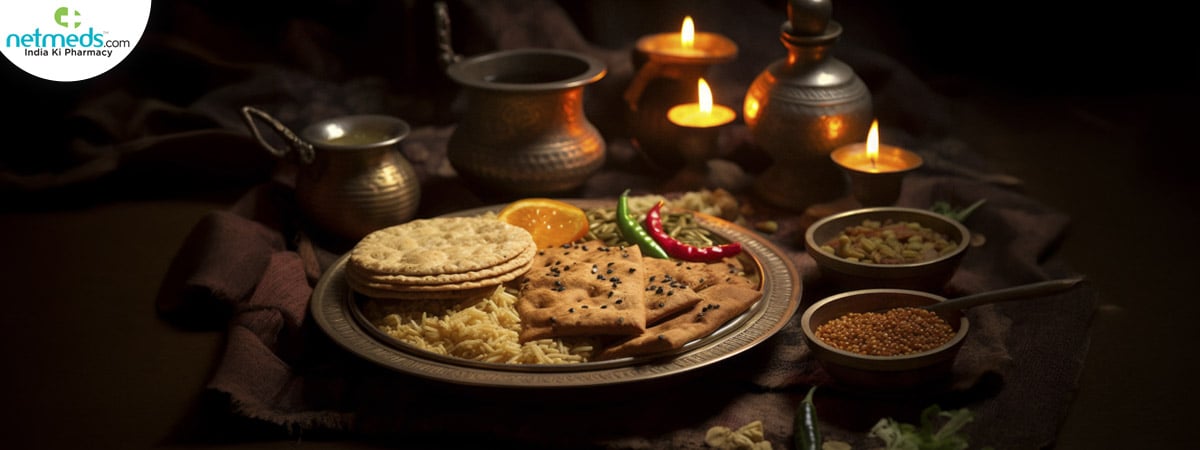
Navratri is a time of devotion, prayer, and traditional fasting that millions of people in India celebrate. During this nine-day festival, many people avoid foods like grains, pulses, onions, and garlic when preparing their meals. They use foods that are allowed by their family traditions. From Kuttu rotis and Samak khichdi to fruits and yoghurt, the meals during fasting can be very varied. Planning your meals before the festival starts can make fasting easier. Help you eat a balanced diet. Keeping the ingredients in your kitchen can also make it easier to avoid eating too many fried snacks and sweets.
(Shop From Our Wide Range Of Health Supplements)
Why Do People Fast During Navratri?
Fasting during Navratri has a religious and cultural meaning. Many people do it to show their devotion to Goddess Durga, to practice self-control, and to spend time on prayer and spiritual thoughts. Fasting practices can be different for everyone. Fasting does not mean your food is automatically healthy. The choices you make, how much you eat, how you. How much you drink all affect the quality of your meals. Some people eat fruits and milk while others include flours, millets, vegetables, and dairy. Some fast partially while others fast strictly. The foods that are allowed can be different based on where you live, your family, and your religious beliefs. From a nutrition point of view, the quality of the food you eat matters. A fasting diet that is mostly made of fried potatoes, puris, and sweets may give you energy. Not enough nutrients. It is also not true that fasting automatically cleanses your body. Your liver and kidneys already work to process and remove waste from your body.
Also Read: What Is A Balanced Diet? Key Components, Benefits And Sample Vegetarian Food Chart
Nine Foods to Have in Your Kitchen During Navratri Fasting
Here are nine foods to have in your kitchen during Navratri along with some tips for using them.
Buckwheat Flour
Kuttu atta, popularly known as kuttu aata, is an ingredient in many North Indian fasting meals. Even though it is called wheat, buckwheat is not a typical wheat. It is gluten-free and can be used to make rotis, puris, and other dishes. Buckwheat gives you carbohydrates, fibre, and plant-based protein along with minerals like magnesium. It can help you eat varied meals when you can't use wheat flour.
Barnyard Millet (Samak Rice)
Barnyard millet is often called Samak rice. It is not rice but a type of millet. It is used in Navratri fasts as a substitute for rice. You can use it to make khichdi, pulao, porridge, or serve it with yoghurt. It gives you carbohydrates for energy. Also adds fibre and minerals. Eating Samak rice with a food that has protein, like yoghurt or paneer, makes the meal more balanced than eating the millet.
Amaranth Flour (Rajgira Atta)
Amaranth is an ingredient for fasting meals. Its flour can be used to make rotis, parathas, pancakes, and sweets depending on what your fasting allows. Amaranth provides carbohydrates, plant-based protein, and minerals like iron and magnesium. It is an alternative to buckwheat flour and helps you avoid repeating the same meals. To make the meal more balanced, eat this grain with yoghurt or a paneer dish. Adding nuts and seeds can also help you get protein and healthy fats.
Potatoes
Potatoes are one of the flexible foods used during Navratri. They can be boiled, steamed, roasted, mashed, or added to fasting foods. Potatoes give you carbohydrates, potassium, and vitamin C. How nutritious they are depends on how you cook them. Fried potato chips, puris,s and patties have more fat than boiled or roasted versions. You don't have to avoid these foods, but enjoying them in small amounts helps keep meals balanced.
Fresh Fruits
Apples, bananas, oranges, papayas, pears, rs and other seasonal fruits are good choices during Navratri. Fruits give you vitamins, minerals, water, and fibre. Whole fruits are better than juice because they keep their fibre and are more filling. You can make a fruit bowl, add chopped fruit to yoghurt, or eat a banana as a snack between meals. Eating fruits adds variety in taste and nutrients.
Dairy Products
Milk, plain yoghurt, paneer, and other allowed dairy products can add protein and calcium to your meals. Milk can also be added to porridge. Yoghurt goes well with Samak rice while paneer can be used in curries. Choose unsweetened versions to avoid extra sugar. People who can’t have lactose may want to try lactose-free options if they are allowed by their fasting rules.
Nuts and Seeds
Almonds, walnuts, cashews, peanuts, and allowed seeds can be great to have in your Navratri kitchen. Nuts give you fats, protein, and minerals. Almonds have vitamin E, while walnuts have omega-3 fatty acids. A small amount can be added to yoghurt, fruit bowls, or porridge. Nuts can also be eaten as a snack between meals.
Rock Salt (Sendha Namak)
Rock salt or Sendha namak is used in Navratri fasting recipes instead of regular salt. It can be used to flavour potatoes, Samak rice, curries,s and curd. Rock salt is not a special health food or a salt-free choice. It is mostly sodium chloride, and much sodium can raise blood pressure for some people. Another thing to remember is iodine. Unlike salt, rock salt is not usually fortified with iodine. The World Health Organization suggests that salt used for food should be iodised to help prevent iodine deficiency.
Ghee and Cooking Oils
Ghee and suitable oils are often used to cook fasting meals. A little ghee can make fasting food taste better. Fats help your body absorb vitamins and give you energy. Ghee has a lot of saturated fat, so it’s best to use it in moderation. Oils with fats can be a good choice for everyday cooking. The health of your meal depends more on the ingredients, how you cook, and how much you eat than just using one type of fat.
Tips for Eating Well During Navratri Fasting
A little planning can help you eat well and feel good during the festival. Here are some tips:
Plan your meals: Keep the foods that are allowed in your kitchen, so you are less likely to skip meals or eat fried snacks.
Stay hydrated: Drink water often unless your doctor says otherwise.
Eat a variety: Mix allowed grains or millets with fruits, dairy, nuts, and other foods.
Watch how much you eat: Fried potatoes and sweets can be high in calories and added fats.
Listen to your body: If you feel weak, dizzy, or have problems, don't ignore it.
Also Read: Kuttu Atta vs Singhara Atta: Which Is Healthier? Nutrition, Benefits And Uses
Frequently Asked Questions
What foods can we eat during Navratri fasting?
Common options include fruits, milk, yoghurt, nuts, potatoes, buckwheat flour, amaranth flour, ur and Samak rice. What you can eat depends on your region, family traditions, and the type of fast you are doing.
Can we eat rice during Navratri fasting?
Regular rice is avoided in Navratri fasts. Samak rice, which is barnyard millet, is often used instead. Check the rules of your fast.
Is it okay to eat potatoes during Navratri?
Yes, potatoes are commonly used during Navratri. They can be boiled, roasted, mashed, or made into a curry. Using an amount of oil or ghee can help keep meals balanced.
How can I stay energized during Navratri fasting?
Choose varied meals that include allowed sources of carbohydrates, foods that are rich in protein and healthy fats. Drink water and do not depend only on fried foods or sweets. If you feel weak or dizzy all the time, think again about your fasting plan. Get help from a doctor.
Is sendha namak better for you than table salt?
Not really. Both have sodium chloride. Eating too much can raise blood pressure. Sendha namak does not always have iodine, while iodised table salt gives iodine, which is needed for the thyroid to work properly.
Conclusion
Navratri fasting is a chance to respect traditions while also thinking about nutrition and health. Having the above-mentioned foods and the right cooking fats in your kitchen can make cooking easier. Pick a mix of allowed foods, use cooking methods that're better for you when you can, and watch how much you eat and how much water you drink. Most of all, change your fasting habits to fit your health needs so that your religious practice stays good for your body. People with diabetes, kidney disease or other long-term health issues, as well as pregnant or breastfeeding women, should talk to a doctor before doing a strict or long fast.
References:
https://mool.health/blog/health/what-can-we-eat-during-navratri-fasting
https://pmc.ncbi.nlm.nih.gov/articles/PMC5240068/
Pragmatic dietary advice for diabetes during Navratris
Lovely Gupta 1, Deepak Khandelwal 1, Rajiv Singla 2, Piyush Gupta 3, Sanjay Kalra 4,✉
Akbani MF, Saleem M, Gadit WU, Ahmed M, Basit A, Malik RA. Fasting and feasting safely during Ramadan in the patient with diabetes. Pract Diabetes Int. 2005;22:100–4
Sircar AR, Sircar S, Sircar J, Misra S. Patients’ concepts and attitudes about diabetes. J Diabetes Complications. 2010;24:398–403. doi: 10.1016/j.jdiacomp.2009.07.004.
Almalki MH, Alshahrani F. Options for controlling type 2 diabetes during Ramadan. Front Endocrinol (Lausanne) 2016;7:32. doi: 10.3389/fendo.2016.00032.
Al-Arouj M, Assaad-Khalil S, Buse J, Fahdil I, Fahmy M, Hafez S, et al. Recommendations for management of diabetes during Ramadan: Update 2010. Diabetes Care. 2010;33:1895–902. doi: 10.2337/dc10-0896.
Elhadd TA, Al-Amoudi AA. Recommendations for management of diabetes during Ramadan. Diabetes Care. 2006;29:744–5. doi: 10.2337/diacare.29.03.06.dc05-2102.
https://maxprotein.in/blogs/health-nutrition/healthy-vs-traditional-navratri-fasting-foods-which-is-better?srsltid=AU7gw4V4CIyX0tQItgAVMc2laa_c-aqxSdpXE9cI_JxHl4m5GWMqbENo
 Previous


