Navratri fasting has begun, and during these nine days of festivity, our regular diet changes dramatically. From the usual dal-chawal, we tend to shift to vrat-friendly foods like kutti rotis, sabudana kichadi, potatoes, fruits, and dairy products during Navratri fasting. However, these food choices may not provide enough protein to meet daily requirements.
During nine days of Navratri fasting, it is essential to meet protein needs of the body for maintaining muscle mass, triggering immunity, keeping you satiated, and promoting body tissue repair. Worry not; here we have listed the best sources of fasting-friendly protein foods, while also keeping with your traditional Navratri meals.
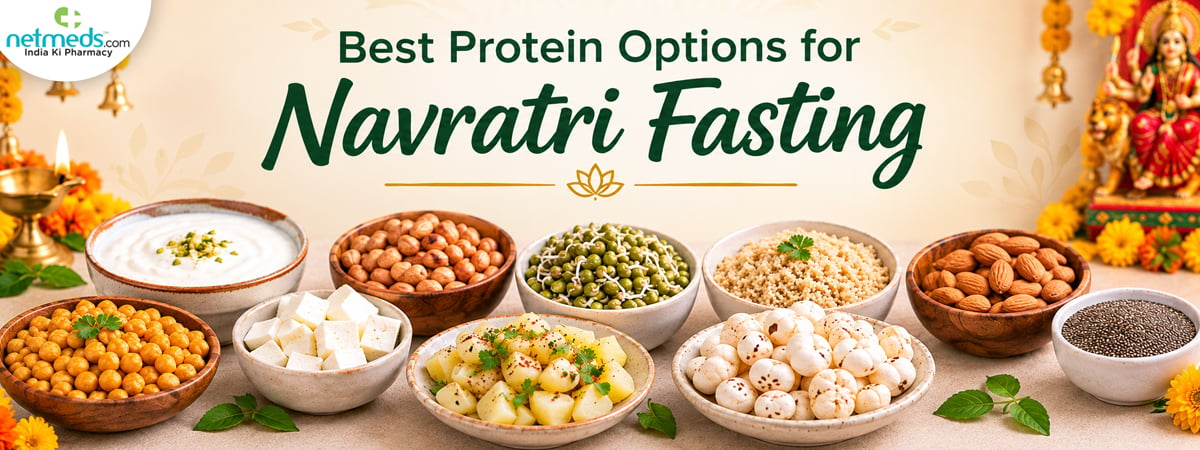
Why Is Protein Important During Navratri Fasting?
Protein, the building block of the body, plays a vital role in several important bodily processes and functions. Adequate intake of protein helps in muscle repair, enzyme and hormone production, improves immune function, and maintains healthy skin and hair. Adequate protein intake during Navratri fasting can keep you satiated, reduce unwanted hunger pangs, and prevent unwanted binge eating. This is particularly valuable for those people who wish to maintain their weight during the festive season.
For all healthy adults, the recommended protein intake is about 0.8-1 gram /kg of body weight/ per day. However, individual needs can vary depending on age, physical activity, health conditions, and other factors.
Protein-Rich Foods to Eat During Navratri Fasting
Milk and Curd
Milk, curd, and other allowed dairy products are best sources of high-quality protein. Additionally, dairy products offer calcium and vitamins A, D, which support bone health and improve overall well-being.
Also Read: Navaratri Vrat/ Fasting Guide: Significance and Healthy Food Ideas for Boosting Energy
Ways To Add
Include a bowl of plain curd with your fasting meal, drink a glass of milk, or prepare a nourishing curd-based drink without excessive added sugar to meet your protein needs.
Paneer
Paneer is a good quality protein source and versatile ingredient that holds an important place in most fasting-friendly meals. It also provides calcium, phosphorus, and other essential nutrients that promote bone mass and overall health.
Ways To Add
Make mildly spiced paneer curry, tikka, or paneer paratha. Use minimal amounts of oil or ghee.
Peanuts
Peanuts supply ample reserves of plant-based protein, healthy unsaturated fats, dietary fiber, and several micronutrients. It is a main vrat food; however, they are energy-dense, so portion control is important, particularly if weight management is your goal.
Ways To Add
Munch on a handful of roasted peanuts as a fasting-friendly snack or add them to your salads or sabudana khichdi to boost nutritional value.
Nuts and Seeds
Almonds, pistachios, pumpkin seeds, and other permitted nuts and seeds are rich in protein, healthy fats, and minerals, and help you meet your protein needs. They are useful additions to a balanced, nutritious fasting diet, but you shouldn't rely on them as your only protein source.
Ways To Add
Combine nuts and seeds with curd, milk or fruit mixes, based on your fasting meal regimen.
Buckwheat (Kuttu)
Buckwheat, also known as kuttu, is a gluten-free pseudocereal that delivers plant protein, fiber, and minerals. Although it contains a fair amount of protein, kuttu flour alone may not meet your daily protein needs.
Ways to add
Kuttu chilla or rotis are a healthier choice or pair kuttu with curd or paneer to make the meal more wholesome and protein-loaded.
Amaranth (Rajgira)
Amaranth is another fasting-friendly option that supplies plant protein, fiber, and minerals. It also supplies key micronutrients that can complement other protein sources.
Ways To Add
Prepare rajgira porridge with milk or make rajgira chilla and serve it with curd, if permitted.
How to Plan Protein-Rich Meals During Navratri Fasting
The best way to boost your protein intake during Navratri fasting is to add a good source of protein in every main meal rather than just relying mainly on starch-laden foods.
Breakfast: Amaranth porridge prepared with milk, or kuttu chilla served with curd.
Mid-morning snack: A glass of milk or a handful of nuts.
Lunch: Paneer curry with kuttu roti and raita.
Evening snack: Badam milk.
Dinner: Paneer with permitted vegetables, or a singhara flour roti with paneer gravy.
Important: Modify the portions according to your appetite, energy needs, and dietary restrictions. Ensure you are well hydrated throughout the day unless you have any fluid restriction advised by your physician.
Can You Meet Your Protein Requirements During Navratri Fasting?
Yes, most people can easily meet their protein needs during Navratri fasting by combining permitted dairy products, paneer, nuts, seeds, and protein-containing fasting grains.
People who avoid dairy and pulses during fasting may need to plan their meals more carefully. Buckwheat, amaranth, nuts, and seeds can only minimally contribute to protein, but adequate intake may require thoughtful portions and right pairing.
Those with kidney disease or other medical conditions that affect protein requirements should seek personalised dietary advice. Diabetics who are fasting should also discuss meal timing, medication adjustments, and safe fasting practices with their dietitian.
Frequently Asked Questions
Which foods are rich in protein during Navratri fasting?
Milk, curd, paneer, peanuts, almonds, seeds, rajgira, and kuttu can contribute protein, depending on your fasting rules.
Is paneer allowed during Navratri fasting?
Yes, paneer is commonly included in many Navratri fasting diets and provides high-quality protein.
Is sabudana a good source of protein?
No. Sabudana is mainly a carbohydrate-dense source and contains little protein. Pair it with peanuts, curd, or paneer to boost your meal's protein content.
How much protein should I have during Navratri?
Most healthy adults need approximately 0.8–1 gram of protein per kilogram of body weight daily, but individual needs may vary.
Conclusion
Meeting your protein needs during Navratri fasting doesn't mean giving up traditional foods. By combining permitted foods such as milk, curd, paneer, peanuts, rajgira, and kuttu with balanced portions of fruits and vegetables, you can make your fasting meals more nutritious. Focus on adequate protein, sensible portions, and hydration rather than extreme dietary restriction to support your health throughout the festive season.
References:
https://nnwa.in/blog/navratri-fasting-diet-plan/
file:///C:/Users/50062973/Downloads/ayushadmin,+ayush_12322.pdf
Lochtefeld, J. G. (2002). The Illustrated Encyclopedia of Hinduism (Vol. 2, p. 470). Rosen,Publishing Group.
Lad, V. (2002). Textbook of Ayurveda: A complete guide to ancient Indian wisdom for modern living. The Ayurvedic Press.
Frawley, D. (2000). Ayurveda and the Mind: The healing of consciousness. Lotus Press.
Upadhyay, Y., Eds., Vaghbhata Astanghrdayam with Vidyotini commentary of Kaviraja Atridev Gupta, Sutra sthana Chapter 3, Verse No.25 Varanasi: Choukhamba Prakashan 2009
Charaka Samhita, with Charaka Chandrika Hindi commentary, by Dr Brahmanand Tripathi and Dr Pandey Ganga Sahay, Sutra Sthana Chapter 6, Verse No. 22, Chaukhamba Surbharti Prakasan, 2007
Charaka Samhita, with Charaka Chandrika Hindi commentary, by Dr Brahmanand Tripathi and Dr
Pandey Ganga Sahay, Sutra Sthana Chapter 6, Verse No. 23, Chaukhamba Surbharti Prakashan, 2007
Patterson, R. E., & Sears, L. D. (2017). Metabolic Effects of Intermittent Fasting. Annual Review of Nutrition, 37, 371-393.
Longo, V. D., & Mattson, M. P. (2014). Fasting: molecular mechanisms and clinical applications. Cell Metabolism, 19(2), 181-192.
Anton, S. D., Moehl, K., Donahoo, W. T., Marosi, K.,Lee, S. A., Mainous, A. G., & Mattson, M. P. (2018). Flipping the metabolic switch: Understanding and applying the health benefits of fasting. Obesity,
26(2),254–268.https://doi.org/10.1002/oby. 22065
Muller, M., Hernandez, M. A. G., Goossens, G. H., Reijnders, D., Holst, J. J., Jocken, J. W. E., & Blaak, E.E. (2021). Circulating but not faecal short-chain fatty acids are related to insulin sensitivity, lipolysis and GLP-1 concentrations in humans.
 Previous