Navratri is one of the most important Hindu festivals celebrated in India, marked by nine days of fasting, devotion, and cultural rituals. The nine days are dedicated to the worship of Maa Durga, detoxification, and spiritual cleansing of the mind and body. But the festival's significance extends beyond religious practices and Navaratri fasting food. During the fasting days, most people replace regular wheat flour with flours like kuttu atta (buckwheat flour) and singhara atta (water chestnut flour). These flours are rich in nutrients and are naturally gluten-free, which is used to prepare rotis, puris, cheelas, and other delicious fasting dishes.
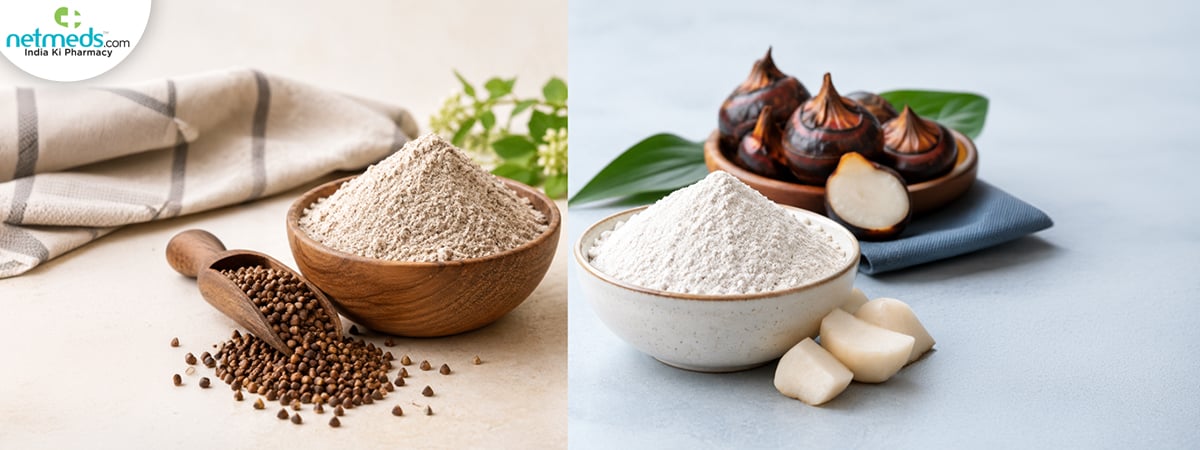
But when it comes to kuttu atta vs singhara atta, which one is healthier? Both flours deliver immense nutritional benefits, but their nutrient profiles are different. Understanding their nutrient content can help you choose the right option based on your dietary needs.
What Is Kuttu Atta?
Kuttu atta, also known as buckwheat flour, is made by grinding the seeds of the buckwheat plant. Regardless of its name, buckwheat is not related to wheat and is naturally gluten-free. This flour is popularly used during fasting as it offers carbohydrates along with a good source of plant-based protein, dietary fiber, and minerals.
Kuttu flour is popular during fasting because it provides carbohydrates along with plant-based protein, fibre, and minerals. It can be used to make kuttu roti, cheela, dosa, and puri.
What Is Singhara Atta?
Singhara atta, or water chestnut flour, is made from dried and ground water chestnuts. It is commonly consumed during any festival fasting in India. Singhara flour is naturally gluten-free and offers carbohydrates, a fair amount of dietary fibre, and minerals. It is commonly used to prepare singhara roti, puri, pancakes, and other fasting foods.
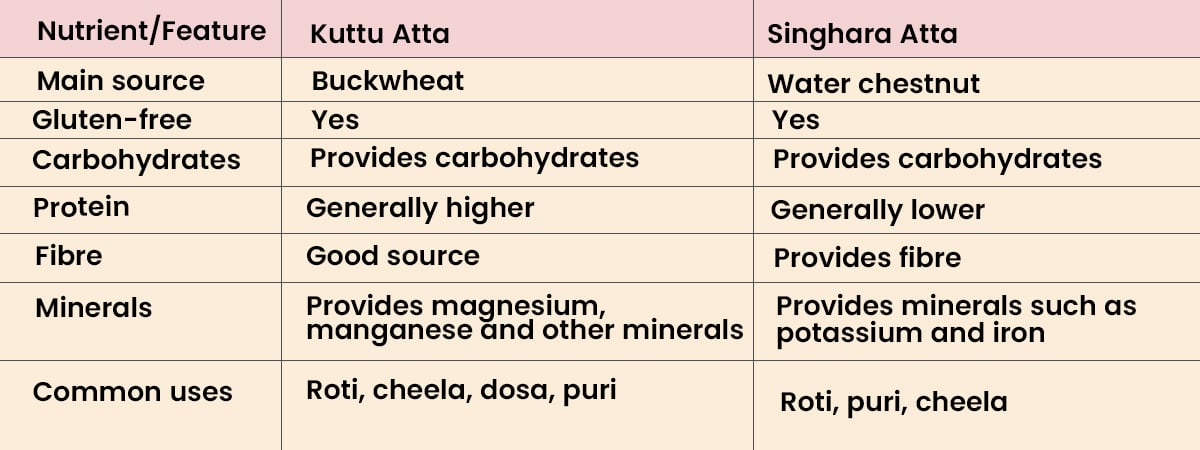
Kuttu Atta vs Singhara Atta: Nutritional Comparison
The nutritional values can vary depending on the processing method. However, both flours contribute valuable nutrients to a balanced fasting diet.
Health Benefits Of Kuttu Atta
Rich In Plant-Based Protein
Kuttu atta provides more protein than many other flours. Protein supports muscle mass and promotes satiety when included as part of a balanced meal.
Heaped With Dietary Fibre
Buckwheat contains dietary fibre, which can support healthy digestion, prevent constipation, and help you feel full for longer.
Provides Minerals
Kuttu contains an impressive profile of minerals such as magnesium and manganese, which play important roles in energy metabolism and other vital bodily functions.
Naturally Gluten-Free
Kuttu atta is naturally gluten-free, making it an ideal option for people who those with gluten intolerance. However, individuals with coeliac disease should choose products that are certified gluten-free and check food labels to minimise the risk of cross-contamination.
Boosts Energy
Kuttu flour offers an abundant source of plant-based protein and dietary fiber. Thus, meals made using kuttu are more filling and provide a sustained source of fuel.
Health Benefits of Singhara Atta
Gluten-Free
Singhara atta is naturally gluten-free and is widely used as a wheat-flour alternative during fasting.
Carbohydrates for Energy
The carbohydrate content of singhara flour can provide a sustained source of energy during fasting, particularly when meals are otherwise restricted.
Contains Fibre
Singhara atta provides dietary fibre, which can support normal digestion and promote satiety.
Versatile Fasting Ingredient
Singhara atta can be used to make rotis, puris, pancakes, and other dishes, making it easy to include in different fasting meals.
Kuttu Atta vs Singhara Atta: Which Is Better for Weight Loss?
Neither flour is a magical food for weight loss. Weight management depends on your overall calorie intake, physical activity, meal composition,n and portion sizes.
Kuttu atta may have an advantage when you want a more protein- and fibre-containing fasting meal. However, the way you prepare the food matters significantly.
For instance, deep-fried kuttu puris or singhara puris can substantially increase the calorie content of a meal. Choosing a roti or cheela and pairing it with vegetables, curd, or another suitable protein source can make the meal more balanced.
Kuttu Atta vs Singhara Atta for Diabetes
People with diabetes should pay attention to portion size and the total carbohydrate content of the meal, even when using these flours.
Kuttu may provide more protein and fibre than singhara atta, but neither should be considered a free food for diabetes. Blood glucose response can vary depending on the portion, recipe and foods eaten alongside it.
If you have diabetes, choose moderate portions and combine the flour with fibre-rich vegetables and an appropriate protein source where possible.
Which Is Better for Digestion?
Both kuttu and singhara atta can provide dietary fibre. However, individual tolerance can differ.
Some people may experience bloating or digestive discomfort after consuming large portions of high-fibre foods. If you are not accustomed to these flours, start with a moderate portion and maintain adequate hydration.
Also Read: Navaratri Vrat/ Fasting Guide: Significance and Healthy Food Ideas for Boosting Energy
Kuttu Atta vs Singhara Atta: Which Is Healthier?
There is no single winner because the healthier choice depends on your nutritional needs and how the flour is prepared.
Kuttu atta may be a better choice if you are looking for:
- More plant-based protein
- A filling fasting meal
- A source of fibre and minerals
- Greater variety in savoury fasting recipes
- Singhara atta may be a suitable choice if you want:
- A gluten-free fasting flour
- A versatile flour for rotis and pancakes
- A carbohydrate-containing option for energy
- An alternative to wheat flour during fasting
For a nutritionally balanced fasting diet, you do not necessarily need to choose only one. Kuttu and singhara atta can both be included in moderation, along with vegetables, fruits, dairy or other permitted protein sources.
How to Make Kuttu or Singhara Atta Healthier
The nutritional quality of the final meal depends not only on the flour but also on the ingredients and cooking method.
Frequently Asked Questions About Kuttu Atta vs Singhara Atta
Is kuttu atta healthier than singhara atta?
Kuttu atta generally provides more protein and can be a good source of fibre and minerals. However, whether it is healthier depends on your dietary requirements, portion size, and preparation method.
Is singhara atta good for weight loss?
Singhara atta can be included in a weight-loss diet, but it does not directly cause weight loss. Portion size, total calorie intake, and cooking method are important.
Can I eat kuttu atta every day?
Kuttu atta can be part of a balanced diet when consumed in appropriate portions. If you are using it regularly, vary your grains and flours to maintain dietary diversity.
Is kuttu atta good for diabetes?
You can include kuttu atta in a diabetes-friendly meal plan in controlled portions. However, it still contains carbohydrates and may affect blood glucose levels.
Conclusion
Kuttu atta and singhara atta are both nutritious alternatives to wheat flour during fasting. Kuttu atta generally offers more protein and fibre, while singhara atta provides carbohydrates and useful micronutrients.
Instead of focusing only on kuttu atta vs. singhara atta, pay attention to portion size, cooking method, and the overall balance of your fasting meals. Adding vegetables, fruits, and suitable protein sources can make your fasting diet more nutritious and satisfying.
References
Buckwheat and CVD Risk Markers: A Systematic Review and Meta-Analysis
Nutritional Properties of Starch in Buckwheat Products: Studies in Vitro and in Vivo
State of Knowledge on Amaranth Grain: A Comprehensive Review
Nutritive value of pseudocereals and their increasing use as functional gluten-free
International tables of glycemic index and glycemic load values 2021: a systematic review
https://nnwa.in/blog/kuttu-singhara-rajgira-atta-compared/
https://nnwa.in/blog/kuttu-singhara-rajgira-atta-compared/
Li et al. (2018). Buckwheat and CVD Risk Markers: A Systematic Review and Meta-Analysis. Nutrients. Across 13 randomised human trials, buckwheat lowered blood glucose by 0.85 mmol/L and total cholesterol and triglycerides modestly, but heterogeneity was high,gh and effects on weight and blood pressure were unclear.
Skrabanja et al. (2001). Nutritional Properties of Starch in Buckwheat Products: Studies in Vitro and in Vivo. Journal of Agricultural and Food Chemistry. Boiled buckwheat groats had a glycaemic index of 61 and produced lower glucose and insulin responses and higher satiety than white wheat bread in healthy volunteers.
Caselato-Sousa and Amaya-Farfán (2012). State of Knowledge on Amaranth Grain: A Comprehensive Review. Journal of Food Science. Reviews amaranth's composition, including protein richer in lysine than cereal grains, its minerals and lipids, and its gluten-free use, while noting antinutrients that reduce mineral absorption.
Alvarez-Jubete et al. (2010). Nutritive value of pseudocereals and their increasing use as functional gluten-free ingredients. Trends in Food Science & Technology. Amaranth, quinoa and buckwheat carry more protein, fibre, minerals and polyphenols than the rice and maize starches common in gluten-free foods, improving the nutritional quality of those products.
Atkinson et al. (2021). International tables of glycemic index and glycemic load values 2021: a systematic review. The American Journal of Clinical Nutrition. The largest compilation of measured glycaemic index values shows that the same food can test quite differently by variety, processing, and cooking, a reason to treat single GI figures for vrat foods loosely.
 Previous