Hypertension or high blood pressure is one of the leading risk factors for cardiovascular disease, stroke and kidney disease across the world. And when it comes to controlling high blood pressure, most people think about cutting down sodium intake. But did you know that increasing potassium intake is also as important? Potassium is a key mineral and electrolyte that supports managing fluid balance, muscle contractions, nerve function and heart rhythm. Most importantly, it holds a key role in maintaining healthy blood pressure by counteracting the effects of excess sodium.
(Buy From Our Best-Selling Blood Pressure Devices To Manage Hypertension Under Control)
Adding potassium-rich foods as part of a wholesome, balanced diet can promote cardiovascular health, improve blood vessel function, and reduce the risk of hypertension. However, certain individuals, particularly those with kidney disease, need to be cautious about potassium intake.
What Is Potassium?
Potassium is an important mineral abundant in a wide array of fruits, vegetables, legumes, dairy products, and fish. It is the third most abundant mineral in the body and functions as an electrolyte, helping maintain the fluid balance inside and outside cells.
More than 98% of the body’s potassium is stored within cells, where it promotes normal muscle contraction, nerve signalling and heart function.
How Does Potassium Help Manage Blood Pressure?
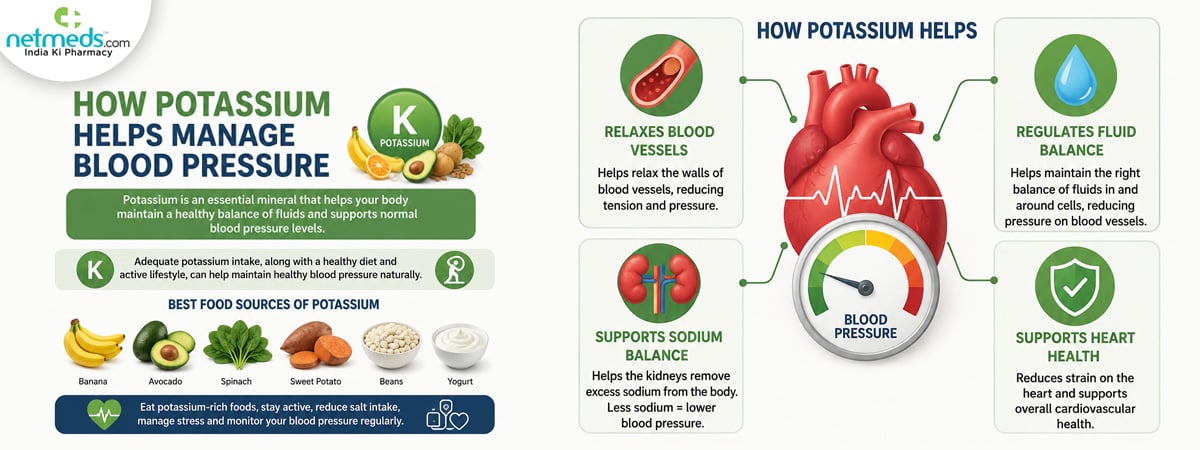
Potassium helps manage blood pressure via several important bodily functions and mechanisms:
Balances Sodium Levels
Potassium holds a key role in eliminating excess sodium from the kidney via urine. As high sodium intake leads to water retention and elevates blood pressure, potassium assists in lowering this effect by supporting sodium excretion.
Also Read: Waking Up with High Blood Pressure? Try These 6 Effective Tips to Lower It
Relaxes Blood Vessel Walls
Adequate intake of potassium relaxes blood vessels and maintains flexibility, decreasing vascular resistance and allowing blood to flow more readily.
Maintains Fluid Balance
Potassium functions alongside sodium to control fluid balance within the system. Proper fluid balance helps prevent unnecessary increases in blood pressure.
Promotes Heart Function
Potassium takes charge of controlling electrical signals that regulate heartbeat and muscle contraction, easing the strain on the cardiovascular system.
Potassium-Rich Foods
Including a wide variety of potassium-rich foods in your daily meals can naturally improve your potassium intake.
Fruits
Oranges
Sweet lime
Avocados
Kiwi
Papaya
Pomegranate
Coconut water
Cantaloupe
Apricots
Vegetables
Spinach
Sweet potatoes
Potatoes
Tomatoes
Pumpkin
Beetroot
Mushrooms
Broccoli
Legumes and Pulses
Lentils
Kidney beans
Chickpeas
Soybeans
Black beans
Dairy Products
Milk
Yogurt
Nuts and Seeds
Pistachios
Almonds
Pumpkin seeds
Sunflower seeds
Fish
Salmon
Tuna
Recommended Daily Potassium Intake
The daily potassium needs vary by age and the person's health conditions. Healthy adults typically need around:
Men and Women: 3,510 mg/day (as per the ICMR, NIN)
Also Read: Hypertension Nutrition: Common FAQ’s Answered About DASH Diet
Signs of Potassium Deficiency
Low potassium (hypokalemia) may occur due to continuous vomiting, diarrhoea, excessive sweating, certain medications, or inadequate dietary intake.
Symptoms include:
Muscle weakness
Fatigue
Muscle cramps
Constipation
Irregular heartbeat
Severe potassium deficiency requires prompt medical care and treatment.
Who Should Be Careful with Potassium Intake?
Although adequate potassium intake is beneficial for most healthy adults, excessive intake can be harmful in certain health conditions.
Chronic Kidney Disease
Those with pre-existing kidney diseases may not be able to eliminate excess potassium, resulting in hyperkalaemia (high blood potassium); this can lead to life-threatening heart rhythm abnormalities.
Medications
People taking the following medications should seek proper advice from their healthcare provider before increasing potassium intake:
ACE inhibitors
Angiotensin receptor blockers (ARBs)
Potassium-sparing diuretics
Certain heart medications
Adrenal Disorders
This condition adversely affects hormone production and may interfere with potassium management and may need personalised dietary advice.
Tips to Increase Potassium Naturally
Eat at least five servings of fruits and vegetables daily.
Include leafy greens in soups, curries, and salads on a regular basis.
Choose legumes several times a week.
Replace processed snacks and high-salt foods with fresh fruits.
Reduce sodium intake while increasing potassium-rich whole foods.
Stay hydrated and maintain an overall balanced diet.
Can Potassium Supplements Help?
Well, most healthy adults can meet their requirements through food. Potassium supplements should only be taken under medical supervision, as excessive supplementation can lead to hyperkalemia, especially in individuals with kidney disease or those taking certain medications.
Frequently Asked Questions
How Does Potassium Lower Blood Pressure?
Potassium helps the kidneys remove excess sodium through urine, relaxes blood vessel walls, and supports healthy fluid balance, all of which contribute to lower blood pressure.
Which Foods Are Highest In Potassium?
Bananas, spinach, sweet potatoes, avocados, lentils, beans, yoghurt, coconut water, tomatoes, and salmon are among the richest dietary sources of potassium.
Is Potassium Better Than Sodium For Blood Pressure?
Both minerals are essential, but consuming more potassium while limiting excess sodium helps maintain healthier blood pressure levels.
Conclusion
Potassium is a vital mineral for controlling healthy blood pressure and overall heart health. Adequate potassium intake helps regulate blood pressure and protects against the effects of high sodium intake. Additionally, including potassium-rich foods such as bananas, spinach, lentils, sweet potatoes, yoghurt, and avocados into a healthy and balanced diet can help improve heart function naturally. However, individuals with kidney disease or those taking medications that affect potassium levels should seek advice from a health provider before significantly increasing their intake.
References:
https://pubmed.ncbi.nlm.nih.gov/21403995/
The importance of potassium in managing hypertension
Mark C Houston 1
https://academic.oup.com/ajh/article/37/2/91/7286227
Potassium and Hypertension: A State-of-the-Art Review
Sriram Sriperumbuduri , Paul Welling , Marcel Ruzicka , Gregory L Hundemer , Swapnil Hiremath
American Journal of Hypertension, Volume 37, Issue 2, February 2024, Pages 91–100, https://doi.org/10.1093/ajh/hpad094
 Previous