


As a key nutrient, protein plays a key role in building muscle, repairing tissues, supporting immunity, and maintaining healthy skin and hair. While animal-based foods are well-known protein sources, few realize that seeds provide a significant amount of plant-based protein, along with fibre, healthy fats, vitamins, minerals, and antioxidants.
Despite their small size, these nutrient-dense seeds fit easily into smoothies, salads, yogurt, soups, breakfast bowls, and homemade baked goods. Regularly consuming a variety of protein-rich seeds can improve your nutrient intake and contribute to overall well-being.
Also Read: 5 Fantastic Benefits Of Lotus Seeds For Overall Health
The Nutritional Benefits of Protein-Rich Seeds
Seeds are among the most nutrient-dense foods, containing essential amino acids, healthy unsaturated fats, dietary fibre, and important micronutrients. Magnesium, zinc, iron, calcium, selenium, and vitamin E are some key nutrients promoting muscle maintenance, tissue repair, energy production, immunity, and overall metabolic health.
Although most seeds are not complete proteins, consuming them with legumes, whole grains, dairy, or soy products helps provide a broader range of essential amino acids. Besides protein, seeds provide fibre intake which promotes satiety. Thus, seeds are an excellent choice for people looking to manage weight or reduce unhealthy snacking. Healthy fats present in many seeds support heart health, while antioxidants help protect cells from mild to severe oxidative stress.
Enhance your metabolism and immunity with our wide range of health and nutrition supplements!
What Else Do Seeds Offer? Key Health Benefits You Should Know
Seeds have great versatility. Whether you sprinkle them over salads, mix them into oatmeal, blend them into smoothies, or incorporate them into homemade energy bars and baked foods, all this can be done without much effort. Regularly including different types of seeds in a balanced diet ensures a diverse nutrient intake, thus contributing to overall health. While they should not replace primary protein sources entirely, they are an excellent addition to vegetarian, vegan, and flexitarian diets.
Also Read: Amazing Health Benefits of Kalonji Seeds and Oil
Conclusion
To boost the nutritional quality of your meals, specifically protein, seeds can go beyond supplying plant-based protein; they deliver fibre, healthy fats, vitamins, minerals, and antioxidants that support heart health, digestion, immunity, and overall well-being. Blend them into smoothies, sprinkle them over breakfast cereals or add them to salads, or enjoy them in a humble healthy snack. Combined with a balanced diet and active lifestyle, these nutrient-packed seeds can fulfil your daily protein needs while enhancing your wellness too.
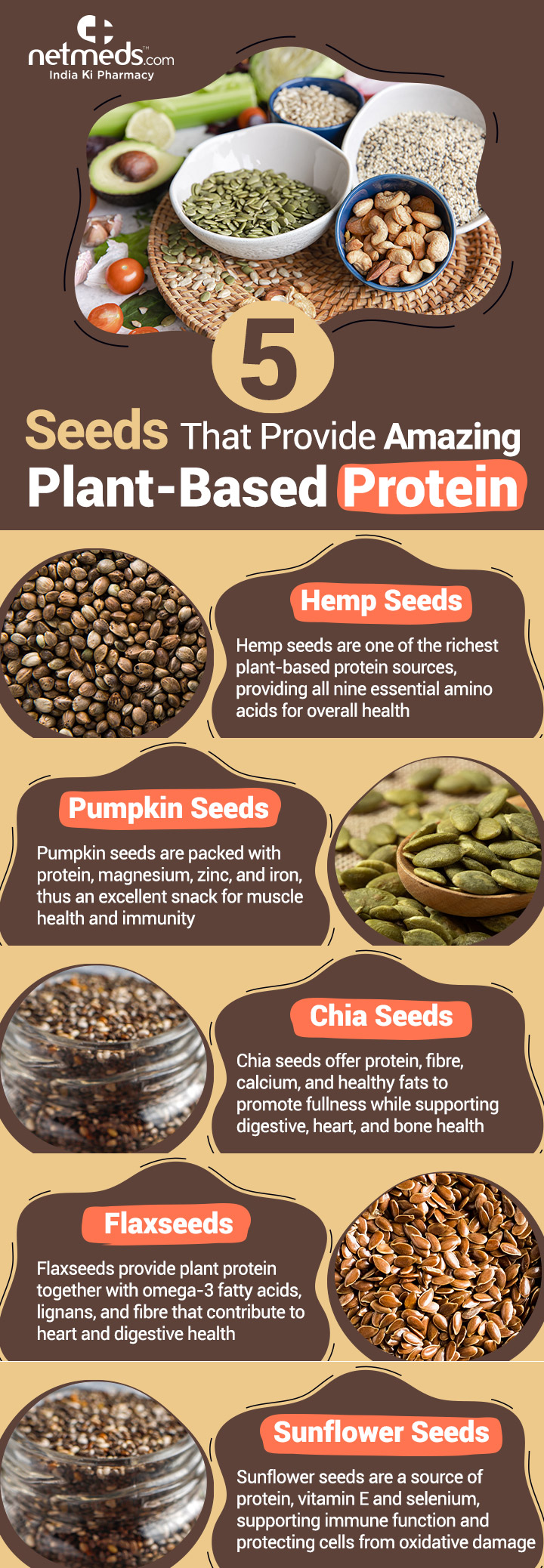
Check out the infographic below for a quick overview of the five seeds for a great boost of protein
References:
https://www.cambridge.org/core/journals/seed-science-research
https://iaeme.com/Home/journal/IJSDSRD
 Previous


