


Frequent bloating, burning acidity, unexplained nausea, or persistent stomach discomfort may be more than just signs of indigestion. They could point to a Helicobacter pylori (also called H. pylori) infection. This common stomach bacterium can damage the protective lining of the stomach and is a major cause of peptic ulcers worldwide. Individuals may carry H. pylori without noticeable symptoms, and leaving it untreated may cause many health problems. But early diagnosis, timely medical treatment, and gut-friendly lifestyle changes can help control the infection. Let's understand how.
What Is H. pylori Infection?
H. pylori infection develops when Helicobacter pylori (a spiral-shaped bacterium) settles in the stomach’s protective lining. Unlike other bacteria, it easily survives the stomach’s acidic environment by producing certain enzymes that neutralise stomach acid. The infection is usually transmitted through contaminated food, water, poor hygiene, or sometimes through close contact with an infected individual. While many people carry the bacteria without any symptoms, some may have the following:
· Constant stomach pain
· Excessive bloating and burping
· Nausea
· Loss of appetite
· Frequent indigestion
· Peptic ulcers in some chronic cases
(To Enhance Gut Functions, Shop From Our Wide Range Of Digestive Supplements)
Can H. pylori Be Cured?
A combination of antibiotics and doctor-prescribed proton pump inhibitors can treat H. pylori infection. The doctor may also recommend follow-up testing to confirm that the infection has cleared. To stay safe from getting infected, wash hands thoroughly before eating and after using the toilet. Drink potable water and do not share utensils with an infected individual. Also, always take your prescribed treatment completely if you have been diagnosed with the infection.
Also Read: 5 Effective Tips To Follow For Optimal Gut Health-Infographic
When To See A Doctor?
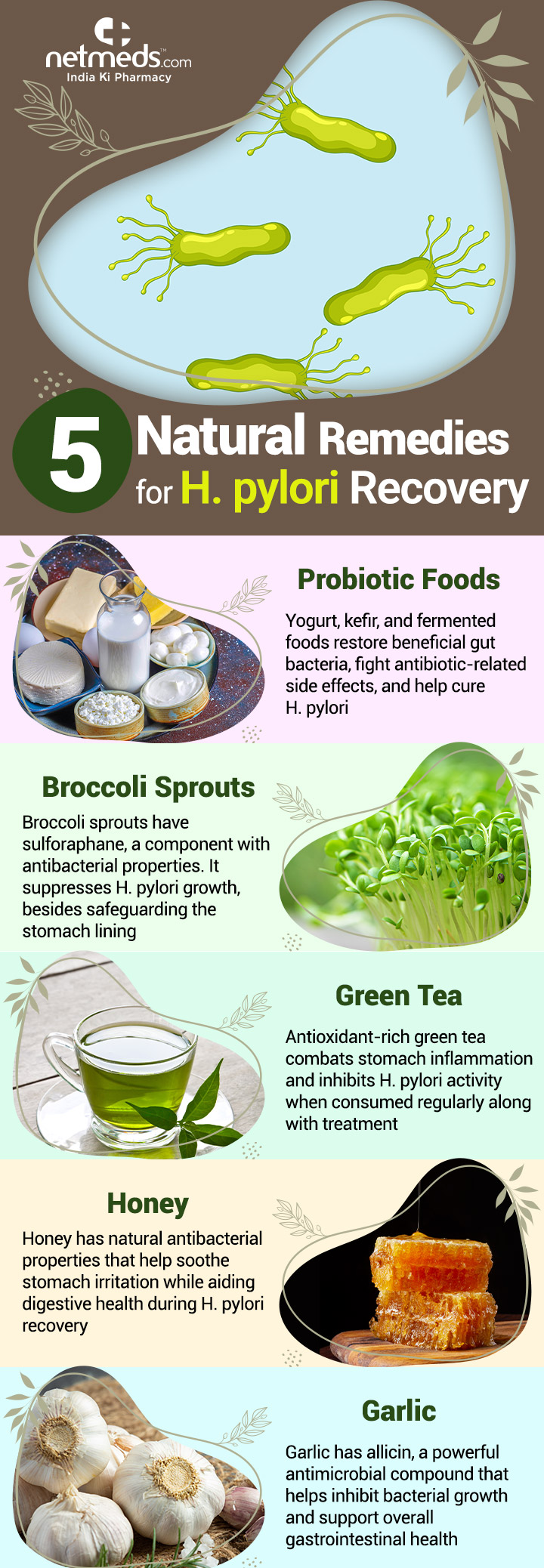
If you experience persistent stomach pain, unexplained weight loss, vomiting, difficulty swallowing, black stools, or indigestion that has lasted more than a few weeks, you must seek medical attention. Along with proper medication, you can also add some easy remedies to your routine that may help aid your recovery. Foray through the infographic to know more:
References:
https://www.ncbi.nlm.nih.gov/books/NBK534233/
https://pmc.ncbi.nlm.nih.gov/articles/PMC9952126/
 Previous


