As the mercury peaks, it does not just make you sweat, but our gut health often faces the brunt of the intense summer. High temperatures slow down metabolism, dehydration, which leads to digestive problems like acidity, bloating and indigestion. Moreover, your body shifts into cooling mode, and blood flow is directed to the skin to release heat, which means circulation to the digestive system is impeded. This results in slow digestion, abdominal discomfort and a higher risk of gut-related problems.
To Improve Overall Gut Health And Digestive Function, Shop From Our Wide Range of Health Essentials
Mindful eating habits, good hydration and balanced physical activity help to keep your digestive system healthy and functioning during the summer season. Read this article to understand how summer heat affects digestive health and simple tips to keep your gut in check.
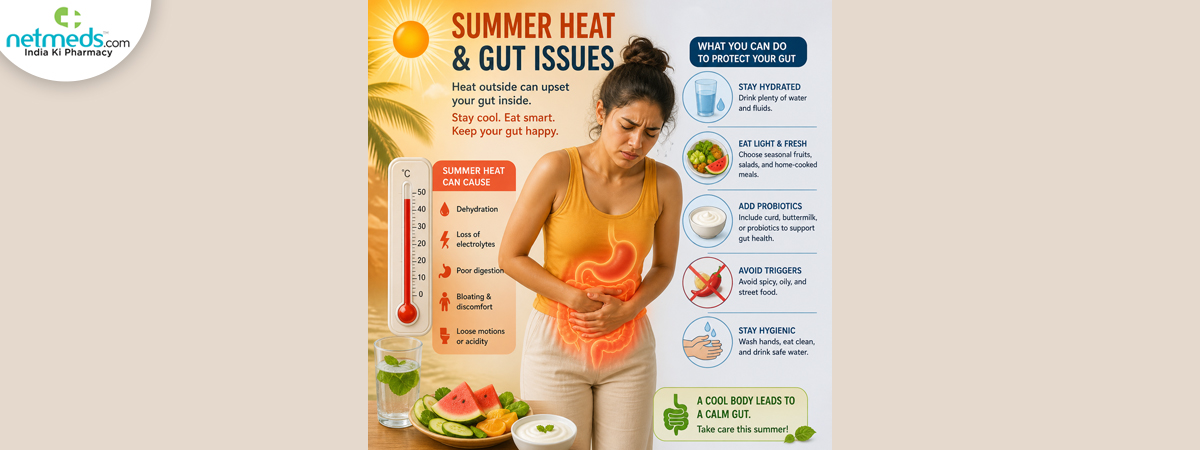
How Intense Heat Affects Gut Health?
Slower Digestion
High temperatures reduce blood supply to the stomach and intestines. This can lead to digestive problems such as bloating, indigestion, and feeling heavy post-meals. All these indicate that your gut is not completely operating.
Dehydration Disrupts Gut Balance
Sweating profusely leads to fluid and electrolyte loss. Furthermore, when you are dehydrated, digestive enzymes become less effective, increasing the risk of constipation, and the absorption of nutrients slows down. Even mild dehydration can disrupt your gut rhythm.
Also Read: Diet, Gut Health and Sleep Connection: How They Work Together To Improve Overall Health
Risk Of Infections
Summer heat easily stimulates bacterial growth in food. This raises the chances of food poisoning, diarrhoea, and gastrointestinal infections. Consuming street foods, improperly cooked, stored meals, or stale leftover ones increases the risk of infection.
Acidity /Gut irritation
Hot weather often triggers acid reflux, gastritis-like symptoms and burning sensation in the stomach, mainly due to dehydration and moderately due to dietary habits like eating more of fried, spicy and junk foods.
Gut Microbiome Imbalance
The good gut bacteria are highly sensitive to temperature, hydration, and diet. Heat stress can decrease beneficial bacteria, increase inflammation and affect immune function and gut microbiome balance.
Effective Remedies To Protect Gut Health In Summer
Prioritize Hydration
Drinking water consistently is very important and not just when you’re thirsty. Include plenty of natural hydrating drinks like buttermilk, coconut water, lemon water and mint-infused lemonade. Limit intake of excessive caffeine and sugar-laden beverages, which can worsen dehydration.
Add hydrating /Light Foods
Eating mindfully and making informed food choices is important to improve digestion and gut health. Add plenty of naturally hydrating foods like fresh watermelon, muskmelon, sweet lime and cucumbers. Enjoy light-cooked vegetables, gravies and curd-based dishes. Restrict intake of heavy, oily, and overly spicy meals, as these can easily overload your gut.
Maintain Gut Microbiome
Probiotics are gut-friendly bacteria that help maintain gut microbiome balance and digestive health. Including natural probiotics like yoghurt, buttermilk, and fermented foods like idli, pickled vegetables and kanji can help revamp good gut bacteria and improve digestion.
Also Read: Digestive Disorders: 7 Ways To Improve Gut Health
Eat Smaller, More Frequent Meals
Large meals strain digestion in hot weather. Instead, go for a smaller light meal evenly spread throughout the day at regular intervals. Avoid overeating at night and late-night binge eating.
Be Cautious With Outside Food
Avoid food that’s been sitting out in the heat in bad conditions. Prefer freshly cooked meals. Be cautious with street food, especially dairy or meat items. Food hygiene and consuming well-cooked foods matter more in summer than in any other season
Simple Home Remedies
Have jeera water that helps improve digestion and reduces bloating.
Mint-infused water is a natural coolant and gut-friendly.
Fennel seeds /saunf help with acidity and gas.
These are readily available, cost-effective, and widely used in traditional diets.
Heat itself is a physiological stressor. To reduce its impact, avoid stepping out during peak afternoon hours, wear breathable clothing and get adequate rest.
When to Take Symptoms Seriously?
Don’t ignore persistent issues. Seek medical advice if you notice:
Severe abdominal pain
Vomiting
Signs of dehydration include dizziness, dry mouth, and low urination.
Conclusion
Summer gut health issues are not random; they are an obvious response to heat, dehydration, and dietary shifts. The easiest remedy is maintaining hydration, eating light foods, practising good hygiene, and supporting your gut bacteria.
References:
https://www.northlakegastro.com/how-summer-heat-affects-gastrointestinal-health
https://www.frejabonebroth.com/blogs/journal/gut-microbiome-in-summer
https://pmc.ncbi.nlm.nih.gov/articles/PMC11737230/
 Previous