


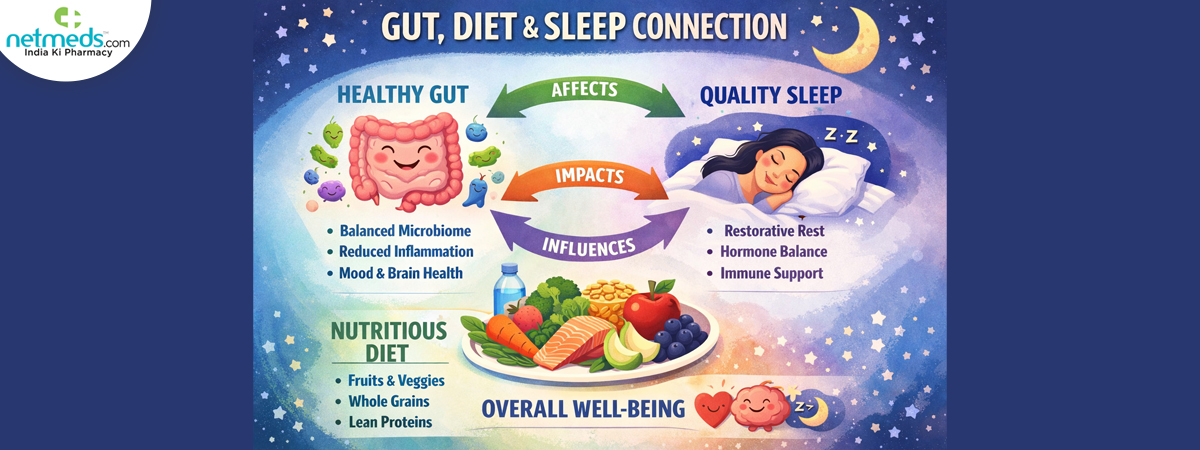
Sleep is often treated as a standalone habit, something you can fix by just going to bed earlier. It does sound very simple. In reality, your sleep schedule is largely influenced by what you eat and how your gut functions. Your diet, gut health, and sleep form a tightly connected biological loop.
Understanding this connection can help you correct irregular sleep patterns more effectively than relying on sleep hacks alone. Dive into this article to learn more about this connection.
What Is The Gut–Brain–Sleep Axis?
At the centre of this complicated relationship is the Gut–brain axis, a communication network linking your digestive system and brain. Your gut contains trillions of microbes, called the gut microbiome. These microbes produce neurotransmitters like serotonin, and more than 90% of serotonin is a precursor to sleep hormones, such as melatonin, which is produced in the gut. This means a healthy gut directly influences your ability to fall asleep and manage a good sleep cycle.
How Does Diet Shape Your Sleep?
Nutrients That Promote Better Sleep
There are a few key nutrients that hold a vital role in proper sleep regulation:
Tryptophan is involved in the production of serotonin.
Magnesium helps relax muscles and nerves.
Complex carbs help regulate blood sugar levels and improve sleep onset.
Foods like bananas, oats, milk, nuts, and leafy greens support these pathways.
Foods That Disrupt Sleep
Diet can also negatively impact your sleep pattern. Certain foods, like high-caffeine products and sugar-laden foods, can delay sleep, which causes sudden energy spikes and crashes. Also, having a late-night heavy meal can make the digestive system overwork and delay sleep onset. This results in irregular sleep timing and poor sleep quality.
Also Read: How To Build A Perfect Sleep Schedule? The Science-Backed Guide
The Role of Gut Health in Sleep
Microbiome and Sleep Quality
A diverse gut microbiome helps to maintain circadian rhythms, eases stress, and improves melatonin production. Poor gut health due to high intake of processed foods, antibiotics misuse, or low fiber diet is linked to insomnia, fragmented sleep and fatigue even after sleeping.
Inflammation and Sleep Disruption
A poor gut can trigger low-grade inflammation, which interferes with sleep signals in the brain. This often leads to problems falling asleep and frequent waking in the middle of the night.
How Sleep Affects Diet and Gut: The Reverse Effect
This relationship is bidirectional, where sleep also influences your diet and gut.
Sleep Deprivation Alters Hunger Hormones
Poor sleep is known to disrupt ghrelin hormone (which increases hunger) and leptin (which signals satiety). This makes you crave more sugary foods and late-night snacks.
Poor Sleep Damages Gut Health
Irregular sleep schedules can lower beneficial gut bacteria, increase gut permeability and disrupt digestion processes.
This creates a vicious cycle leading to poor diet intake and poor gut health, all of which worsen sleep.
How These Factors Impact Your Sleep Schedule?
Your sleep schedule is governed by your internal clock, or Circadian rhythm.
Diet and gut health influence this rhythm in several ways:
Meal timing acts as a biological signal; late meals delay sleep timing.
Gut microbes help regulate sleep hormones.
Dietary fluctuations affect when you feel sleepy.
Common Effects:
Irregular meal timing eventually delays the sleep cycle.
Poor gut health results in inconsistent sleep quality.
High sugar and caffeine intake make it difficult to maintain a routine.
Practical Tips to Align Diet, Gut, and Sleep
To stabilise your sleep schedule, focus on all three systems:
Eat at a Consistent Time
Ensure to have an early dinner and avoid late-night meals. Schedule dinner at least 2–3 hours before bed and have a light and balanced meal. Avoid intake of caffeinated beverages.
Also Read: Better Sleep Starts On Your Plate: 5 Foods To Try- Infographic
Improve Gut Health
Include probiotics such as curd, yogurt, fermented foods and drinks, which help to maintain gut microbiome balance. Boost your fibre intake by adding plenty of fresh vegetables, fruits, and whole grains to improve your digestive function.
Maintain Sleep Consistency
The most important thing is to maintain fixed sleep schedules and wake-up times, even on weekends or holidays.
Stay Hydrated
Drinking enough water during the day is essential to maintain fluid balance, however, limit intake right before bed to avoid disturbances.
Conclusion
Diet, gut health, and sleep are not separate pillars; they function as a single integrated system. If your sleep schedule is off, the solution is not about maintaining a better sleep routine. It’s also about what you eat, when you eat, and how well your gut functions.
By making small, consistent changes in your diet and lifestyle, you can reset this system and build a healthier, more stable sleep cycle.
References:
Impact of Food Intake and Sleep Disturbances on Gut Microbiota
Vignesh S D 1, Vijayakumar T M 1, N Sai Supra Siddhu
https://pmc.ncbi.nlm.nih.gov/articles/PMC11531926/
Association of the dietary index for gut microbiota with sleep disorder among US adults: the mediation effect of dietary inflammation index
Yingying Li
https://www.frontiersin.org/journals/nutrition/articles/10.3389/fnut.2025.1528677
 Previous