


With its striking yellow and orange hues, the golden-orange marigold flower is a familiar sight across India. More than an ornamental bloom, it holds significance beyond decoration. People have traditionally used the colourful flower in household remedies, skincare preparations, and religious ceremonies. While the traditional uses of this bright bloom vary depending on the species, Navratri is a time when marigolds are seen more often across homes, temples, and marketplaces. Its bright blooms and makes festive celebrations more colourful and auspicious.
This short read explores the potential marigold flower health benefits, traditional uses, skin benefits, and precautions.
Also Read: Marigold: 5 Awesome DIY Recipes For A Glowing And Flawless Skin -Infographic
What Is Marigold Flower?
Marigold flowering plants belong to the Tagetes genus, mostly Tagetes erecta (African marigold) and Tagetes patula (French marigold), which are commonly cultivated in gardens. They have been widely used for decoration and religious purposes. It is important not to confuse Tagetes marigolds with Calendula officinalis, which is sometimes called pot marigold. Calendula is a different plant and is used particularly in herbal skincare. Having naturally occurring plant compounds, including carotenoids and flavonoids, the petals have antioxidant and soothing properties, traditional use does not automatically establish a potent treatment effect.
Also Read: DIY Flower Recipes: Homemade Beauty Products Using Incredible Blooms
Why Is Marigold Considered A Navratri Flower?
Marigold blooms have a special place during Navratri celebrations. It is seen in homes, temples, entrances, and puja spaces as decoration. The colours of this flower are traditionally associated with positivity, auspiciousness, and divine energy. Marigold garlands are often offered to deities and are used to adorn idols and prayer spaces. While the specific customs may differ across states, marigold remains one of the most recognisable flowers associated with Navratri celebrations and Hindu religious rituals.
Marigold Flower Nutrition And Plant Compounds
Marigold petals may contain naturally occurring pigments such as carotenoids, including lutein and zeaxanthin, besides flavonoids and other phytochemicals. However, the nutritional composition and concentration of active compounds can vary considerably according to the plant species, growing conditions, and preparation method.
Does Marigold Flower Benefit the Skin?
Yes, it does! The flower extracts are commonly found in traditional and cosmetic preparations. The extracts of this bloom are incorporated into creams, oils, lotions, and other skincare and topical products. Potentially useful properties of the flower include:
Soothing effect
Marigold-based preparations may help calm minor skin discomfort.
Antioxidant activity
Plant pigments and flavonoids may help combat oxidative stress.
Skin-conditioning
Marigold extracts may be included in formulations designed to moisturise and condition the skin.
Traditional wound care
Historically, it has been used for minor skin injuries, although appropriate wound care and medical advice remain important.
May Calm Redness
Marigold-based skincare preparations also soothe mild redness and irritation, making it an active ingredient in topical formulations.
Also Read: Mimosa Tenuiflora/Orpheus Flower: Uses, Benefits, Remedies For Skin And Hair
Traditional Uses Of Marigold Flower
Across different cultures, marigolds have been used for decorative, culinary, cultural, and traditional purposes. In India, marigold garlands are particularly associated with festivals, weddings, religious ceremonies, and home decoration. Some traditional practices also use marigold petals in herbal preparations, infused oils, and topical applications. However, the method of preparation matters, and traditional use should not be interpreted as proof that marigold can prevent or cure a disease.
Potential Side Effects Of Marigold Flower
Although marigold is commonly used ornamentally, people who are allergic to plants in the Asteraceae/Compositae family may experience an allergic reaction after skin contact. Discontinue use if redness, itching, swelling, or irritation develops. People taking medicines or managing a medical condition should also seek professional advice before using marigold supplements or concentrated extracts. Avoid using homemade marigold preparations on deep wounds, burns, infected skin, or serious injuries without medical guidance.
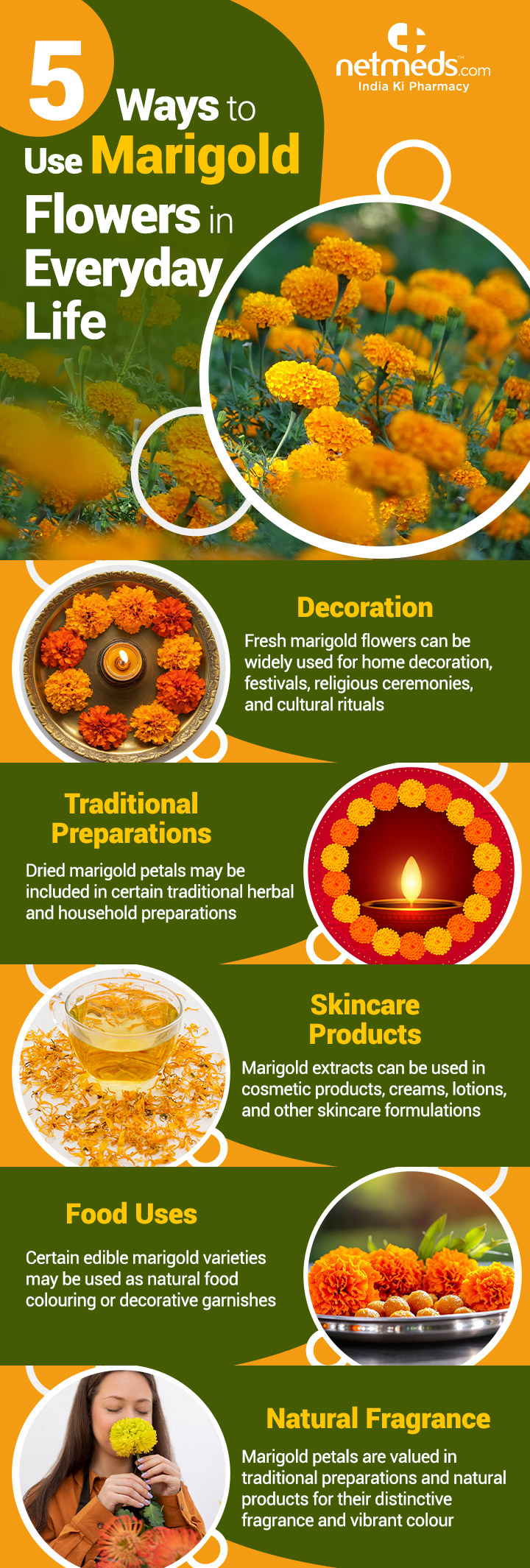
In conclusion, marigold is a vibrant and versatile flower that, during Navratri, is widely used for puja, decoration, and festive rituals. These luscious blossoms can also be used in different ways depending on their species and intended purpose. Want to know how you can incorporate this vibrant flower into your daily routine while keeping its traditional uses and precautions in mind? Check the infographic below:
References:
https://ijrpp.com/ijrpp/article/view/810
https://www.sciencedirect.com/science/article/pii/
https://www.sciencedirect.com/science/article/pii/S0378874119311572
https://journal-jps.com/new/index.php/jps/article/view/1442
https://pmc.ncbi.nlm.nih.gov/articles/PMC12085363/
https://www.researchgate.net/publication/307904714_A_BRIEF_STUDY_ON_MARIGOLD_TAGETES_SPECIES_A_REVIEW
 Previous


