Have you stopped having curd in the rainy season because people believe it is not good for health? Well, most people assume that eating curd during monsoon can result in colds, coughs, sore throats or excess mucus. However, there’s no evidence that curd alone can cause infections in the monsoon.
(To Optimise Your Overall Gut Health And Immunity, Shop From Our Trusted Range of Probiotics)
The good news is that curd can be part of a healthy monsoon diet regimen when it is fresh, properly stored and consumed in moderation. It offers quality protein, calcium and other vital nutrients; moreover, fermented curd may also contain beneficial bacteria that support gut health. However, food hygiene becomes especially important during the rainy season.
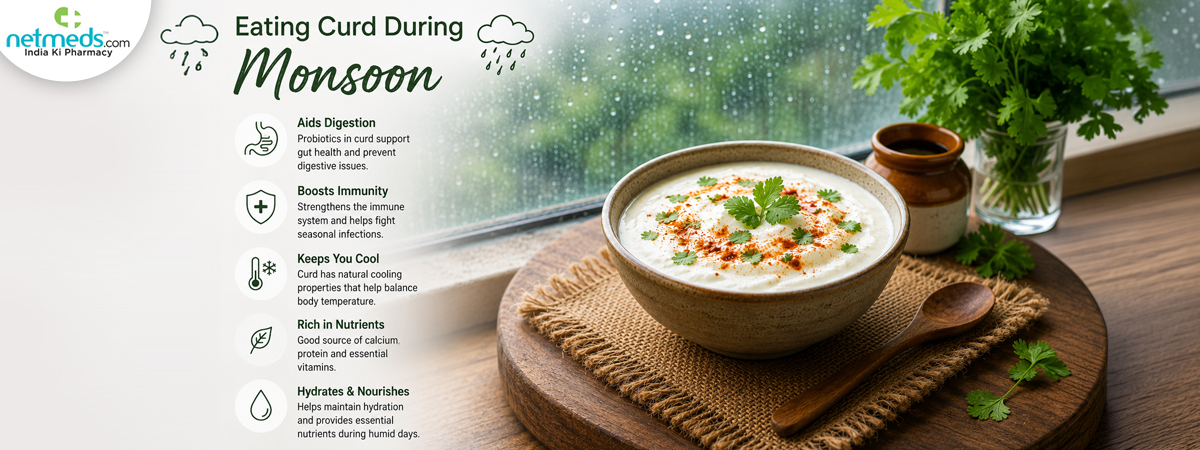
Is Eating Curd Good for Health During Monsoon?
Yes, eating fresh home-made curd during monsoon season can be healthy for most people. Curd is a wholesome fermented dairy food that offers a rich array of nutrients, including protein, calcium, phosphorus and vitamin B12.
The monsoon season does not make curd unhealthy. However, poor storage, contamination or having curd that has been left at room temperature for a longer time can elevate the risk of foodborne illness. Therefore, it is important to choose fresh, properly refrigerated curd and refrain from having curd that smells unusual, changed texture or has been stored improperly.
Also Read: Is Curd Good For Weight Loss? Surprising Reasons How Dahi Helps To Shed That Surplus Fat
5 Health Benefits of Eating Curd During Monsoon
Enhances Gut Health
Curd contains live cultures that may help support a healthy balance of the gut microbiome. Maintaining gut health is especially beneficial during monsoon; changes in food and water hygiene can increase the risk of digestive problems. In addition, it is easier to digest than certain dairy products and promotes the digestion process.
Provides Protein
Curd is a good source of protein and can complement meals such as rice, roti, vegetables and pulses. Protein is important for building muscles, supporting tissue repair and keeping you satiated.
Helps Strengthen Bones
Curd provides calcium and phosphorus, nutrients that contribute to keeping healthy bones and teeth. Regular inclusion of calcium-rich foods can support overall bone health and lower the risk of osteoporosis.
Can You Eat Curd Every Day During Monsoon?
Yes, most healthy people can eat curd daily during monsoon as part of a wholesome and balanced diet. A moderate serving can be included with lunch, breakfast or as part of a healthy snack.
However, individual tolerance varies. People who experience bloating, abdominal discomfort or other symptoms after consuming dairy should consider reducing their intake and discussing persistent symptoms with a healthcare professional.
Is Curd Bad During Monsoon?
Curd is not inherently bad during monsoon. The common belief that curd must always be avoided during rainy weather does not apply universally. The more important concern is food safety. Warm and humid conditions can promote microbial growth when dairy products are not handled properly. Always refrigerate curd promptly and use clean utensils when serving it.
How To Eat Curd Safely During Monsoon
Follow these simple tips:
Choose fresh homemade curd or curd from a reliable source.
Keep curd refrigerated and avoid leaving it at room temperature for extended periods.
Use a clean, dry spoon to serve it.
Avoid eating curd if it has an unusual smell, taste, colour or texture.
Avoid consuming unpasteurised or improperly handled dairy products.
If you are sensitive to dairy, choose a suitable alternative based on your dietary needs.
What Is the Best Time to Eat Curd During Monsoon?
There is no established “best” time to eat curd. Lunch is a convenient option because curd can be paired with a balanced meal containing vegetables, whole grains and protein.
Some people prefer avoiding curd late at night because they experience digestive discomfort, but this is an individual preference rather than a rule that applies to everyone.
Who Should Be Careful With Curd?
Although curd is nutritious, some people may need to limit or avoid it depending on their individual health conditions and dietary needs.
People with a milk allergy should avoid dairy products unless advised otherwise by their healthcare professional. Those with lactose intolerance may have varying levels of tolerance because fermentation can reduce some of the lactose in dairy, but symptoms can still occur.
If you regularly experience bloating, diarrhoea, abdominal pain or other symptoms after consuming curd, consult a healthcare professional.
Curd vs Flavoured Yogurt: Which Is Healthier?
Plain, unsweetened curd is generally a better choice for daily use than flavoured yogurts because flavoured varieties can contain significant amounts of added sugar.
For a healthier snack, combine plain curd with fresh fruit, nuts or seeds. You can also use curd as a base for raita or a savoury dip.
Healthy Ways To Include Curd During Monsoon
Try incorporating fresh curd into your meals in simple ways:
Fresh curd with cucumber, carrot and herbs.
Pair a moderate portion with vegetables and a protein-rich side dish.
Have plain curd with seasonal fruits and nuts.
Dilute the fresh curd with water, then add herbs and spices.
Use curd instead of mayonnaise in homemade dips.
Frequently Asked Questions
Is Curd Good To Eat During Monsoon?
Yes. Fresh curd can be a nutritious addition to the monsoon diet and provides protein, calcium and beneficial fermented cultures.
Can We Eat Curd Every Day In The Rainy Season?
Yes, most people can consume moderate amounts of fresh curd daily if they tolerate dairy well.
Does Eating Curd During Monsoon Cause A Cold?
There is no good evidence that eating curd itself causes the common cold. However, people who notice that certain foods worsen their symptoms can adjust their diet accordingly.
Conclusion
Eating fresh curd during monsoon can be a valuable addition for your health. It provides protein, calcium and other essential nutrients and can support a healthy digestive system. There is no general need to avoid curd simply because it is the rainy season. The key is to choose fresh curd, maintain proper refrigeration and practise good food hygiene.
References:
https://pmc.ncbi.nlm.nih.gov/articles/PMC4248380/
Probiotic potential of lactic acid bacteria present in home made curd in southern India
Ramadass Balamurugan 1, Aarthi Sophia Chandragunasekaran 1, Gowri Chellappan 1, Krithika Rajaram 1, Gayathri Ramamoorthi 1, Balakrishnan S Ramakrishna 1,✉
https://www.sciencedirect.com/science/article/abs/pii/S2212429220311676
 Previous