The festive season is all about enjoying scrumptious meals, family outings, sweets and celebrations. From laddoos, kaju katli, and barfis to spicy fried snacks and rich curries, festive treats make every celebration more special and vibrant. However, regular indulgence in fried foods, sugary desserts, heavy meals, and irregular eating patterns can at times leave your digestive system feeling exhausted.
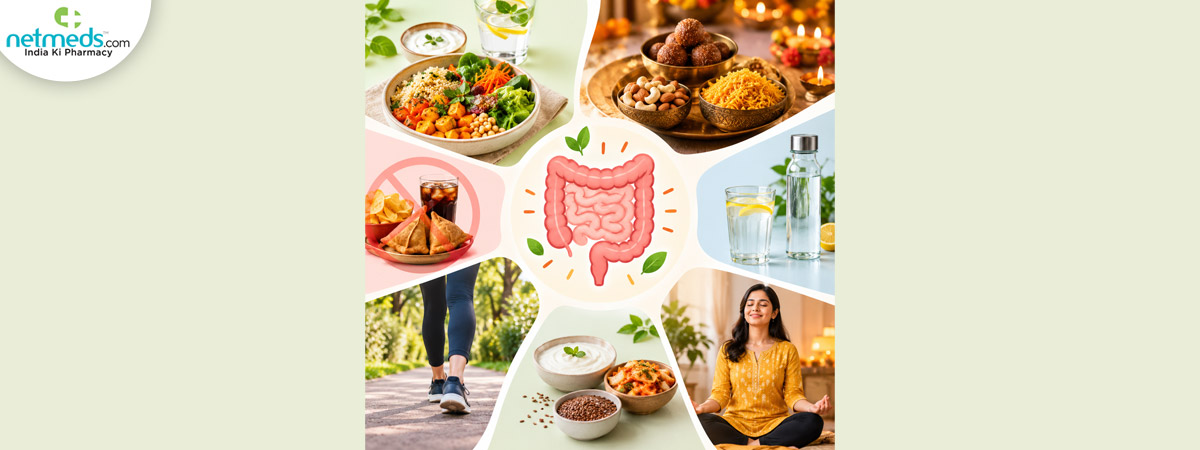
(To Enhance Gut Functions, Shop From Our Wide Range Of Digestive Supplements)
Bloating, acidity, indigestion, flatulence, gas and constipation are common digestive discomforts most people complaint during festive season. Fortunately, you don’t have to completely give up your favourite festive foods to maintain gut microbiome balance. Instead, with mindful eating, good hydration and tweaking a few habits, you can have fun and enjoy festivity while keeping your digestive system functioning efficiently.
Explore this article to discover how to keep your gut healthy during the festive season with practical, easy-to-follow tips.
Why Is Gut Health Important During the Festive Season?
The gut plays a key role in digesting food, assimilating nutrients, promoting overall immune function and sustaining a healthy balance of gut microbes. The beneficial bacteria are collectively known as the gut microbiome, which helps break down food components and supports normal digestion.
And during the festive time, there is a profound change in eating habits; increased intake of sugary and fatty foods, decreased physical activity, and inadequate sleep patterns may result in digestive discomfort. Heavy, oily meals can worsen acidity and bloating, while inadequate fiber and fluid intake may also contribute to constipation.
Effective Tips to Keep Your Gut Healthy During the Festive Season
Practise Portion Control
Festive delights are tempting, and it is easy to go for an extra serving when a wide variety of dishes are available. However, having huge portions at one go can result in stomach discomfort, bloating, and indigestion.
Instead of totally restricting your favourite dishes, have them in moderate portions. Take smaller servings, eat slowly and focus on your body’s hunger and satiety signals.
Pro-Tip: Have a small serving of your favourite sweet or snack rather than munching large portions of everything at once.
Also Read: What Is Your Gut Microbiome And Its Impact On Health How To Improve, Reset And Maintain?
Add Fibre-Rich Foods
Dietary fiber regularises bowel movements and helps maintain healthy digestive function. Certain types of fiber are known to nourish beneficial gut bacteria.
During the festivals, try to incorporate fruits, vegetables, whole grains, legumes, nuts and seeds in your meals.
Fiber-rich options include:
Fruits like apples, pears, guavas, and papayas.
Vegetables such as carrots, beans, spinach, and broccoli.
Whole grains such as oats, millets, and whole-wheat atta.
Pulses and legumes such as moong dal, chickpeas, and rajma.
Gradually improve the fiber intake and drink enough water to help your digestive system work efficiently.
Maintain Hydration
Water is important for maintaining gut function and overall health. It helps soften stools, regularise bowel movements, and prevents risk of constipation. Not having enough water, especially when attending festival celebrations, may increase the risk of digestive problems.
Carry a bottle of water while travelling and make a habit of drinking water regularly. In addition, add water-rich foods like tender coconut water, cucumber, watermelon, oranges, and soups.
Pro-Tip: Keep a water bottle handy during festive outings instead of relying entirely on tea, coffee, or sugary drinks.
Add Probiotics to Your Meals
Probiotics are live microorganisms that may offer several health benefits when consumed in adequate amounts. There is a rich array of traditional fermented foods which can be a useful addition to a balanced diet. Consider including:
Plain curd or yoghurt containing live cultures.
Buttermilk prepared hygienically.
Dhokla, idli and dosa made using fermented batter.
Fermented rice kanji.
Other traditionally fermented foods prepared and stored safely.
Remember that not every fermented food contains live probiotic microorganisms in beneficial amounts. Choose fresh, hygienically prepared foods and avoid products that have been stored improperly.
Avoid Overindulging in Fried/ Sugary Foods
Samosas, pakoras, chips, rich creamy gravies, and traditional sweets are all-time festive favourites. However, large amounts of high-fat foods may slow down gastric emptying and may cause indigestion in some people. Moreover, excess intake of foods high in added sugar can also displace intake of nutritious food choices.
You do not need to eliminate these foods completely. Instead, balance them with vegetables, whole grains, pulses, and protein-rich foods.
Choose roasted snacks more often, limit repeated servings of deep-fried foods, and enjoy sweets in moderate portions.
Eat at Regular Intervals
Skipping meals to compensate for a well-planned festive feast can leave you in an extremely hungry state and make you overeat.
Maintain consistent meal timings, even when you have a hectic schedule. Include balanced meals containing protein, fibre-rich carbohydrates, vegetables, and healthy fats.
For example, you could have vegetable idlis with sambar for breakfast, rice or chapati with dal and vegetables for lunch, and a lighter dinner with adequate protein.
If you have a large celebratory meal, return to your usual balanced eating pattern at the next meal rather than fasting or following a restrictive detox diet.
Walk After Meals
A short walk post-meals can help improve normal digestion and may ease feelings of meal fullness.
A relaxed 10–15-minute walk after meals is the easiest way to remain active during the festive season. You can also take short walking breaks between gatherings or choose stairs when practical.
Avoid vigorous exercise immediately after a large meal and allow yourself time to rest if you feel uncomfortable.
Get Enough Sleep
The digestive system is largely influenced by the gut-brain connection, which displays the two-way communication between the brain and gastrointestinal tract. Stress and improper sleep patterns may affect bowel movements and aggravate symptoms in a few people prone to gut issues. Late-night celebrations, travel, and busy schedules can interfere with your normal sleep routine.
Also Read: Diet, Gut Health and Sleep Connection: How They Work Together To Improve Overall Health
Common Festive Eating Habits That Can Affect Gut Health
Eating food quickly can increase air swallowing and make it harder to recognise the feeling of fullness.
Having large meals close to bedtime may worsen acid reflux and indigestion.
Drinking too many fizzy beverages can increase belching and bloating.
Replacing regular meals with sweets and fried snacks may reduce your daily fibre intake.
Repeatedly delaying bowel movements may contribute to constipation.
The liver and kidneys function to process and eliminate waste. Trying special detox drinks is not necessary to cleanse the gut.
Small, consistent habits are generally more helpful than restrictive diets or quick fixes.
Frequently Asked Questions
How can I improve my digestion during the festive season?
Eat moderate portions, chew food slowly, drink enough water, include fibre-rich foods, and take a gentle walk after meals. Maintaining regular meal and sleep schedules may also help.
Which foods are good for gut health during festivals?
Fruits, vegetables, whole grains, pulses, nuts, seeds, and suitable fermented foods such as plain curd can support a balanced diet and normal digestive function.
Does curd help improve gut health?
Plain curd may contain beneficial live cultures and provide protein and calcium. Its effects depend on the cultures present, and it may not suit everyone, particularly those who are sensitive to lactose.
Conclusion
Keeping your gut healthy during the festive season is about the right balance, not strictly restricting the foods you love. Enjoy your favourite festive delicacies in moderation, eat plenty of fibre-rich foods, stay hydrated, include suitable fermented foods, remain physically active, and maintain regular sleep habits. These simple steps can help support normal digestion and make festive celebrations more comfortable.
Enjoy the festivities while making choices that support your gut and overall health.
References:
Gut health': a new objective in medicine?
Stephan C Bischoff
https://pmc.ncbi.nlm.nih.gov/articles/PMC3065426/
https://gut.bmj.com/content/71/5/1020
Human Microbiome Research Program, Faculty of Medicine, University of Helsinki, Helsinki, Finland
Laboratory of Microbiology, Wageningen University, Wageningen, The Netherlands
Department of Internal Medicine I, Gastroenterology, Hepatology, Endocrinology & Metabolism, Medical University Innsbruck, Innsbruck, Austria
Louvain Drug Research Institute (LDRI), Metabolism and Nutrition research group (MNUT), UCLouvain, Université catholique de Louvain, Walloon Excellence in Life Sciences and BIOtechnology (WELBIO), Brussels, Belgium
 Previous