


Purple foods do more than add a pop of colour to your plate. A powerful nutritional punch, from juicy jamun and sweet black grapes to crunchy purple cabbage and glossy brinjal, these vibrant foods are bursting with vitamins, minerals, fibre and antioxidants. But did you know their rich purple hues come from natural plant compounds that help protect your cells? Many purple and blue foods keep their colour because of anthocyanins, natural plant pigments. Studies say anthocyanins might help the heart and metabolism. Adding different purple foods to a balanced diet is a simple way to get more of these helpful plant compounds.
Let’s explore 7 purple foods that can add colour, flavour and a healthy boost to your daily diet!
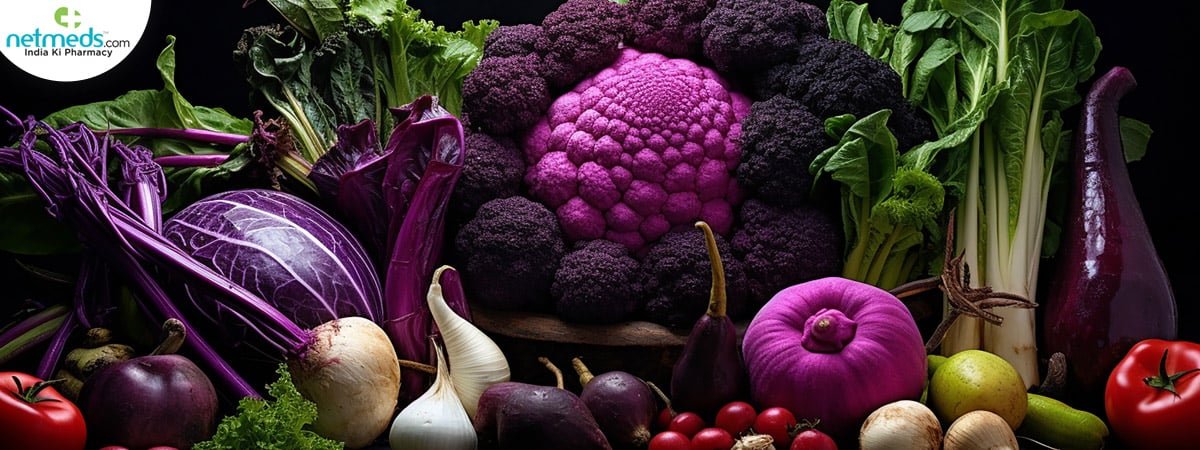
What Are Antioxidants And Anthocyanins? Why Do They Matter?
Antioxidants have always been known for their several benefits on the body. They are nothing but substances that guard cells against damage from molecules called free radicals. Our body makes some antioxidants on its own. Many come from foods like fruits, vegetables, nuts, and whole grains. Anthocyanins are a type of plant compound that appears in red, blue, and purple foods. They act as antioxidants and help heart health, blood sugar control, and reduce the chances of many mild to chronic ailments. However, eating foods rich in antioxidants does not promise protection from disease.
Also Read: Velvet Queen Tamarind: Health Benefits, Culinary Uses, Nutrition And Easy Recipe
7 Purple Foods To Eat for Better Health
Jamun (Indian Black Plum)
Jamun is an Indian fruit that has deep purple skin and juicy flesh. It has anthocyanins and other polyphenols plus a bit of vitamin C and fibre. Jamun provides antioxidants and fibre to the diet. Its plant compounds are being studied for help with blood sugar control. But evidence is not strong enough for jamun to replace diabetes medicine or act as a treatment. Eat washed jamun when it is in season and choose the fruit itself over sweetened juices, syrups or concentrated extracts.
Blueberries
Blueberries are famous for their Antioxidant content. They also give fibre, vitamin C, and other plant compounds. Blueberries benefit heart health and some aspects of blood vessel function. Eating them is easy as you can add frozen blueberries to oats, curd or a fruit bowl. Frozen berries are a choice when fresh ones are hard to find.
Grapes
Black and dark‑purple grapes hold anthocyanins, especially in their skins. This fruit provides natural sugars and small amounts of vitamins and minerals. Grapes have potent plant compounds that act as antioxidants. Enjoy grapes as a snack or add them to a fruit salad. Whole grapes are usually a better everyday choice than juice because they keep their fibre and are more filling.
Purple Cabbage
Purple cabbage holds anthocyanins and provides vitamin C, vitamin K, and fibre. Its nutrients support normal immune function, blood clotting, and digestive health. The fibre also helps keep bowel movements regular. Anthocyanins add activity, but the specific health effects of purple cabbage in humans need more study. You can add purple cabbage to salads, make a lightly cooked sabzi, or include it in vegetable stir‑fries. But avoid cooking if you want to keep more of its heat‑sensitive vitamin C.
Purple Eggplant
Purple brinjal is an ingredient in Indian cooking. Its skin holds anthocyanins, including nasunin, and the vegetable also provides fibre and other plant compounds. Brinjal adds variety and fiber to meals. Its skin holds compounds that scientists study for biological effects, but claims that brinjal detoxifies the body or stops specific diseases are not proven. Make brinjal as a lightly cooked sabzi. Use amounts of oil, as deep‑frying can raise the calorie content.
Purple Sweet Potato
Purple sweet potatoes hold powerful anthocyanins, carbohydrates, fibre, and other nutrients. Their nutrition varies with variety. They provide an energy source along with fibre and antioxidant plant compounds. Including them in meals can raise vegetable variety but they are not a special treatment for inflammation or chronic disease. You can steam, boil, or roast sweet potatoes. You can pair them with a protein source such as dal, beans or curd to create a more balanced meal.
Blackberries
Blackberries are dark‑coloured berries that are rich in anthocyanins and other polyphenols. Blackberries also provide significant fibre and vitamin C. Their fibre supports digestive health. Vitamin C from blackberries helps immune function and collagen formation. Anthocyanins from blackberries have metabolic benefits and support gut health. Enjoy blackberries frozen, add to porridge, or blend blackberries into a smoothie without added sugar.

Also Read: Phalsa: 5 Amazing Health Benefits Of The Indian Sherbet Berry
Tips for Getting Antioxidants From Your Diet
You do not need to eat all seven foods every day. Instead,d aim for variety. Purple foods are not the only source of antioxidants; citrus and even leafy vegetables, orange fruits, tomatoes, beans, nuts and whole grains give beneficial nutrients and plant compounds. Include different‑coloured fruits and vegetables. Choose fruits more often than juices because whole fruits keep more fibre. Eat fruit and vegetable skins when appropriate after washing them thoroughly. Use cooking methods such as steaming, roasting or light sautéing and limit added sugar, salt and oil.
Frequently Asked Questions
Can purple foods help prevent diseases?
A diet rich in fruits and vegetables is linked to overall health. Research suggests that anthocyanins may benefit cardiovascular and metabolic health measures, but no single purple food can guarantee disease prevention.
Are frozen purple fruits healthy?
Yes. Frozen blueberries and blackberries retain many of their nutrients. They are convenient when fresh fruit is unavailable. Choose products without added sugar when possible.
Should I take supplements instead of eating these foods?
Not routinely. Whole foods provide fibre and a combination of nutrients that supplements may not replicate. High‑dose supplements can also carry risks. Interact with medicines. Consult a healthcare professional before taking them for a health concern.
Conclusion
Purple foods such as jamun, blueberries, black grapes, purple cabbage, brinjal, purple sweet potatoes and blackberries provide a range of nutrients and plant compounds including anthocyanins. They have potential health benefits. For overall health, include purple foods as part of a varied, balanced diet rather than relying on any one food or antioxidant supplement. Regular physical activity, adequate sleep, and other healthy habits remain important besides a good diet.
References:
https://pubmed.ncbi.nlm.nih.gov/34725704/
https://pmc.ncbi.nlm.nih.gov/articles/PMC7504512/
https://pubmed.ncbi.nlm.nih.gov/34725704/
https://pmc.ncbi.nlm.nih.gov/articles/PMC7504512/
https://pmc.ncbi.nlm.nih.gov/articles/PMC9268388/
 Previous


