


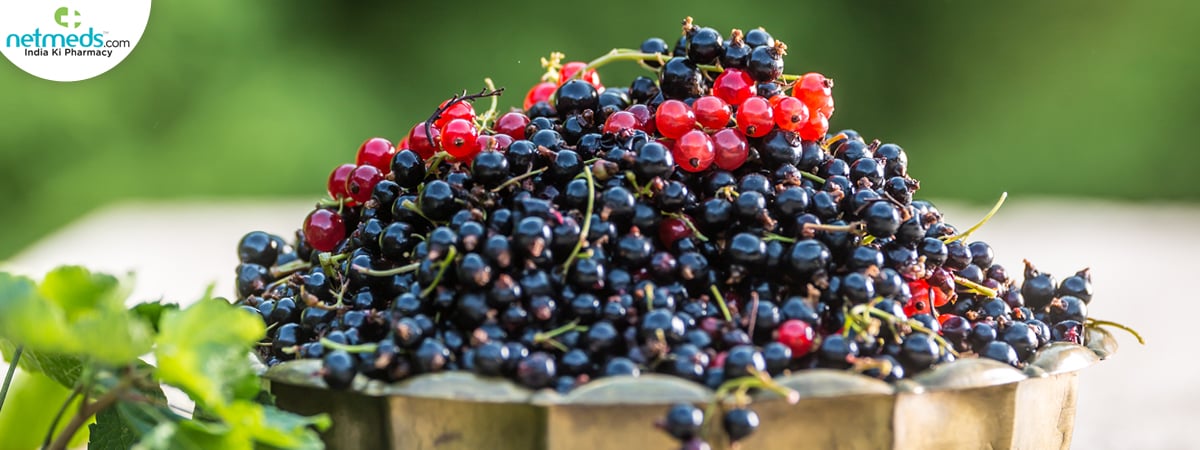
Lovely dark-coloured fruits that grow on shrubs and small trees in the genus Juneberry; depending on where they grow and the type, they might also be called Saskatoon, serviceberry, or shadbush. Resembling blueberries, these berries are pomes and are more like apples than real berries. When ripe, they are usually dark purple or blue-black. Mostly found in parts of Europe, Canada, and the US, they have an almond-like flavour; this fruit can be eaten raw or used in jams, pies, syrups, baked goods, and drinks.
This article sheds light on Juneberries health benefits, Juneberry nutritional value, potential side effects of Juneberries, and an easy Juneberry yogurt bowl recipe for you to try.
Also Read: Berries For Health: 7 Types, Key Nutrients And 5 Amazing Benefits- Infographic
Juneberries Nutrition
The exact nutrition of these berries can change depending on the type, how they are grown, and how ripe they are. Most types of Juneberries have fibre, minerals, vitamins, and plant substances like anthocyanins and other polyphenols. Loaded with a mix of fibre, carbs, nutrients, and natural plant substances, studies on them show about 5 to 6 grams of fibre and around 11 grams of natural sugars per 100 grams of fruit. They contain minerals like potassium, calcium, magnesium, iron and manganese. They also have amounts of vitamin C, vitamin E, and some B vitamins.
What Makes Juneberries Special?
One of the interesting things about Juneberries is the high number of polyphenols they have. These include anthocyanins, flavonols, and proanthocyanidins. Anthocyanins are the pigments that give fruits their purple colour and are also being studied for their effects on health.
Potential Health Benefits of Juneberries
Research has found the potential antioxidant, anti-inflammatory, and antimicrobial properties of compounds found in Saskatoon berries. While they may not prevent or treat specific diseases in humans, here are some health benefits these berries provide.
Juneberries Provide Antioxidants
Juneberries have plant substances that act as antioxidants. Antioxidants help protect cells from damage caused by molecules from normal body processes and the environment.
May Support Digestive Health
The fibre in Juneberries can help you meet your fibre needs. Getting fibre is important for regular digestion and healthy eating. But Juneberries should be seen as one source of fibre, not a way to treat constipation or other digestion problems.
Promotes Heart Health
Juneberries have significant anthocyanins, besides other plant substances that are great on the heart. Research on foods in anthocyanins has found links to heart health, but these results can't be directly connected to only Juneberries.
Provide minerals and vitamins
Juneberries have potassium, calcium, magnesium, iron, and manganese, but the amounts can change. They also have some vitamin C, vitamin E, and B vitamins. Manganese helps with body processes and antioxidant functions, while potassium helps with muscle and nerve function.
Contains Several Plant Substances
Research has found anthocyanins, proanthocyanidins, and phenolic acids in Saskatoon berries. These substances are known for their anti-inflammatory, metabolism-supporting, and germ-fighting effects. Consuming them regularly and in moderate amounts can help promote overall well-being.
Also Read: Goji Berries: Bounteous Health Benefits Of This Bright Red Tiny Fruit
How to Use Juneberries
Ripe Juneberries can be eaten in the following ways:
· Eat them raw after washing them well
· Add them to yogurt, oatmeal, or breakfast cereal
· Mix them into smoothies
· Use them in muffins, cakes, and pies
· Make jam, jelly, or fruit sauce
· Add them to pancakes or desserts
· Use them to make syrups or fruit drinks
· Freeze them for later use.
(Shop From Our Wide Range Of Nutrition Supplements To Boost Overall Health!)
Juneberry Yogurt Bowl
This simple Juneberry yogurt bowl combines fruit, yogurt, oats, and nuts for a nutritious breakfast or snack without relying on added sugar.
Ingredients
· 1 cup thawed Juneberries
· 1 cup plain yogurt
· 2 tablespoons rolled oats
· 1 tablespoon chopped nuts or seeds
· 1 teaspoon honey, optional
· A pinch of cinnamon
Method
· Wash fresh Juneberries thoroughly. If using frozen, thaw first
· Put the yogurt in a bowl
· Top with Juneberries, oats, and chopped nuts or seeds
· Add cinnamon and a little honey if you like
· Serve fresh. For a version with sugar, skip the honey and let the natural sweetness of the fruit shine
Potential Side Effects of Juneberries
Juneberries are usually eaten as a fruit. There is not much information on their long-term safety or use as medicine. Some things to think about are:
· Eating a lot of high-fibre foods at once can cause bloating, gas, or tummy pain, especially if you are not used to eating a lot of fibre.
· People with fruit allergies should be careful. If you have symptoms like swelling, trouble breathing, or hives, stop eating the fruit and see a doctor.
· Some research has found glycosides in the seeds and in parts like the leaves and twigs of A. Alnifolia. The ripe fruit has less, but research on the safety of different Amelanchier species is limited. So don't eat the leaves, twigs, or other parts without knowing they are safe.
· People taking medicines or considering using concentrated extracts should talk to a doctor. There is no research on the safety or how they might interact with other medicines.
Frequently Asked Questions About Juneberries
Are Juneberries and Saskatoon berries the same?
They can be the same or very similar depending on where they are being grown. Saskatoon berry usually refers to Amelanchier alnifolia, while Juneberry and serviceberry are general names for different Amelanchier types.
Can You Eat Juneberries Raw?
Yes. Ripe Juneberries can be eaten raw after washing. They can also be. Used in jams, pies, and other foods.
Are Juneberries Better Than Blueberries?
There is no need to say one is better than the other. Both have nutrients and plant substances. Juneberries are known for their fibre, minerals, and polyphenols. The nutrients can be different between fruits and types.
Are Juneberries for diabetes?
Juneberries have fibre and natural sugars. There is not enough human research to say they are a good choice for diabetes. People with diabetes can talk to their doctor. A dietitian about how much fruit to eat.
Can Juneberries be eaten every day?
Ripe Juneberries can be part of a healthy diet. There is no set amount for Juneberries, and research does not prove that eating a lot gives benefits.
Are Juneberries the Same as Blueberries?
No. Juneberries and blueberries are different fruits, although they can look similar when ripe. Juneberries belong to the Amelanchier genus and generally have a sweeter, mildly nutty flavour.
Conclusion:
Juneberries is a fruit that can add variety to your meals. They give fibre, minerals, vitamins, and plant substances, especially anthocyanins and other flavonoids. Research into their effects is promising, but most of the findings are from animal studies. Eat ripe Juneberries like other fruits, fresh, frozen, or in everyday dishes. Don’t see them as a cure or a superfood, but as part of a balanced diet.
References:
[https://pmc.ncbi.nlm.nih.gov/articles/PMC13022111/](https://pmc.ncbi.nlm.nih.gov/articles/PMC13022111/)
[https://doi.org/10.1007/s10068-025-01997-7](https://doi.org/10.1007/s10068-025-01997-7)
[https://gardening.usask.ca/gardening-advice/gardenline-nested-pages/food-plant-pages/fruit/saskatoon.php](https://gardening.usask.ca/gardening-advice/gardenline-nested-pages/food-plant-pages/fruit/saskatoon.php)
[https://teachingtest.usask.ca/traditional-garden/in-the-garden/juneberries.php](https://teachingtest.usask.ca/traditional-garden/in-the-garden/juneberries.php)
[https://pmc.ncbi.nlm.nih.gov/articles/PMC7120188/](https://pmc.ncbi.nlm.nih.gov/articles/PMC7120188/)
[https://pmc.ncbi.nlm.nih.gov/articles/PMC6270369/](https://pmc.ncbi.nlm.nih.gov/articles/PMC6270369/)
[https://www.webmd.com/diet/what-are-saskatoon-berries](https://www.webmd.com/diet/what-are-saskatoon-berries)
 Previous


