


As we transition from heavy monsoon rains into winter, temperatures have gradually begun to drop with each passing day. Thus, the body may need extra nourishment to support overall well-being and stay away from winter-borne illnesses. Adding the right seasonal foods to your diet before winter arrives can help you prepare for colder days while keeping meals wholesome and balanced. From nutrient-rich fruits and vegetables to warming herbs and healthy fats, many foods are naturally rich in essential vitamins, minerals, and antioxidants that support overall health and well-being.
Also Read: 7 Superfoods To Add To Your Winter Diet To Boost Immunity And Energy
Why Winter Foods Hold Value
Shorter days, cooler temperatures, and changes in routine can influence appetite, activity levels, and everyday food choices. A balanced winter diet doesn’t have to be complicated or overly restrictive. Seasonal produce, whole grains, nuts, seeds and warming foods can provide essential nutrients to support normal immune function. Foods rich in healthy fats and protein can be particularly useful when temperatures dip down, while fruits and veggies are a great source of antioxidants and essential micronutrients. While thirst may be less noticeable in cold weather, staying adequately hydrated remains important too. A varied diet, adequate hydration, regular movement, and healthy lifestyle habits can help you stay nourished throughout the colder season.
(To Combat Seasonal Illness And Stay Healthy, Buy From Our Wide Range Of Health Supplements)
Traditional winter foods can also be valuable when prepared thoughtfully. For example, sesame seeds, walnuts and millet can add healthy fats, minerals, fibre and plant-based protein to meals. Root vegetables and leafy greens provide additional vitamins, minerals and fibre. However, no single food can prevent infections or guarantee immunity during winter. Overall dietary variety, adequate sleep, physical activity, hydration and appropriate hygiene remain important components of healthy living.
Precautions When Adding Certain Foods to Your Diet
In conclusion, nutrient density, portion size, and individual dietary needs all matter, but eating moderate portions is advisable rather than consuming nuts and seeds in high quantities. People with nut or seed allergies should check food labels for possible cross-contamination. Those with diabetes should consider the carbohydrate content before simply assuming that traditional winter preparations can never go wrong. Sweetened versions of seasonal dishes like carrot halwa or sweet balls can contain substantial amounts of sugar and calories. Anyone taking regular medication or following a medically supervised diet should consult a healthcare advisor before adding any ingredients in large amounts.
It is also important to maintain food hygiene. Wash fresh produce thoroughly, store perishable foods properly, and avoid consuming ingredients that are spoiled or have been stored incorrectly. Do not rely on individual foods or supplements as a substitute for medical treatment, vaccination, or a balanced diet.
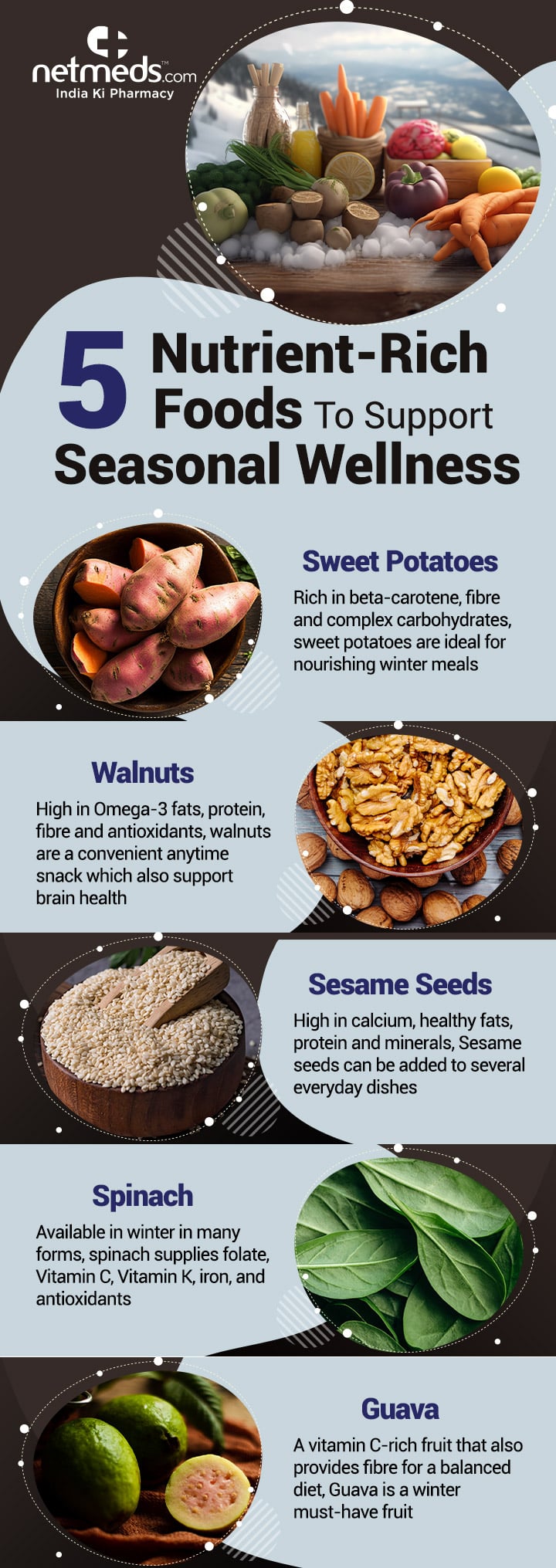
Here are some winter-specific foods to add to your diet and support your health through the chilly season. They easily fit into everyday Indian meals while also providing a variety of essential nutrients.
References:
https://pmc.ncbi.nlm.nih.gov/articles/PMC1447925/
https://health.clevelandclinic.org/5-foods-for-winter-weather
https://ijisrt.com/a-comprehensive-study-on-the-winter-delicacies-of-the-kashmir-valley
https://pmc.ncbi.nlm.nih.gov/articles/PMC1447925/
https://journals.plos.org/plosone/article?id=10.1371/journal.pone.0053121
 Previous


