Beautifully scented blooms not only ornate the interiors of your house but also some of them augment your health and overall wellness. Commonly termed as “Edible Flowers”, which simply indicates that the flowers were grown in a food-safe way, without the use of harmful pesticides or other chemicals.
Although they are not commonly used in our daily household cooking, some flowers which are marked safe to eat are used in many different styles of cuisines all over the world.
These blossoms can offer a unique burst of flavour and tint to many dishes, including rice, smoothies, sauces, and beverages. Some of them filled with vital nutrients can even provide an array of health benefits when brewed as a tea, concocted as a jam, or just sprinkled over salads or juices.
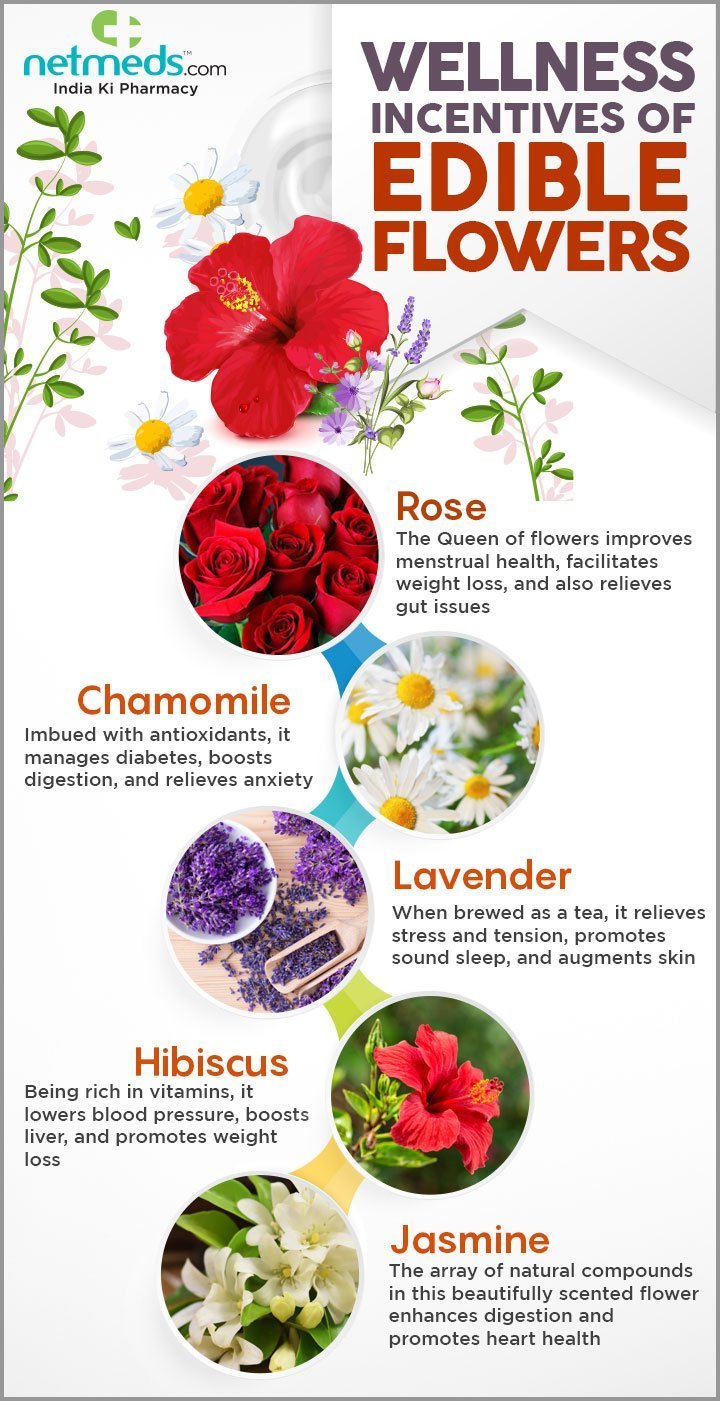
Imbued with antioxidants, vitamins, and bioactive components, these flowers offer innumerable health benefits. Right from boosting digestion, relieving stress and anxiety, managing diabetes, lowering cholesterol, promoting heart health, augmenting skin, and improving menstrual health, these edible flowers offer a one-stop remedy for all. And the best part is, some of them you can even grow in your kitchen garden and use them for enhancing the taste and therapeutic value of gourmet meals. Also Read: Jasmine: 5 Astonishing Benefits Of Adding This Incredible Flower To Your Diet
So what are you waiting for? Foray through the infographic to know about the health benefits of these fascinating edible flowers and use them in your favourite cuisine next time to please your guests.
Frequently Asled Questions
1. What are the health benefits of eating edible flowers?
Edible flowers can provide antioxidants, polyphenols, flavonoids and other bioactive compounds that may support overall health, although human evidence varies by flower and benefit.
2. Which flowers are safe to eat?
Only flowers specifically identified as edible and grown for culinary use should be consumed, as some ornamental flowers can contain toxic compounds or pesticide residues.
3. Are edible flowers good sources of antioxidants?
Many edible flowers contain antioxidant compounds such as phenolics, flavonoids, anthocyanins and carotenoids, but their concentrations differ considerably among species.
4. Can edible flowers improve digestion and immunity?
Some edible flowers contain bioactive compounds with potential digestive, anti-inflammatory and other health-promoting effects, but stronger human clinical evidence is still needed before making therapeutic claims.
5. Are edible flowers safe to eat every day?
Edible flowers can be incorporated into the diet when correctly identified, properly handled and sourced from food-safe producers, but regular consumption should not include unidentified or chemically treated flowers.
References:
A Comprehensive Review of Edible Flowers with a Focus on Microbiological, Nutritional, and Potential Health Aspects – PubMed (2025)
A recent comprehensive review covering nutritional composition, bioactive compounds, potential health benefits and microbiological safety concerns of edible flowers.
An Update on the Health Benefits Promoted by Edible Flowers and Involved Mechanisms – PubMed
Reviews research on antioxidant, anti-inflammatory, hepatoprotective, neuroprotective, anti-diabetic and other potential effects associated with edible flowers.
Phytochemical Content, Health Benefits, and Toxicology of Common Edible Flowers – PubMed
Examines phytochemicals found in common edible flowers, their potential health effects and available toxicological evidence.
Nutraceutical Potential of Dietary Phytochemicals in Edible Flowers – PubMed
Reviews flavonoids, phenolic acids and anthocyanins in edible flowers and their potential antioxidant, anti-inflammatory and cardioprotective properties.
Edible Flowers’ Flavor, Safety and Their Utilization as Functional Ingredients – PMC
Discusses the nutritional and bioactive properties of edible flowers alongside potential chemical, biological and microbial safety hazards.
The Compositional Aspects of Edible Flowers as an Emerging Horticultural Product – PMC
Provides information on phenolic compounds, flavonoids, carotenoids, betalains and other bioactive components found in edible flowers.
Traditionally Used Edible Flowers as a Source of Neuroactive, Antioxidant, and Anti-Inflammatory Extracts – PMC (2025)
Reviews traditional edible flowers and their potential neuroactive, antioxidant and anti-inflammatory properties.
Tropane and Pyrrolizidine Alkaloids in Edible Flowers and Flower-Derived Foods – PubMed
Highlights food-safety concerns involving toxic alkaloids, pesticide residues, heavy metals and microbial contamination in edible flowers and flower-derived products.
 Previous