Our bones are constantly breaking down and rebuilding through a natural cellular process. But the rate of breakdown surpasses new bone formation, which may be due to ageing, hormonal changes or underlying health conditions; this may lead to osteoporosis, a condition that can severely weaken bones. As bone loss develops slowly without any noticeable symptoms, most people do not realise they have osteoporosis until they suffer a fracture.
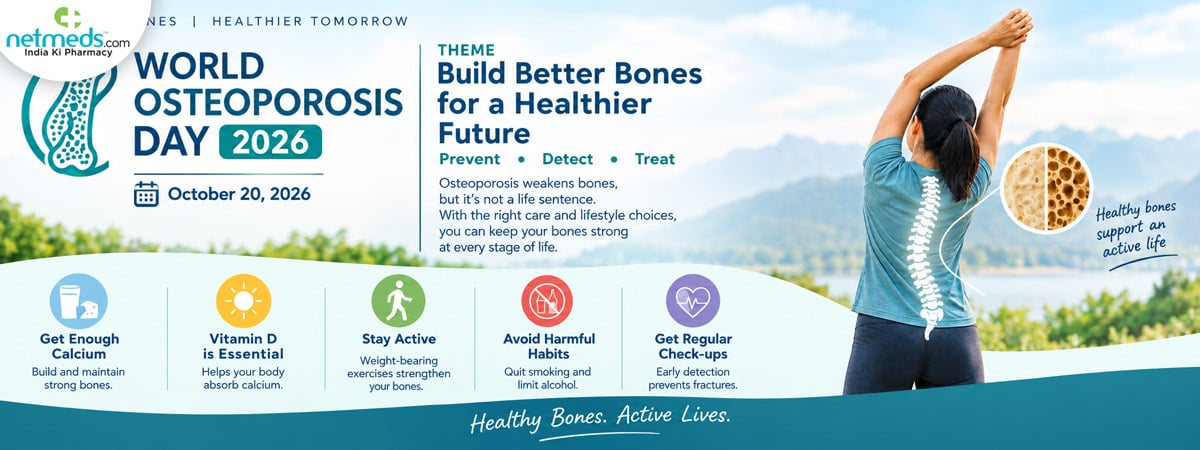
World Osteoporosis Day 2026 is observed on October 20 to raise awareness about osteoporosis, a condition that weakens bones and increases the risk of fractures. On this World Osteoporosis Day, let us work together to raise awareness globally about prompt detection, prevention and the role of nutrition in maintaining stronger bones throughout life.
Dive into this article to learn more about the significance, theme of World Osteoporosis Day 2026, and five vital nutrients to consider for better bone health.
World Osteoporosis Day 2026: Theme
The theme for World Osteoporosis Day 2026 is “Build, Protect, Strengthen Your Bones for Life.” The campaign emphasises lifelong bone health, from building strong bones during childhood to preserving bone strength in adulthood and preventing fractures in later years
The theme promotes people to take proactive steps to safeguard their bones through nutritious food choices, regular physical activity, understanding their osteoporosis risk and seeking medical advice when needed. Additionally, it highlights the need for the right treatment and fracture prevention for people already living with osteoporosis.
What is Osteoporosis?
Osteoporosis is a bone condition categorised by decreased bone density and deterioration of bone structure, making bones more fragile and likely to break. It commonly affects the hip, spine and wrist.
Significance of World Osteoporosis Day
World Osteoporosis Day plays an important role in educating people about bone health and encouraging preventive care. Its significance includes:
Helps people understand osteoporosis, its risk factors and potential complications.
Promotes medical assessment and bone mineral density testing when appropriate.
Highlights the importance of calcium, vitamin D, protein and other nutrients for healthy bones.
Encourages fall-prevention measures, timely treatment and regular follow-up for people at increased risk.
This health event is a reminder that taking necessary care for your bones is a lifelong priority, rather than something to consider only in older age.
Also Read: World Osteoporosis Day: 5 Ways To Stay Healthy With Osteoporosis
5 Key Supplements for Bone Health
Good nutritional status and intake of the right nutrients help build stronger bones and maintain bone health; however, supplements are not required for everyone. A wholesome and balanced diet should be the first source of meeting the requirements of the key nutrients.
Supplements are considered valuable for individuals when dietary intake is insufficient, or nutritional deficiency is identified. In those cases, supplements are recommended by a healthcare provider.
Here we have curated five nutrients that play important roles in bone health.
Calcium
Calcium is the most abundant mineral present in the body, accounting for 90% and a major structural element of bones and teeth. Adequate calcium intake helps maintain bone mineral density and supports normal muscle mass and nerve function.
Food sources: Milk, curd, paneer, calcium-set tofu, ragi, sesame seeds and certain green leafy vegetables.
When Do You Need A Supplement?
Calcium supplements may be suggested when dietary intake alone does not provide enough calcium, particularly for those with increased needs or certain medical conditions. Excessive supplementation may cause constipation and increase the risk of kidney stones in susceptible individuals.
Vitamin D
Vitamin D is vital for calcium absorption and normal bone mineralisation. Without adequate vitamin D, the body cannot efficiently absorb calcium from food, which can contribute to weak bones and other bone-related deformities associated with vitamin D deficiency.
Food sources: Fatty fish, egg yolks and vitamin D-fortified foods. The body also produces vitamin D following exposure to sunlight.
When Do You Need A Supplement?
Vitamin D supplements may be recommended for those with confirmed deficiency, poor intake or certain risk factors. The right dose depends on individual needs, and you should not take high doses without proper medical guidance.
Magnesium
Magnesium is another key mineral involved in bone formation and helps regulate processes linked to calcium and vitamin D metabolism. A substantial proportion of the body's magnesium is stored in bones. It supports bone structure, muscle and nerve function.
Food sources: Nuts, seeds, whole grains, beans, lentils and green leafy vegetables.
When Do You Need a Supplement?
Supplementation may be needed when dietary intake is poor or a deficiency is identified. However, studies that suggest magnesium supplements independently prevent osteoporosis or fractures remain limited. Excessive intake from supplements can cause diarrhoea, and people with kidney disease need medical advice before using them.
Vitamin K
Vitamin K is needed to activate certain proteins involved in the bone metabolism process, including osteocalcin. These proteins play a vital role in the normal formation and maintenance of bone tissue.
Food sources: Spinach, broccoli, cabbage and other green leafy vegetables.
When Do You Need a Supplement?
A varied and balanced diet generally supplies vast reserves of vitamin K for most people. Although vitamin K supplements have been studied for bone health, evidence is not strong enough to recommend routine supplementation to lower the risk of osteoporosis. Vitamin K can interact with certain medications and other vitamin K-sensitive anticoagulant treatments, so consult a healthcare provider before taking supplements.
Zinc
Zinc is an essential trace mineral involved in protein synthesis, cell growth and tissue repair. It also contributes to the normal functioning of cells involved in bone formation. Additionally, adequate intake of zinc may support bone growth and maintenance, and normal immune function.
Food sources: Dairy products, legumes, nuts, seeds, whole grains, eggs and meat.
When Do You Need A Supplement?
Zinc supplements may be beneficial for people with inadequate dietary intake or a diagnosed deficiency. However, there is limited evidence that taking extra zinc improves bone health in people who already get enough. Excessive zinc intake can cause nausea and interfere with copper absorption.
Can Supplements Alone Prevent Osteoporosis?
No. Supplements alone cannot offer protection against osteoporosis or fractures. They are intended to fill nutritional gaps and support overall bone health, not replace a healthy lifestyle or prescribed osteoporosis treatment.
Who Is at Higher Risk of Osteoporosis?
Although osteoporosis can affect people of different ages and sexes, some factors increase the risk:
Age and menopause-related hormonal changes.
A strong family history of osteoporosis or hip fractures.
Underweight or a history of fragility fractures.
Low calcium or vitamin D intake.
Physical inactivity and smoking.
Certain medical conditions or long-term use of medicines such as glucocorticoids.
People with these risk factors should speak with a healthcare provider about appropriate screening and preventive measures.
Conclusion
World Osteoporosis Day 2026 emphasises the need of building, protecting and strengthen bones throughout life. Adequate calcium, vitamin D, magnesium, vitamin K and zinc contribute to bone health, but supplements should be used thoughtfully and according to individual needs. A nutritious and balanced diet, regular physical activity, timely assessment and appropriate treatment can help preserve bone strength, reduce fracture risk and support mobility and independence as you age.
References:
https://www.worldosteoporosisday.org/node
https://www.worldosteoporosisday.org/
https://en.wikipedia.org/wiki/World_Osteoporosis_Day
https://pmc.ncbi.nlm.nih.gov/articles/PMC2621390/
The use of calcium and vitamin D in the management of osteoporosis
John A Sunyecz
https://pmc.ncbi.nlm.nih.gov/articles/PMC12714311/
Supplements for bone health
Tiago Donizeti Bertolacini da Silva 1,2, Gabriela Mazzarolo Marcondes Vieira 1, Layana Tyara Sandes Fraga 1, Wesdrey Dantas Fernandes 1, Eliane Naomi Sakane 1, Sergio Setsuo Maeda 1
Matikainen N, Pekkarinen T, Ryhänen EM, Schalin-Jäntti C. Physiology of Calcium Homeostasis: An Overview. Endocrinol Metab Clin North Am. 2021 Dec;50(4):575–590. doi: 10.1016/j.ecl.2021.07.005
Deluque AL, Dimke H, Alexander RT. Biology of calcium homeostasis regulation in intestine and kidney. Nephrol Dial Transplant. 2025 Feb;40(3):435–445. doi: 10.1093/ndt/gfae204.. Erratum in: Nephrol Dial Transplant. 2025 Aug 29;40(9):1810. 10.1093/ndt/gfaf131
Erben RG. Physiological Actions of Fibroblast Growth Factor-23. Front Endocrinol (Lausanne) 2018 May;9:267. doi: 10.3389/fendo.2018.00267
Gao H, Ji B, Jager IL, Arzt E, Fratzl P. Materials become insensitive to flaws at nanoscale: lessons from nature. Proc Natl Acad Sci U S A. 2003 May;100(10):5597–5600. doi: 10.1073/pnas.0631609100
Bonucci E. Bone mineralization. Front Biosci (Landmark Ed) 2012 Jan;17(1):100–128. doi: 10.2741/3918
Zhu K, Prince RL. Calcium and bone. Clin Biochem. 2012 Aug;45(12):936–942. doi: 10.1016/j.clinbiochem.2012.05.006
Winter EM, Ireland A, Butterfield NC, Haffner-Luntzer M, Horcajada MN, Veldhuis-Vlug AG, et al. Pregnancy and lactation, a challenge for the skeleton. Endocr Connect. 2020 Jun;9(6):R143–R157. doi: 10.1530/EC-20-0055.. [DOI] [PMC free article] [PubMed] [Google Scholar]
Matkovic V, Heaney RP. Calcium balance during human growth: evidence for threshold behavior. Am J Clin Nutr. 1992 May;55(5):992–996. doi: 10.1093/ajcn/55.5.992.. [DOI] [PubMed] [Google Scholar]
Cormick G, Belizán JM. Calcium Intake and Health. Nutrients. 2019 Jul;11(7):1606. doi: 10.3390/nu11071606.. [DOI] [PMC free article] [PubMed] [Google Scholar]
 Previous