Roti is a staple in most Indian households, and meals feel incomplete without it. As food habits change, numerous nutritious alternatives have emerged. Have you ever realised that your kitchen has umpteen varieties of grains that deliver more health benefits than wheat? Yes, these flours may support weight management, promote digestion, and strengthen bones. In addition, exploring other nutritious flours can diversify your meal regimen and optimise overall nutrient intake.
Delve into this article to discover five wholesome flours, their nutrition, health benefits, and how they can make your daily meals more nourishing.
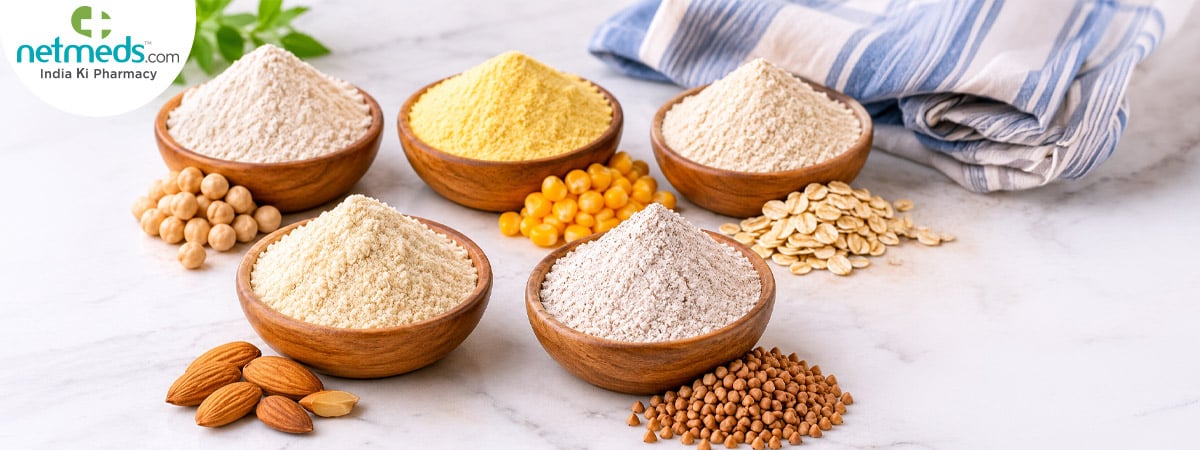
5 Healthy Alternatives to Wheat Roti You Should Try
Ragi Roti (Finger Millet)
Ragi, also called a finger millet, is a nutrient-dense grain widely consumed across India. It is extremely rich in calcium, phosphorus, iron, dietary fiber, and other essential minerals. The calcium and phosphorus in ragi promote bone health. It supplies antioxidants, iron, and dietary fiber that support healthy digestion, blood sugar management, and boost iron levels.
Ways to Add It: Make soft ragi rotis using ragi flour, warm water and a little salt. Pair them with vegetable curry, sambar or curd.
Also Read: 5 Best Gluten-Free Grains And How To Cook Them For Maximum Nutrition
Jowar Roti (Sorghum)
Jowar is a gluten-free whole grain loaded with plant-based protein and essential minerals. It is a popular alternative to wheat flour, particularly in Maharashtra and Karnataka regions. The goodness of dietary fiber supports the digestion process, is a healthier alternative for those suffering from celiac disease and irritable bowel syndrome and improves overall gut health. While loaded with antioxidants, plant compounds and minerals like magnesium, phosphorus and iron optimises overall well-being.
Ways to Add It: Make soft jowar rotis using freshly prepared dough and serve them with leafy vegetable curry, dal or curd.
Bajra Roti (Pearl Millet)
Bajra, or pearl millet, is a nutritious traditional whole grain rich in fibre, magnesium, iron, and other key nutrients. It is very popular during winter in many parts of India. Provides dietary fibre that supports digestive health. Rich in magnesium, it plays a vital role in muscle and nerve function. Moreover, loaded with plant protein and other essential minerals, bajra optimises the overall nutritional quality of meals.
Ways to Add It: Prepare bajra rotis with warm water and serve them with methi sabzi, baingan bharta or dal.
Also Read: Ragi Vs Wheat Flour Which Is Healthier Nutrition Benefits And Uses
Barley Roti
Barley roti offers immense health benefits. Being low in calories and packed with dietary fiber, it supports gut health, improves digestion, and offers respite from common digestive problems such as constipation, bloating, and indigestion.
Ways to Add It: Prepare barley rotis or savoury flatbreads using barley, chopped onions, coriander, green chillies, and spices. Pair them with curd or vegetable raita.
Rajgira Roti (Amaranth)
Rajgira, also called amaranth, is a naturally gluten-free pseudocereal that contains an impressive profile of plant-based protein, fibre, calcium, iron and magnesium. It contains vital minerals that promote bone health and proper muscle function. Supplies dietary fibre for digestive health and adds variety to daily meals.
Ways to Add It: Combine rajgira flour with warm water to prepare soft flatbreads. Serve with vegetable curry, dal or homemade curd.
Wheat Roti vs Its Healthy Alternatives: Which Is More Nutritious?
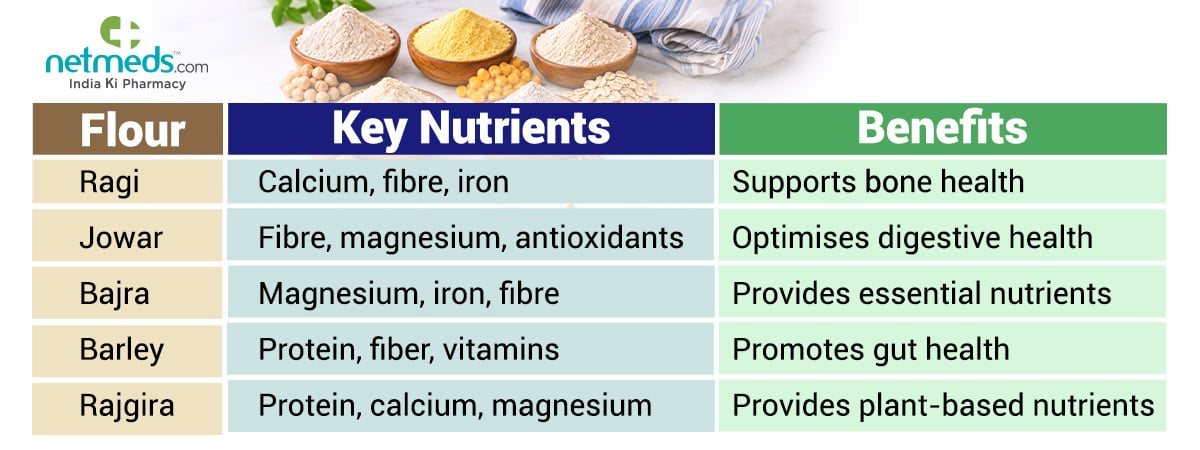
Different type of flours provides various nutritional benefits. Here is a quick comparison of their key nutritional characteristics.
Tips to Make Your Rotis Healthier
Prefer whole-grain flours instead of refined or highly processed varieties.
Combine different millet flours with pulses to improve plant-based protein and fibre intake.
Add finely chopped vegetables or leafy greens to your roti dough to boost fiber intake.
Avoid adding excessive ghee, butter or oil during preparation.
Practise portion control and include vegetables to create a balanced meal.
Are These Wheat Roti Alternatives Good for People with Diabetes?
Yes, these alternatives can be included in a diabetes-friendly eating pattern, provided portion sizes and the overall meal composition are monitored
Millets such as ragi, jowar and bajra provide fibre, minerals, vitamins and additional protein. However, these foods still contain carbohydrates and can increase blood glucose levels.
People with diabetes should:
- Monitor portion sizes and individual blood glucose responses.
- Combine rotis with protein-rich foods and non-starchy vegetables.
- Avoid assuming that millet-based rotis are automatically low in carbohydrates.
- Seek advice from a registered dietitian to determine personalised portions based on individual nutritional requirements and blood glucose control.
Frequently Asked Questions
Which is the healthiest alternative to wheat roti?
Ragi, jowar, bajra, barley, and rajgira are nutritious alternatives. The best choice depends on your nutritional needs and fitness goals.
Which roti is best for weight loss?
Rotis made with whole-grain flours such as jowar, bajra and barley can support weight management when consumed in controlled portions as part of a calorie-balanced diet.
Which Indian flours are naturally gluten-free?
Ragi, jowar, bajra, barley and rajgira are naturally gluten-free. However, people with coeliac disease should choose certified gluten-free products to avoid cross-contamination.
Can I eat millet roti every day?
Yes, different millet rotis can be included regularly as part of a balanced diet. Rotating grains helps provide a wider variety of nutrients.
Conclusion
Replacing wheat roti occasionally with nutritious alternatives like ragi, jowar, bajra, barley and rajgira can help add variety to your diet and improve nutrient intake. Each flour offers unique nutritional benefits, from calcium and iron to fibre and plant-based protein. Rather than eliminating wheat roti, consider rotating different whole-grain and pulse-based flours to enjoy a balanced and varied diet.
References:
https://pubmed.ncbi.nlm.nih.gov/35441405/
New alternatives from sustainable sources to wheat in bakery foods: Science, technology, and challenges
Shahida Anusha Siddiqui 1 2, M M Chayan Mahmud 3, Gholamreza Abdi 4, Uracha Wanich 5, Muhammad Qudrat Ullah Farooqi 6, Natwalinkhol Settapramote 7, Sipper Khan 8, Sajad Ahmad Wani 9
Adeloye, J. B., Osho, H., & Idris, L. O. (2020). Defatted coconut flour improved the bioactive components, dietary fibre, antioxidant and sensory properties of nixtamalized maize flour. Journal of Agriculture and Food Research, 2, 100042.
Ahmad, F., Siddiqui, S. A., Sundari, R. S., Ahmad, J., Shah, S. M., Khan, M. R., Tarigan, R. A., Nagdalian, A., Mehdizadeh, M., Moazzem, M. S., Ali, A., Fidan, H., Kasulla, S., Malik, S. J., Blinov, A., Fazili, M. A., Kiptum, C. K., & Ibrahim, S. (2022). Assessing integrated nitrogen and planting density on growth, yield components, and financial analysis of maize crops (zea mays). Journal of Hygienic Engineering and Design. https://doi.org/10.13140/RG.2.2.25545.21606
Ahmed, J., Al-Attar, H., & Arfat, Y. A. (2016). Effect of particle size on compositional, functional, pasting and rheological properties of commercial water chestnut flour. Food Hydrocolloids, 52, 888-895.
Al Alawi, A. M., Majoni, S. W., & Falhammar, H. (2018). Magnesium and human health: Perspectives and research directions. International Journal of Endocrinology, 2018, 1-17.
Altındağ, G., Certel, M., Erem, F., & İlknur Konak, Ü. (2015). Quality characteristics of gluten-free cookies made of buckwheat, corn, and rice flour with/without transglutaminase. Food Science and Technology International, 21(3), 213-220.
https://pubmed.ncbi.nlm.nih.gov/35441405/
 Previous