Managing diabetes means more than just cutting down sugar. Yes, choosing the right type of diet can help regulate blood glucose levels, manage weight, and lower the risk of diabetes-associated complications. The two most discussed dietary approaches are a low-carb diet and a low-calorie diet.
(To Manage Diabetes And Optimise Overall Health, Buy From Our Extensive Range of Diabetes Essentials Today!)
But is a low-carb diet better than a low-calorie diet for diabetes management? Well, the answer is not necessarily. Both these dietary methods can be helpful, depending on a person’s overall diet quality, calorie intake, medication, physical activity, health status and individual nutritional requirements. For most people with diabetes, the sustainable eating pattern is one that combines right carb intake with balanced portion size and adequate nutrition, rather than paying attention to either carbs or calories.
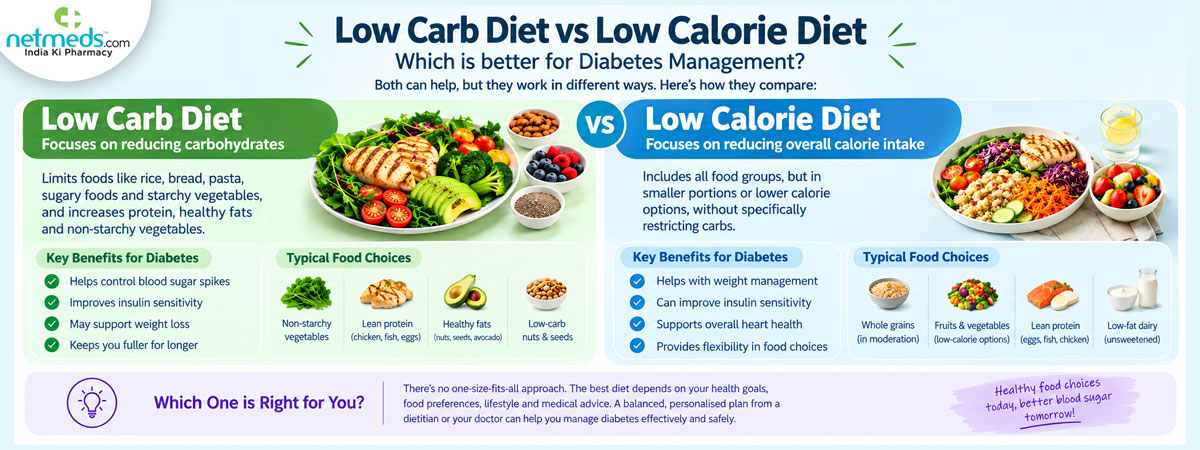
What Is a Low-Carb Diet?
A low-carb diet restricts the amount of carbohydrates consumed from food sources like rice, bread, cereals, potatoes, sweets, sugary beverages and other carbohydrate-dense foods.
Instead, meal plans generally emphasise consuming:
- Non-starchy vegetables
- Good quality protein foods such as eggs, fish, chicken, pulses and tofu
- Nuts and seeds
- Healthy fats in right portions
- Whole grains and other high-fibre carbohydrates in measured amounts
- The extent of carb restriction can differ considerably. A moderately limited carbohydrate diet varies from a very-low carbohydrate or ketogenic diet.
How Can A Low-Carb Diet Help With Diabetes?
Carbohydrates have a remarkable effect on blood glucose because they are broken down into the simpler form glucose during digestion. Restricting the amount of carbohydrate, particularly refined and highly processed carbohydrates, can reduce post-meal blood glucose spikes in some people with diabetes.
A well-planned low-carb diet may also be helpful in:
- Controls blood glucose level
- Reduces post-meal glucose elevations
- Supports weight loss
- Reduces the need for diabetes medications in certain people under proper medical guidance
- Lowers triglyceride levels
However, replacing carbohydrates with large amounts of unhealthy and saturated fat or processed meat is not a healthy strategy.
Also Read: Diabetes Diet: 9 Foods And Drinks To Avoid For Better Blood Sugar Control
What Is a Low-Calorie Diet?
A low-calorie diet focuses mainly on reducing total daily calorie intake rather than specifically restricting carbohydrates. Calories primarily come from carbohydrates, protein and fat. A calorie-controlled diabetes diet can therefore include all three macronutrients in the right proportions.
A balanced low-calorie meal may contain:
High-fibre vegetables
A moderate portion of whole grains or other carbohydrates
Lean protein
Healthy fats
Low-sugar fruits
Adequate fluids
How Can a Low-Calorie Diet Help With Diabetes?
Diabetes who are overweight or living with obesity, reducing calorie intake can support weight loss. Even modest weight loss can promote insulin sensitivity and blood glucose control in many people with type 2 diabetes.
A calorie-controlled eating pattern may therefore help:
Reduce weight
Improve insulin sensitivity
Better blood glucose control
Lower cardiometabolic risk factors
Promote healthier eating habits
Most essentially, a low-calorie diet should not mean severely limiting food or skipping meals. Extremely low-calorie diets should be followed under proper medical guidance.
Which Is Better for Diabetes: Low-Carb or Low-Calorie?
Well, neither is a universally right choice for those living with diabetes. Studies show that reducing carbohydrate intake can improve glycaemic control in some people, particularly in the short term. At the same time, calorie restriction can promote weight loss, which substantially improves metabolic health, especially for people with type 2 diabetes who have excess body weight.
In general, the quality of the diet, sustainability, and overall calorie intake may be more important than choosing between an extremely low-carb and extremely low-calorie diet.
A person with diabetes may benefit from:
Choosing fibre-dense carbohydrates
Controlling carbohydrate portions
Including protein with every meal
Eating plenty of non-starchy vegetables
Limiting added sugars and refined carbohydrates
Maintaining an appropriate calorie intake
Staying physically active
What Type of Carbohydrates Should People With Diabetes Choose?
Well, not all types of carbohydrates impact blood glucose in the same way. Instead of totally restricting carbohydrates, pay attention to nutrient -dense, high-fiber food sources.
Also Read: Diabetes Diet: Read To Know The Common FAQ About
Better choices can include:
- Whole grains such as oats and whole-wheat products
- Millets
- Beans and lentils
- Non-starchy vegetables
- Whole fruits
- Unsweetened dairy and dairy products
- Limit or reduce:
- Sugary drinks
- Sweets and desserts
- Refined cereals
- Large portions of white rice
- Refined food products
- Highly processed snacks
Remember portion size matters even with healthier carbohydrate sources.
Is a Low-Carb Diet Safe for Everyone With Diabetes?
No. A low-carb diet may not be appropriate for everyone. Those who are taking insulin or certain diabetes medicines sugar levels may drop down and may need medication adjustments when significantly reducing carbohydrate intake. People with kidney, liver or other medical conditions may also require individual dietary advice.
A very-low-carbohydrate or ketogenic diet should therefore not be started without discussing it with a doctor or registered dietitian, particularly if you take glucose-lowering medication.
Frequently Asked Questions
Is A Low-Carb Diet Good For Diabetes?
Yes, a well-planned low-carb diet may help improve blood glucose control in some people with diabetes, but carbohydrate needs should be individualised.
Is Calorie Restriction Good For Diabetes?
Yes. For people who need to lose excess weight, reducing calorie intake can support weight loss and improve blood glucose control.
Should People With Diabetes Avoid Carbohydrates Completely?
No. Most people do not need to eliminate carbohydrates. Choosing high-fiber carbohydrates and controlling portions is generally more practical.
Which Is Better For Weight Loss, Low-Carb Or Low-Calorie Diets?
Both can support weight loss when they create a sustainable calorie deficit. The better option is the one a person can follow safely and consistently.
Conclusion
A low-carb diet can help some people improve blood glucose control and may support weight loss. A calorie-controlled diet can also promote weight loss and improve metabolic health, particularly when excess body weight contributes to insulin resistance. Therefore, the ideal diabetes diet plan is generally a customised, balanced eating approach that controls portions, prioritises fibre-rich foods and lean protein, limits refined carbohydrates and added sugars, and provides an appropriate amount of calories and carbohydrates.
References:
https://pmc.ncbi.nlm.nih.gov/articles/PMC4674467/
Low Carbohydrate Diets and Type 2 Diabetes: What is the Latest Evidence?
Pamela Dyson 1,✉
https://www.bmj.com/content/372/bmj.m4743
Tattersall B. Diabetes: the biography. Oxford: Oxford University Press; 2009.
Moran M. The evolution of the nutritional management of diabetes. Proc Nutr Soc. 2004;63:615–620. doi: 10.1079/PNS2004392.
Sawyer L, Gale EAM. Diet, delusion and diabetes. Diabetologia. 2009;52:1–7. doi: 10.1007/s00125-008-1203-9.
Feinman RD, Pogozelski WK, Astrup A, et al. Dietary carbohydrate restriction as the first approach in diabetes management: critical review and evidence base. Nutrition. 2015;31:1–13. doi: 10.1016/j.nut.2014.06.011.
Dyson PA, Kelly T, Deakin T, on behalf of Diabetes UK Nutrition Working Group et al. Diabetes UK evidence-based nutrition guidelines for the prevention and management of diabetes. Diabet Med. 2011;28:1282–1288. doi: 10.1111/j.1464-5491.2011.03371.x.
Evert AB, Boucher JL, Cypress M, et al. Nutrition therapy recommendations for the management of adults with diabetes. Diabetes Care. 2014;37:S120–S143. doi: 10.2337/dc14-S120.
Dyson P. A review of low and reduced carbohydrate diets and weight loss in type 2 diabetes. J Hum Nutr Diet. 2008;21:530–538. doi: 10.1111/j.1365-277X.2008.00896.x.
Kirk JK, Graves DE, Craven TE, Lipkin EW, Austin M, Margolis KL. Restricted-carbohydrate diets in patients with type 2 diabetes: a meta-analysis. J Am Diet Assoc. 2008;108:91–100. doi: 10.1016/j.jada.2007.10.003.
 Previous