Ectoin isn’t just the latest “it” ingredient; people are seriously excited about it for good reason. In 2026, it has become a go-to for anyone dealing with sensitive, dry, or stressed skin. Ectoin comes from hardy little microbes that survive in punishing environments, like salt flats, scorching heat, and blazing sun. When these bugs crank out ectoin to protect themselves, we can borrow that same kind of resilience for our own skin.
What sets ectoin apart? It is gentle. Unlike retinol, acids, or exfoliants that might leave your skin stinging or flaky, ectoin is all about comfort and calm. You will find it in barrier-repair creams, hydrating serums, soothing lotions, and even washes designed for very sensitive or atopic skin.
To Get A Glowing And Supple Skin, Shop From Our Spectrum Of Beauty Products, Right Here!
So, What Actually Is Ectoin?
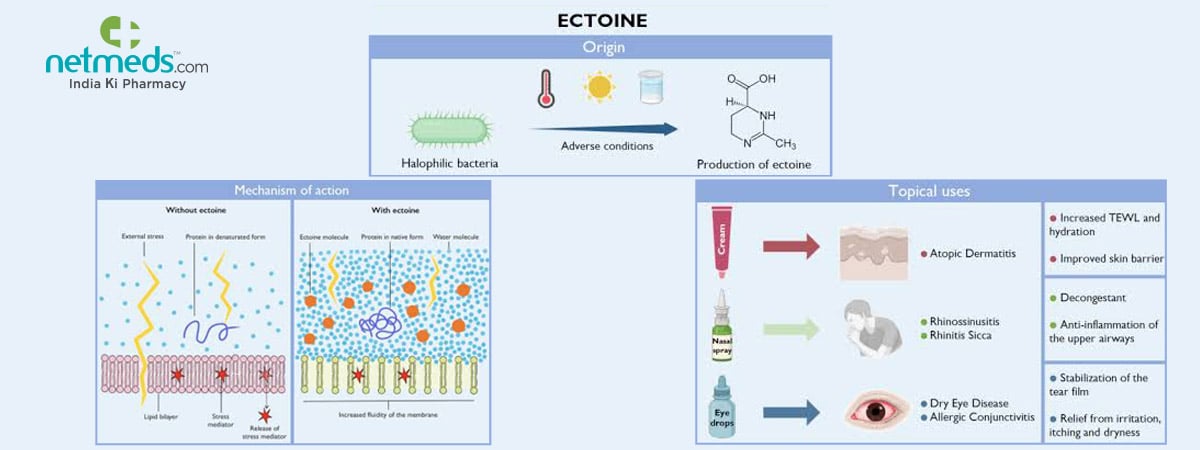
Ectoin (sometimes spelt “ectoine”) is a tiny but mighty molecule known as an osmolyte. In plain English: it helps cells hang onto water and stay stable, even under stress like heat or UV rays. When you put it on your face, ectoin creates a sort of watery shield over your skin cells, reducing water loss and fending off irritation from the outside world.
Also Checkout: Hyaluronic Acid: Astounding Uses Of This Wonder Skin Care Ingredient - Infographic
How Does Ectoin Work on Your Skin?
The magic is in how it binds to water. Ectoin pulls water molecules to your skin and forms a hydrating film, cutting down on that annoying tight, dry feeling. It helps your skin barrier stay intact, so you lose less moisture, and your face gets less reactive to stuff like pollution or wild weather. Studies even show it can calm inflammation, thanks to tamping down trigger molecules like IL-6, and it is a solid defender against oxidative stress from UV or smog.
Where You Will Find Ectoin?
You will spot ectoin all over the skincare aisle, especially in products aimed at:
Soothing or repairing your barrier
Deep hydration
Pollution protection
Calming cleansers for sensitive skin
After-sun or post-treatment lotions
Anti-redness and dryness solutions
Hydrating, gentle anti-ageing options
If your skin always feels dry, tight, or angry (from wind, AC, pollution, or too many actives), ectoin is meant for you.
7 Wondrous Benefits Of Ectoin
Provides Hydration
Ectoin helps the skin hold onto water long-term. People using ectoin formulas report less dryness and that “tight face” feeling pretty quickly.
Strengthens Skin Barrier
A weak skin barrier means redness, breakouts, and stinging. Ectoin helps stop moisture from leaking out and fortifies your defences.
Soothes Redness and Inflammation
Clinical research says ectoin reduces inflammation. That is good news for anyone with irritated or sensitive skin.
Relieves Dryness and Itch
Topical ectoin (5.5–7%) eased itching and dermatitis in folks with atopic eczema. It is not a replacement for medical creams, but it can be a helper in your routine.
Defends Against Pollution and Stress
Ectoin is a star in anti-pollution products for a reason; it shields you from particulate matter, reduces oxidative stress, and helps limit UV-related damage.
Reverses Ageing Signs
Ectoin doesn’t promise miracles, but it improves hydration and elasticity, which softens the look of fine lines.
Makes Strong Actives Easier to Tolerate
If you love acids or retinoids but hate the irritation, layering ectoin with those can make everything feel gentler.
Tips for Using Ectoin
Apply ectoin serums or creams after cleansing, before heavier creams or sunscreen.
Use it once or twice a day; follow your product’s directions.
Pair it with ceramides, hyaluronic acid, niacinamide, or panthenol for extra barrier support.
Always finish with sunscreen in the morning; ectoin isn’t a substitute for SPF.
If your skin is reactive, only start one new product at a time.
Good news: most people tolerate ectoin really well, but if your product has fragrance, essential oils, alcohol, or harsh acids, those can still set off sensitive skin.
Side Effects Of Using Ectoin
Ectoin has a great safety record. Even in long-term studies (up to 7% ectoin), people, including children, got benefits without problems for up to six months. Some users might notice mild burning or tingling, a bit of redness, or a rare flare in sensitive or compromised skin. If you experience ongoing burning, hives, or a severe rash, stop and see your dermatologist.
Who Should Try Ectoin?
Folks with dry, tight, flaky skin
Sensitive or eczema-prone types (with your doctor’s go-ahead)
Anyone exposed to pollution, air con, or tough weather
People using retinoids, acids, or acne treatments
Anyone who wants gentle, hydrating anti-ageing care
If you have a diagnosed skin issue or are on prescription creams, clear it with your dermatologist first.
How to Fit Ectoin Into Your Routine?
Morning:
Wash with a gentle cleanser
Apply ectoin serum/essence
Add niacinamide or vitamin C if you want (and your skin is happy with it)
Seal with a ceramide moisturiser
Finish with broad-spectrum SPF 30+
Ectoin supports your SPF; it never replaces it.
Night:
Cleanse off makeup and sunscreen
Smooth on an ectoin serum or cream
Use your retinoid or acid (when you are ready), but if you are new to strong actives, give ectoin a week or two to settle your skin first
Add a richer barrier cream if needed
Can You Use Ectoin with Acne Treatments?
Yes, and it actually helps. Retinoids, benzoyl peroxide, and acids can be brutal; ectoin soothes and hydrates, making irritation less likely. Use it after your treatment or in the morning (save strong actives for night). Just don’t pile on too many harsh products at once.
Is Ectoin Safe During Pregnancy?
Ectoin itself is gentle, but always scan the full ingredient list. Some blends also include retinoids, high-concentration acids, or botanical extracts that aren’t always pregnancy-safe. Check with your doctor before trying new products if you are pregnant or breastfeeding.
How to Pick a Solid Ectoin Product?
Ectoin (or ectoine) should be clearly listed near the top or middle of the ingredients.
Look for ceramides, panthenol, glycerin, or hyaluronic acid in the ingredient deck.
Avoid added fragrance, strong alcohols, or essential oils if you are sensitive.
Airless, opaque packaging is best for formula freshness.
Choose a reputable brand with clear directions.
Conclusion
Ectoin is a gentle, evidence-based way to hydrate, heal your skin barrier, and protect against environmental stress. It isn’t magic, but it is a smart choice if your skin is dry, sensitive, or just needs a little extra protection, without the sting or irritation of harsher actives.
References:
PMC — Topical ectoine for atopic dermatitis:
https://pmc.ncbi.nlm.nih.gov/articles/PMC8850511/
PMC — Ectoin and inflammatory skin response:
https://pmc.ncbi.nlm.nih.gov/articles/PMC13532817/
PMC — Ectoin, hydration and barrier repair:
https://pmc.ncbi.nlm.nih.gov/articles/PMC12291419/
PMC — Ectoin and skin photodamage:
https://pmc.ncbi.nlm.nih.gov/articles/PMC12186289/
PMC — Ectoin in cleansing cosmetics:
https://www.ncbi.nlm.nih.gov/pmc/articles/PMC7145297/pdf/molecules-25-01433.pdf
PMC — Extremophile-derived bioactives in cosmeceuticals:
https://pmc.ncbi.nlm.nih.gov/articles/PMC12734273/
Typology — Risks of ectoine in cosmetics:
Vogue India — Dermatologists on ectoin:
https://www.vogue.in/content/should-you-try-ectoin-dermatologists-explain-who-it-helps-most
 Previous