


The monsoon brings much-needed relief from the sweltering summer heat, but it also creates favourable conditions for the spread of water-borne illnesses. Intense spells of rain often contaminate drinking water sources with harmful pathogens such as bacteria, viruses, and parasites, significantly increasing the risk of infections.
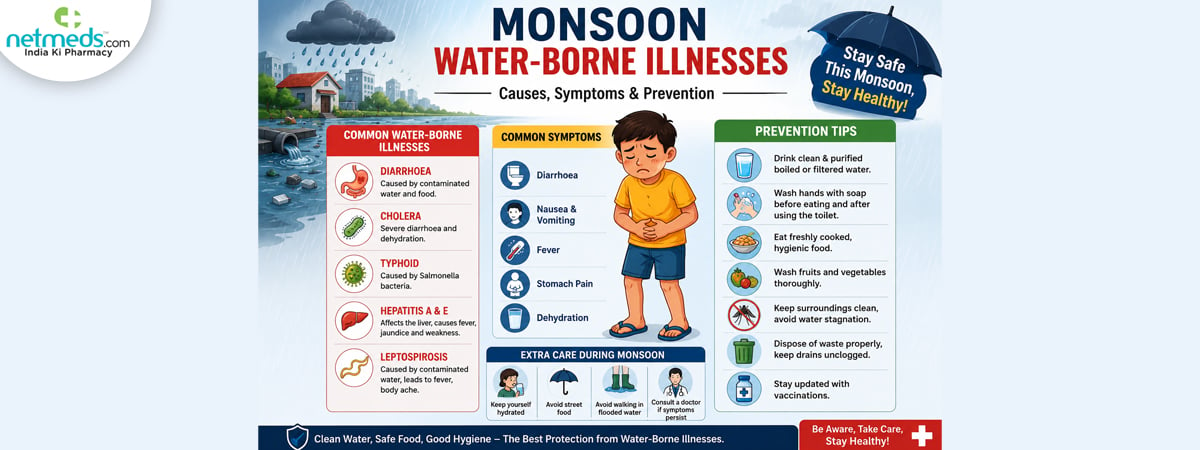
In addition, flooding, poor sanitation, and stagnant water further worsen the situation, making the monsoon one of the most challenging seasons for public health.
(Protect Yourself from Monsoon Illnesses, Explore Our Trusted Range of Health Essentials Today.)
From diarrhea and cholera to typhoid and hepatitis A, water-borne illnesses can affect people of all ages. Children, older adults, pregnant women, and individuals with poor immunity are easily vulnerable to serious medical complications.
Take this two-minute read to understand the causes, symptoms and effective preventive measures to follow to keep you and your loved ones safe and healthy during the rainy season.
What Are Water-Borne Diseases?
Waterborne diseases are illnesses caused by drinking water contaminated with harmful microorganisms, such as bacteria, viruses, or parasites, or their toxins. These pathogens enter water supplies through sewage leaks, animal waste, floods, or poor hygiene practices.
Why Do Water-Borne Diseases Increase During the Monsoon?
Numerous environmental factors contribute to the rise in infections during the monsoon season:
Flooded drains can contaminate drinking water.
Rainwater carries sewage, garbage, and harmful microbes.
Stagnant water readily promotes bacterial growth.
Poor sanitation increases the spread of infectious organisms.
Food prepared with contaminated water becomes unsafe to consume.
Damaged pipelines may cause sewage water to mix with drinking water.
Common Water-Borne Diseases During Monsoon
Diarrhea
Diarrhea is one of the most common monsoon illnesses caused by contaminated food or water. Some of the common signs and symptoms include frequent loose stools, abdominal cramps, nausea and vomiting, fever, dehydration and extreme tiredness. If left unattended, severe dehydration can become life-threatening, especially in children.
Cholera
Cholera is a bacterial infection caused by Vibrio cholerae. It spreads rapidly through contaminated water and food. Sudden profuse watery diarrhea, vomiting, extreme dehydration, muscle cramps, rapid heartbeat, and low blood pressure are the symptoms observed. Immediate rehydration is essential to prevent serious complications.
Also Read: 8 Effective Ways To Battle Monsoon Infections And Stay Healthy
Typhoid Fever
Typhoid is caused by Salmonella Typhi bacteria and spreads through contaminated food and drinking water. Symptoms include continuous high fever, headache, poor appetite, weakness, stomach pain, constipation or diarrhea and skin rash in some people. Prompt diagnosis and antibiotic treatment are important to avoid complications.
Hepatitis A
Hepatitis A is a viral infection that affects the liver and spreads through contaminated food and water. Fatigue, fever, loss of appetite, nausea, vomiting, yellowing of the eyes and skin (jaundice) and dark-coloured urine. Most people recover completely with supportive care and adequate rest.
Amoebiasis
Amoebiasis is a parasitic infection caused by Entamoeba histolytica. Common signs and symptoms include bloody diarrhea, abdominal cramps, weight loss, fever and extreme weakness. If left untreated, infections may spread to the liver and other vital organs.
Giardiasis
Giardiasis results from infection by the parasite Giardia lamblia. Persistent diarrhea, bloating, flatulence, abdominal cramps and weight loss are the common symptoms. If not diagnosed and promptly treated, the infection may last for several weeks.
How Are Water-Borne Diseases Diagnosed?
Based on the signs and symptoms, your healthcare provider may recommend:
Stool examination
Blood tests
Liver function tests (for hepatitis)
Other blood work, where appropriate
Diagnosis depends on symptoms and medical history.
Treatment for Water-Borne Diseases
Treatment varies depending on the underlying infection.
Rehydration Therapy
Replacing lost fluids and electrolytes is the primary goal and priority. The patient is provided with:
Oral Rehydration Solution (ORS)
Encouraged to drink plenty of boiled water
Intravenous fluids for severe dehydration
Medications
Doctors may prescribe medications such as:
Antibiotics for bacterial infections
Antiparasitic medicines
Fever suppressants
Anti-nausea medications
Zinc supplements for children with diarrhea
Avoid self-medicating with antibiotics without medical advice.
Effective Ways to Prevent Water-Borne Diseases
Drink Safe Water
Boil water for at least 5–10 minutes before drinking. Use trusted and certified water purifiers whenever possible. Store drinking water in clean and covered containers.
Wash Hands Frequently
Always wash your hands before eating, before handling food and cooking, after using the toilet, after returning home, and when handling garbage. Use soap and clean water for at least 20 seconds.
Eat Hygienic Food
Eat freshly prepared home-cooked meals. Clean and wash fruits and vegetables thoroughly. Peel fruits and vegetables whenever possible. Avoid eating raw salads from outside vendors. Reheat leftovers completely before consumption.
Avoid Street Foods
During the monsoon, roadside food may be prepared with contaminated water or exposed to unhygienic conditions. Refrain from consuming fast foods and foods from street vendors.
Maintain Household Hygiene
Clean kitchen surfaces regularly and dispose of waste properly. Prevent water stagnation around the house and keep toilets clean and disinfected.
Vaccination
Vaccination offers protection against certain infections such as:
Hepatitis A
Cholera (recommended for high-risk individuals or travellers)
Consult your healthcare provider to determine if vaccination is appropriate.
Foods That Support Recovery
If you are recovering from a water-borne illness, focus on easily digestible, soft and bland foods:
Rice
Applesauce
Toast
Khichdi
Plain curd (if tolerated)
Coconut water
Clear soups
Boiled potatoes
Oatmeal
Avoid spicy, oily, fried, and processed foods until digestion improves.
When Should You See a Doctor?
Seek immediate medical attention if you experience:
Severe dehydration
Blood in stools
High fever lasting more than two days
Persistent vomiting
Confusion or dizziness
Yellowing of the eyes
Diarrhea lasting more than three days
Reduced urination
Prompt treatment can prevent serious complications.
Conclusion
Water-borne diseases are very common during the monsoon due to contaminated drinking water, poor sanitation, and flooding. While most of these infections are preventable through safe drinking water, proper hand hygiene, healthy food practices, and timely medical care.
References
Post-monsoon waterlogging-associated upsurge of cholera cases in and around Kolkata metropolis, 2015
Asish K Mukhopadhyay 1, Alok K Deb 2, Goutam Chowdhury 1, Falguni Debnath 2, Prosenjit Samanta 1, Rudra Narayan Saha 1, Byomkesh Manna 3, Mihir K Bhattacharya 4, Dharitri Datta 4, Keinosuke Okamoto 5, Uchhal K Bhadra 6, Shanta Dutta 1,✉
https://pmc.ncbi.nlm.nih.gov/articles/PMC6518531/
https://jcdr.net/articles/PDF/17718/61624_CE[Ra1]_F(IS)_PF1(RL_SS)_PFA(KM)_PB(RL_OM)_PN(KM).pdf
 Previous