One of the world's most common yet misinterpreted women’s health concerns has received a historic name change. Polycystic Ovary Syndrome (PCOS) will now be known as Polyendocrine Metabolic Ovarian Syndrome (PMOS), following a global consensus led by international endocrine and reproductive health experts and published in The Lancet.
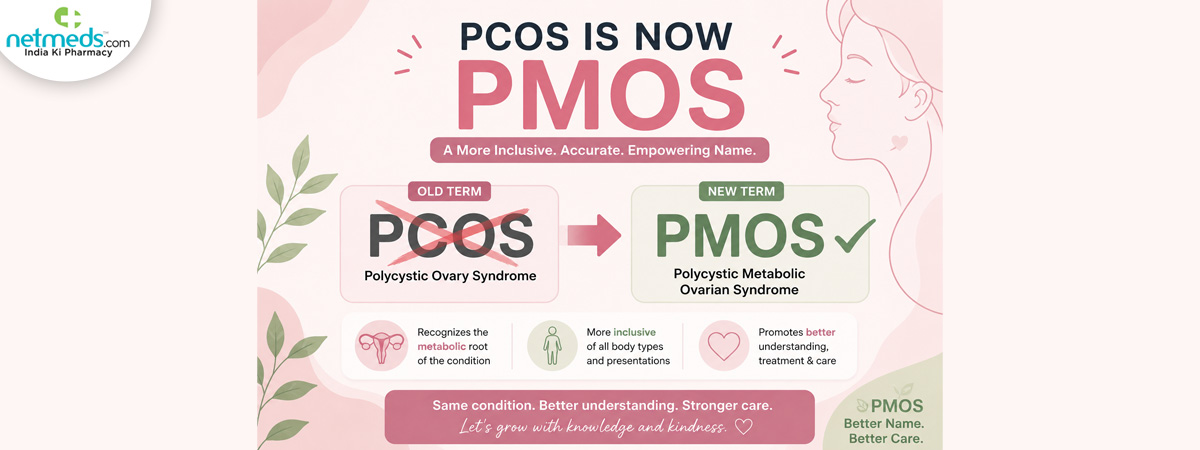
This renaming comes after decades of consultation, including clinicians, researchers and patient advocacy groups across several countries. Experts claimed that the term “PCOS” was medically misleading since most women with this condition do not have ovarian cysts. Additionally, the old name failed to depict the syndrome’s broad range of effects on metabolism, hormones, mental well-being and cardiovascular risk.
To Manage PCOS And Enhance Your Overall Health, Shop From Our Wide Range Of Nutritional Supplements
This change is especially relevant for India, where PCOS affects millions of women and is highly associated with obesity, diabetes, infertility and mental health concerns. Indian researchers have constantly raised their concern that the condition is underdiagnosed and often misunderstood as merely a fertility issue rather than a lifelong metabolic disorder. (PMC)
Why Has PCOS Been Renamed PMOS?
The new name, Polyendocrine Metabolic Ovarian Syndrome, was established to reflect the disorder’s complicated and multisystem nature. According to the international consensus published in The Lancet, the older term overly paid attention to ovarian cysts, even though most affected women do not have cysts at all. Instead, the condition includes abnormalities in the endocrine system, metabolism and ovarian function.
What Does PMOS Stand For?
PMOS stands for:
Polyendocrine: Affecting multiple hormone systems
Metabolic: Involving metabolism and insulin resistance
Ovarian: Affecting ovarian function like ovulation, menstruation and fertility
Syndrome: A group of interconnected symptoms and risk
The Endocrine Society said the new name change focuses on improving diagnosis, easing stigma and promoting more holistic treatment and care. Medical experts disclosed that the old terminology often delayed diagnosis, as most women believed that they could not have PCOS unless the scans exhibited ovarian cysts.
Also Read: PCOS Skin Problem Explained: Why It Happens, Proven Ways And Top Foods To Fix It
What Is PMOS?
PMOS is the same medical disorder previously known as PCOS. The criteria for diagnosis have not changed. It is a hormonal and metabolic condition generally categorised by:
Over secretion of androgen hormones
Acne and facial hair growth
Excess weight gain or difficulty losing weight
Insulin resistance
Fertility problems
Multiple immature ovarian follicles in some patients
This condition also raises long-term health risks of:
Hypertension
Heart disease
Fatty liver disease
Sleep disorders
Depression and anxiety
As per statistics, globally, PMOS affects nearly 1 in 8 women.
Professor Helena Teede, one of the leading voices behind the initiative, explained that the condition had long been misunderstood as “all about ovarian cysts,” when it involves widespread hormonal and metabolic dysfunction.
How Does This Name Change Concern India?
There is an increasing prevalence of PCOS cases in India, especially among adolescents and young urban women. The Indian Council of Medical Research (ICMR) was one of the organisations that supported this study, which emphasised the range of regional change in prevalence and warned of rising metabolic risks among Indian women.
A large body of Indian studies estimates prevalence rates ranging 3.7% to over 22%, varying with diagnostic criteria and geography.
Researchers have linked the rise to:
Sedentary lifestyles
Increased intake of processed foods
Poor sleep pattern
Stress
Genetic predisposition
Most importantly, women in India with PCOS also happen to face increased metabolic risks at a very young age. A study published in the Indian Journal of Medical Research revealed that metabolic syndrome impacts more than one-third of Indian women with PCOS.
Also, doctors now believe that the new name change PMOS can help change attention beyond fertility issues and promote prompt screening for chronic conditions like diabetes, cardiovascular disease and mental health complications.
Also Read: 7 Hidden Symptoms Of PCOS You Should Never Ignore
How Will This Change Help Patients?
Experts believe the PMOS terminology could improve healthcare in several important ways.
Early Diagnosis
Healthcare providers may now look beyond ovarian cysts and identify symptoms earlier. Women without visible ovarian cysts may still receive proper diagnosis and treatment.
Better Treatment Approaches
The new terminology highlights metabolic dysfunction, which may encourage more comprehensive treatment plans focusing on insulin resistance, inflammation, nutritional management, metabolic well-being and preventing heart disorders.
Reduces Stigma
Many patients felt that the previous name did not fully reflect the broader impact of the condition beyond reproductive health. PMOS offers a more comprehensive understanding by acknowledging that the disorder can affect metabolism and may lead to chronic health conditions.
Increases Research Funding
Experts hope the updated terminology will attract broader research into vast areas, including endocrine disorders, metabolism, diabetes and long-term health outcomes.
Improves Public Awareness
The new name educates both patients and healthcare professionals that this is not “just a fertility issue.”
How Does Name Change Impact Treatment?
Though the name has changed, treatment approaches remain the same.
Management typically includes:
Being physically active
Effective weight management
Balanced nutritional therapy
Stress reduction
Hormonal therapy as required
Insulin-sensitising medicines.
A multidisciplinary care is also recommended, including
Endocrinologists
Gynaecologists
Nutritionists
Mental health professionals
Medical practitioners say that the PMOS structure may promote healthcare systems to regulate the condition more holistically rather than just focusing on fertility.
Conclusion
The renaming of PCOS to PMOS signifies more than a cosmetic terminology update. It indicates that growing scientific knowledge suggests that this is a complicated endocrine and metabolic disorder with chronic impacts on women’s health. In India, particularly where millions of women are still undiagnosed or untreated, this change could help promote awareness, decrease stigma and prompt intervention.
References:
https://www.thelancet.com/journals/lancet/article/PIIS0140-6736(26)00717-8/fulltext
Polyendocrine metabolic ovarian syndrome, the new name for polycystic ovary syndrome: a multistep global consensus process
Prof Helena J Teede, PhDa,b Send email to helena.teede@monash.edu ∙ Mahnaz Bahri Khomami, PhDa,† ∙ Rachel Mormanc,† ∙ Prof Joop S E Laven, PhDd ∙ Anju E Joham, PhDa,b ∙ Michael F Costello, DMedSce ∙ et al. Show more
https://www.emjreviews.com/reproductive-health/news/pcos-renamed-pmos-in-landmark-global-consensus-to-improve-care/
PCOS Renamed PMOS in Landmark Global Consensus
https://www.endocrine.org/news-and-advocacy/news-room/2026/pcos-name-change
Polyendocrine Metabolic Ovarian Syndrome: New name to improve diagnosis and care of condition affecting 170 million women worldwide
 Previous