Depression isn’t always loud. Sometimes, it quietly settles into your daily life, making even simple tasks feel overwhelming. You might feel low, drained, disconnected, or stuck in a loop of negative thoughts. And while professional help is essential, many people also look for natural ways to support their mental well-being.
Also Read: Yoga For Anxiety: 5 Calming Asanas To Relax Your Mind Naturally
Modern lifestyles often make things worse. Long screen hours, lack of movement, poor sleep, and constant stress can deepen emotional fatigue. This is where yoga gently steps in, not as a replacement for treatment, but as a powerful, supportive practice.
Yoga isn’t just about flexibility; it works deeply on your nervous system. It encourages relaxation, improves blood circulation, balances hormones, and helps release feel-good chemicals like serotonin and endorphins. Over time, it can uplift your mood, reduce stress, and help you feel more connected to yourself.
Also Read: 7-Minute Power Workout: What Is This Latest Fitness Routine Everyone Is Talking About?

So, What Exactly Is Depression?
Depression is a mental health condition that affects how you think, feel, and function. It can lead to persistent sadness, loss of interest, low energy, poor concentration, and sleep disturbances.
From an Ayurvedic perspective, depression is often linked to an imbalance in Vata and Kapha doshas. Excess Vata can cause anxiety and restlessness, while aggravated Kapha may lead to heaviness, lethargy, and emotional stagnation.
The good part? Gentle yoga practices can help restore balance by calming the mind and energising the body simultaneously.
How Does Yoga Help With Depression?
Yoga creates a powerful mind-body connection that helps you slowly come out of that low-energy state. Here is how it works:
Reduces stress hormones like cortisol
Boosts serotonin and dopamine levels
Improves blood flow to the brain
Promotes better sleep and relaxation
Encourages mindfulness and emotional stability
Even 20 minutes of daily yoga can make a noticeable difference over time.
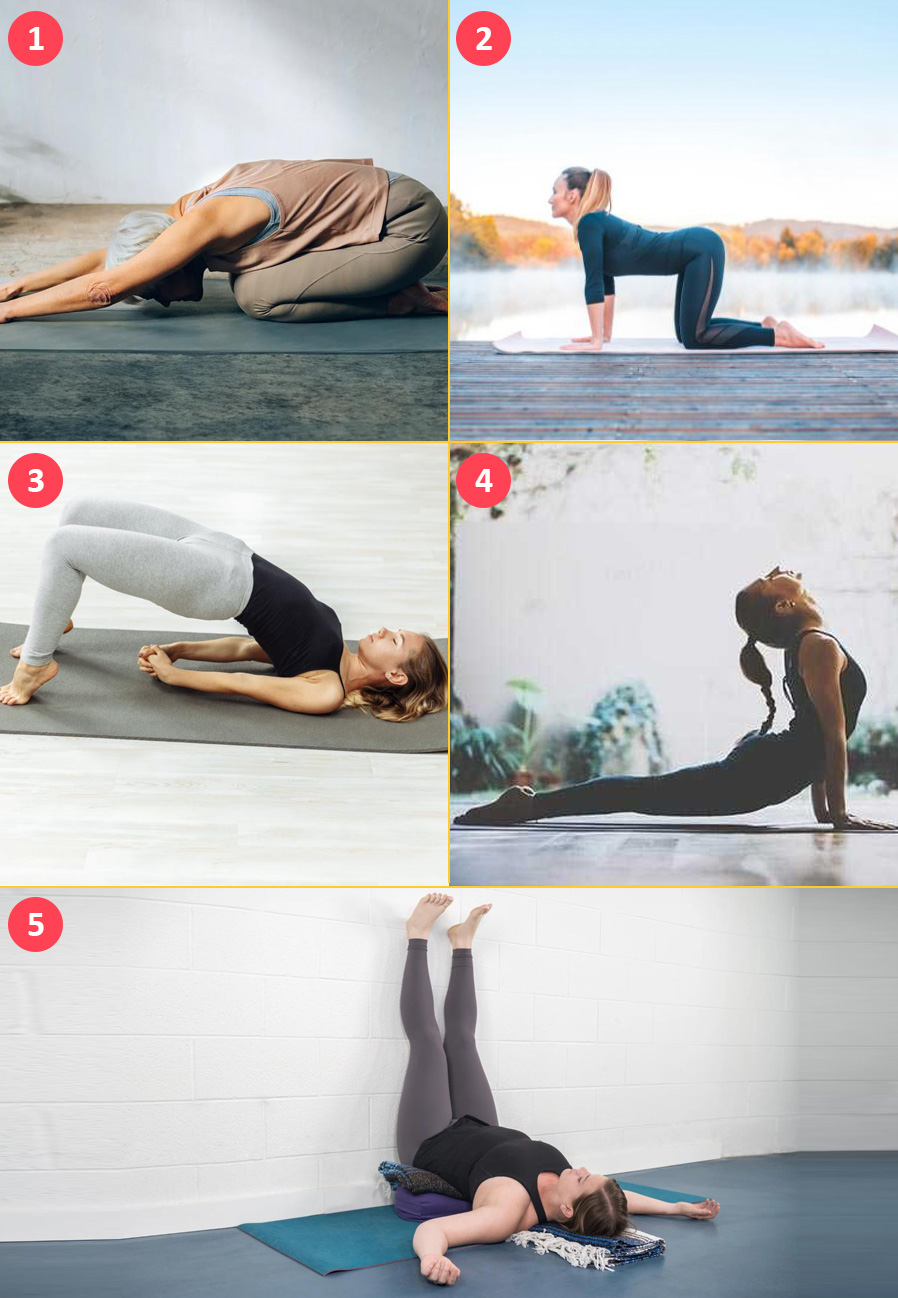
5 Yoga Asanas That Help Reduce Depression
Child’s Pose (Balasana)
Sit back on your heels, stretch your arms forward, and rest your forehead on the mat. Breathe deeply and stay here for 1–2 minutes.
Benefits:
This gentle pose calms the nervous system, reduces anxiety, and provides a sense of emotional comfort.
Cobra Pose (Bhujangasana)
Lie on your stomach, place your palms under your shoulders, and lift your chest while inhaling. Hold for 20–30 seconds.
Benefits:
It opens up the chest, improves posture, and helps release feelings of sadness and fatigue.
Bridge Pose (Setu Bandhasana)
Lie on your back, bend your knees, and lift your hips upward while pressing your feet into the floor. Hold for 20–30 seconds.
Benefits:
This pose stimulates the nervous system, improves mood, and helps reduce stress and mild depression symptoms.
Legs Up The Wall (Viparita Karani)
Lie on your back and extend your legs up against a wall. Relax your arms by your sides and breathe slowly for 5–10 minutes.
Benefits:
It promotes deep relaxation, reduces fatigue, and helps calm an overactive mind.
Cat–Cow Pose (Marjaryasana–Bitilasana)
Get on all fours. Inhale and arch your back (Cow), then exhale and round your spine (Cat). Repeat for 10–12 rounds.
Benefits:
This flowing movement relieves tension, improves circulation, and helps release emotional stress.
A Few Tips If You Are Practicing Yoga for Depression
Practice regularly, even if it’s just 15–20 minutes
Focus on slow breathing along with movement
Try adding meditation or pranayama
Create a calm, quiet space for practice
Be gentle with yourself, progress takes time
Who Can Benefit From These Asanas?
People experiencing mild to moderate depression
Anyone dealing with chronic stress or burnout
Individuals struggling with low energy or mood swings
Those looking for natural mental wellness support
Beginners wanting a gentle and calming yoga routine
Precautions
Yoga is supportive, but it is not a substitute for medical care. If you are dealing with severe depression or ongoing mental health concerns, consult a healthcare professional. Avoid pushing your body too hard, and always listen to how you feel during practice.
Conclusion
Depression can feel isolating, but small, consistent steps can make a big difference. Yoga offers a gentle path to reconnect with your body, calm your mind, and slowly lift your mood. These five yoga asanas are simple yet powerful tools to help you break the cycle of stress and emotional fatigue. With regular practice, patience, and self-care, you may begin to notice a shift, not just in your mood, but in your overall sense of well-being.
Remember, healing isn’t instant, but every mindful breath takes you one step closer.
References:
- https://www.ncbi.nlm.nih.gov/pmc/articles/PMC3193654/
- https://www.health.harvard.edu/mind-and-mood/yoga-for-better-mental-health
- https://www.frontiersin.org/articles/10.3389/fpsyt.2019.00504/full
 Previous