


Feeling weak, light-headed, or unusually tired, especially when standing up suddenly? Then these could be symptoms of hypotension, known as low blood pressure. While a drop in blood pressure on an occasional basis may not be a concern, persistent low BP can impact blood flow and lower the supply of oxygen to vital organs.
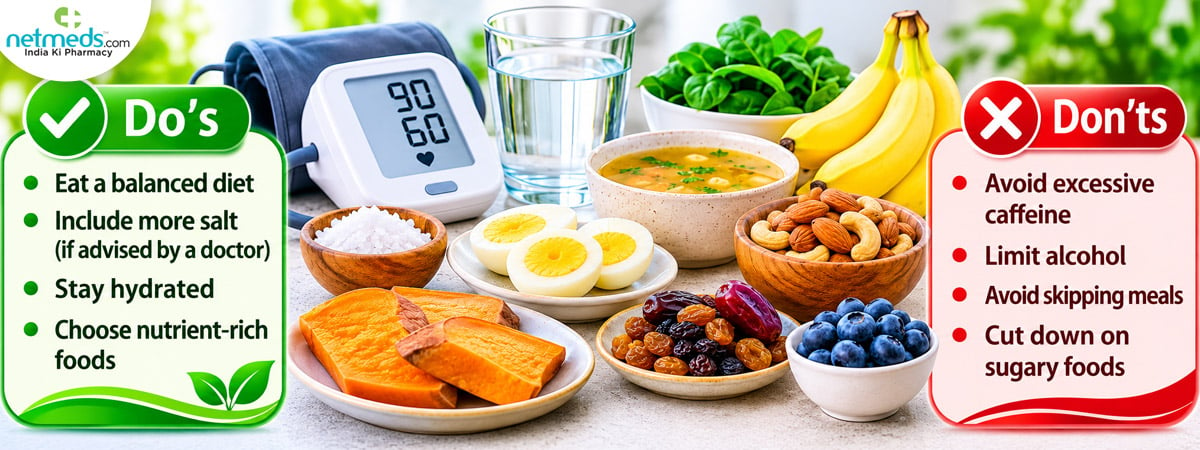
Besides identifying the root cause and following proper medical guidance, making the right dietary approaches may help manage low blood pressure and promote overall heart health.
(To Manage Blood Pressure, Shop From Our Wide Range Of BP Monitors)
Take this two-minute read to discover the best foods to eat and avoid, along with practical dietary tips to manage hypotension.
What Is Low Blood Pressure?
Low blood pressure, also termed hypotension, means different things for different people. A normal blood pressure reading should be in the range between 90/60 and 120/80 millimetres of mercury (mm Hg).
A healthy blood pressure range for your body is based on your:
Medical history
Age
Overall health status
Your physician may diagnose you with low blood pressure if your reading is under 90/60 mm Hg and you have other symptoms, including:
Blurry vision
Confusion
Dizziness
Light-headedness
Nausea or vomiting
Weakness
Seek immediate medical care if you have:
Fast pulse rate
Shallow breathing
Cold or clammy skin
These symptoms may denote immediate shock, which is a medical emergency.
Causes
Low blood pressure has a range of causes, including:
Sudden change in position
Autonomic nervous system disorders
Dehydration
Poor dietary habits
Endocrine disorders
Extreme allergic reaction (anaphylaxis)
Heart attack or heart disease
Low blood sugar
Certain medications
Pregnancy
Severe infection
Stress
Thyroid issues
Vigorous exercise
How Does Diet Help Manage Low Blood Pressure?
Diet plays a key role in regulating healthy blood pressure levels. Dehydration, improper nutrient intake, continued fasting, and certain dietary deficiencies can contribute to low BP.
A well-balanced diet containing adequate fluids, essential electrolytes, vitamin B12 and folate can support healthy blood circulation and overall cardiovascular function.
Depending on the underlying cause, your doctor may also recommend adjusting salt intake or eating smaller, more frequent meals.
Also Read: Hypotension: Causes, Symptoms And Treatment
Foods to Eat for Low Blood Pressure
Foods Rich in Salt (Sodium)
Sodium is a vital mineral that helps control fluid balance and plays a role in maintaining blood pressure. In a few people with hypotension, a physician may suggest a moderately higher sodium intake.
Some of the best options to improve sodium levels include buttermilk, soups, lime with salt and foods prepared with moderate amounts of salt. However, excessive sodium intake can increase cardiovascular and kidney-related risks. Thus, it is important to increase salt intake only with proper medical guidance.
Bananas
Bananas contain impressive amounts of potassium, a key mineral that maintains fluid balance, muscle function and normal nerve signalling. They also offer carbohydrates that help meet daily energy needs.
Excessive intake of potassium may be harmful for those with certain kidney conditions or taking specific medications.
Leafy Greens
Spinach, amaranth leaves, moringa leaves, fenugreek leaves and other green leafy vegetables are excellent sources of folate. This vitamin promotes red blood cell production, while adequate intake helps prevent folate-deficiency anaemia, which can sometimes contribute to weakness and fatigue.
Eggs
Eggs are a powerhouse of vitamin B12 and protein. Vitamin B12 is essential for healthy red blood cell formation and nerve function. Adding eggs as a part of a wholesome and balanced diet can help improve nutrient intake and boost overall energy levels.
Nuts and Seeds
Almonds, walnuts, pumpkin seeds, sunflower seeds and chia seeds offer a wealth of nutrients such as healthy fats, magnesium and antioxidants. Incorporate nuts and seeds as a wholesome snack, or add them to breakfast bowls, salads or smoothies.
Citrus Fruits
Citrus fruits such as oranges, sweet limes, lemons, and grapefruit offer vitamin C, which triggers an immune response and improves the absorption of non-haem iron from plant-based food sources. While citrus fruits do not directly raise blood pressure, they support a balanced and nutrient-rich diet regimen.
Fluids
Dehydration is a common causative factor in low blood pressure. Staying well hydrated and drinking water throughout the day helps maintain blood volume and supports circulation.
Based on individual needs, fluids like coconut water, soups, and oral rehydration solutions may be beneficial. However, people with kidney or cardiovascular conditions should seek medical advice before increasing fluid intake.
In addition, coffee and caffeinated drinks may temporarily spike blood pressure levels by triggering the cardiovascular system and boosting your heart rate.
Also Read: Hypotension: 5 Best Home Remedies To Maintain Blood Pressure
Foods and Drinks to Avoid
Alcohol
Excessive alcohol intake can cause blood vessels to relax and may contribute to dehydration, potentially lowering blood pressure further. Restrict or avoid alcohol, especially if you experience frequent dizziness or fainting.
Avoid Large Meals
Eating large meals, particularly those rich in simple carbohydrates, may trigger postprandial hypotension (a drop in blood pressure after eating). Instead, focus on eating smaller, balanced meals at regular intervals.
High-Sugar Foods and Drinks
Sugar-loaded drinks, carbonated beverages, sweets, cakes and highly processed desserts offer no nutritional value, but empty calories that contribute to blood sugar fluctuations. Choose whole fruits, fibre-rich foods and balanced meals instead.
Excessive Caffeine
Though caffeine can temporarily raise blood pressure in a few people, its impacts vary. Excessive consumption of coffee or other energy drinks can impede a normal sleep schedule and may result in dehydration when it replaces adequate water intake.
Remember: It is not ideal to rely on caffeine as a remedy for low BP.
When Should You See a Doctor?
Low blood pressure or hypotension, if it occurs rarely without any symptoms, may not need any treatment. However, persistent hypotension associated with dizziness, fainting, blurred vision or unusual fatigue needs medical attention.
Seek immediate medical care if low BP occurs with chest pain, breathlessness, confusion, cold clammy skin or signs of shock.
A healthcare provider may recommend blood tests, medication reviews and other investigations to identify underlying causes such as dehydration, anaemia, hormonal disorders or heart-related conditions.
Conclusion
Having a wholesome and balanced diet for hypotension can help maintain good hydration, support blood flow and avert nutritional deficiencies. Add nutrient-dense foods like eggs, leafy greens, nuts, fruits and lean proteins to regular meals.
However, dietary changes alone may not be adequate to treat frequent low blood pressure. However, monitoring BP levels and following appropriate medical advice are essential for maintaining long-term health.
Frequently Asked Questions
Which foods help increase low blood pressure quickly?
Drinking water and consuming a doctor-approved salty snack may help some people with low BP. However, sudden or severe symptoms require medical attention.
Is banana good for low blood pressure?
Yes, bananas provide potassium and other nutrients that support overall health. However, they do not directly increase blood pressure.
Can drinking coffee help with hypotension?
Caffeine may temporarily raise blood pressure in some people, but it is not a recommended long-term treatment for hypotension.
Is coconut water good for low BP?
Coconut water provides fluids and electrolytes, but it is not a proven treatment for hypotension. People with kidney disease or potassium restrictions should consult their doctor.
References:
https://pmc.ncbi.nlm.nih.gov/articles/PMC12249995/
Effect of Dietary Modifications on Blood Pressure and Anthropometric and Biochemical Parameters in a Woman with Hypotension
Katarzyna Antosik 1, Damian Dyńka 1,*, Kinga Ziętara 1
Journal of Clinical Medicine (JCM)
June 202514(13):4415
Nolan P., McEvoy J.W. Salt restriction for treatment of hypertension—Current state and future directions. Curr. Opin. Cardiol. 2024;39:61–67. doi: 10.1097/HCO.0000000000001098.
Chan R.J., Parikh N., Ahmed S., Ruzicka M., Hiremath S. Blood Pressure Control Should Focus on More Potassium: Controversies in Hypertension. Hypertension. 2024;81:501–509. doi: 10.1161/HYPERTENSIONAHA.123.20545.
Nurvita S., Rizkapriliza W. Coffee and blood pressure. Coffee Sci. 2024;19:e192193. doi: 10.25186/.v19i.2193.
Sales Barbosa S., Martin Sousa L.C., de Oliveira Silva D.F., Bastos Pimentel J., Cavalcanti Mauricio de Sena Evangelista K., de Oliveira Lyra C., Gomes Dantas Lopes M.M., Vieira Cunha Lima S.C. A Systematic Review on Processed/Ultra-Processed Foods and Arterial Hypertension in Adults and Older People. Nutrients. 2022;14:1215. doi: 10.3390/nu14061215.
Nestel P.J., Mori T.A. Diet to Stop Hypertension: Should Fats be Included? Curr. Hypertens. Rep. 2024;26:409–417. doi: 10.1007/s11906-024-01310-7.
Strilchuk L., Cincione R.I., Fogacci F., Cicero A.F.G. Dietary interventions in blood pressure lowering: Current evidence in 2020. Kardiol Pol. 2020;78:659–666.
Lari A., Sohouli M.H., Fatahi S., Cerqueira H.S., Santos H.O., Pourrajab B., Rezaei M., Saneie S., Rahideh S.T. The effects of the Dietary Approaches to Stop Hypertension (DASH) diet on metabolic risk factors in patients with chronic disease: A systematic review and meta-analysis of randomized controlled trials. Nutr. Metab. Cardiovasc. Dis. 2021;31:2766–2778.
 Previous