


You know that awful burning feeling in your chest after a big meal or late-night snack? Maybe you reach for antacids after spicy food, coffee, or just about anything heavy. Heartburn and acidity aren’t just uncomfortable, they can really throw off your day and, honestly, might be your body’s way of asking for better eating habits.
Also Read: Acid Reflux: 7 Awesome Foods That You Should Add In Your Diet To Ease Heartburn
So, What Is Acid Reflux, Anyway?
It happens when stomach acid slips back up into your food pipe, making that classic burning sensation we call heartburn. Usual suspects are spicy and fatty foods, fried stuff, citrus fruits, tomatoes, chocolate, caffeine, alcohol, and fizzy drinks.
Soothe The Various Symptoms Of Acidity Buy Our Wide-Range Of Herbal Teas And Digestive Supplements!
The good news? Food won’t work like a magic pill, but choosing gentler, less acidic, and fiber-rich options can help keep things calm in your stomach. Here are five foods that actually support more comfortable digestion.
Also Read: Ayurveda For GERD: Proven Natural Remedies To Soothe Heartburn
Why Does Acidity Happen So Often?
A little heartburn after a heavy meal or lots of spice? Pretty normal. But when you start getting that burn over and over, it usually means acid is coming up into your esophagus and irritating it.
What tends to set it off?
Big, heavy, or late meals
Spicy, oily, or fatty foods
Citrus, tomato sauces, and ketchup
Coffee, tea, chocolate, peppermint, alcohol
Fizzy drinks
Lying down right after eating
Smoking or carrying extra weight
Fatty foods hang around longer in your stomach and often trigger reflux, while spicy or acidic choices turn up the heat (literally).
Can Food Actually Help With Heartburn?
Look, food isn't a quick fix like popping an antacid. But choosing the right kind of meals, think gentle, less acidic, high-fiber, can help. Bananas, melons, steamed veggies, lean proteins, and simple cooking methods (like grilling or baking instead of frying) make a real difference.
Also, small changes help. Instead of wolfing down huge meals, try eating smaller portions, chew slowly, and make sure you finish dinner a few hours before you lie down. That one alone can help night-time heartburn.
Don’t Ignore Constant Heartburn
If your heartburn is minor and only pops up once in a while, it is probably not a big deal. If it happens all the time, especially at night or enough to mess with your sleep, you need to talk to your doctor.
If you notice:
Trouble swallowing or pain
Chest pain, pressure, or shortness of breath
Vomiting blood, or black stools
Nausea or vomiting that won’t let up
No relief even with lifestyle tweaks
These need medical attention. Persistent issues could be GERD, and that is something you shouldn't ignore.
What Should You Cut Back On?
Want fewer flare-ups? Try limiting:
Fried and fatty meals
Spicy curries and chilli-loaded dishes
Tomato-heavy foods and citrus juice
Coffee, cola, energy drinks, and booze
Large meals and eating late at night
But keep in mind, everyone’s triggers are a little different.
Simple Habits For Easing Acidity
Eat smaller meals more often
Eat slowly and don’t talk with your mouth full
Stay upright as you eat and for at least an hour after
Give yourself at least three hours between dinner and bedtime
Wear loose clothes around your stomach if you can
Figure out your worst triggers and limit them
Weight loss, quitting smoking, and keeping the head of your bed elevated also help a lot for frequent reflux.
Alright, now onto the part you are really here for. Here are five cooling foods that tend to go easy on your stomach if you are struggling with acidity:
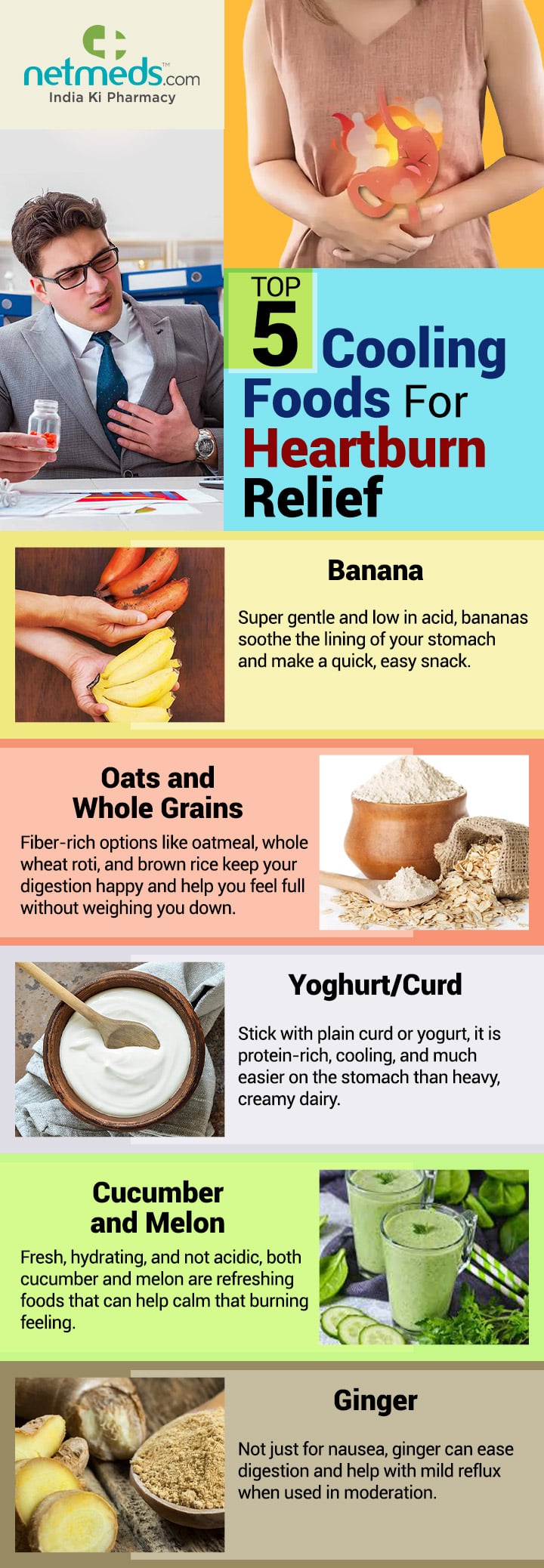
You don’t need to overhaul your entire diet overnight. Adding in more bananas, oats, yogurt, cucumber, melon, and a bit of ginger (while cutting back on spicy, fatty, or acidic foods) can make a real difference.
One last thing: if your symptoms are hard to manage or keep coming back, get yourself checked by a healthcare professional. Especially if you have chest pain, trouble swallowing, unexpected weight loss, or symptoms that don’t get better with simple diet changes.
References:
- NIDDK – Acid Reflux (GER & GERD) in Adults: Eating, Diet & Nutrition.
- NIDDK – Acid Reflux (GER & GERD) in Adults: All Content.
- NCCIH – GERD and Complementary Health Approaches.
- Cleveland Clinic – GERD Diet: Foods To Eat and Avoid.
- Johns Hopkins Medicine – GERD Diet: Foods That Help With Acid Reflux.
- NIH News in Health – Feeling the Burn?
 Previous