


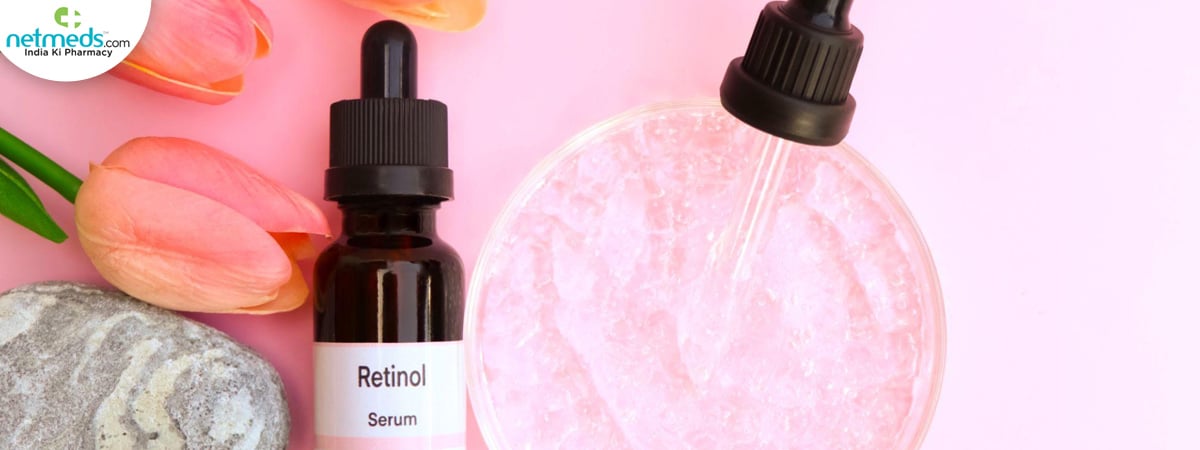
One of the discussed ingredients in skincare, retinol appears in everything from serums and night creams to eye products. Retinol is often promoted for skin, fewer fine lines, a brighter complexion, and improved texture. At the same time, social media has created plenty of confusion; some people call retinol a miracle ingredient while others warn that retinol will damage the skin. The reality is more balanced. Retinol can help with skin concerns, but results depend on the formulation, how you use it, and how well your skin tolerates it. Understanding the facts can help you use retinol safely of following skincare trends blindly.
Also Read: DIY Facial Serum: Homemade Skin Tinctures For Flawless Dewy Skin
What Is Retinol And How Does It Work?
Retinol is a type of retinoid, a family of vitamin A‑derived compounds used in skincare. Once retinol is applied to the skin, it gets converted into active forms of vitamin A. Retinoids influence skin‑cell turnover and several processes involved in skin structure and pigmentation. Retinoids are used for concerns such as lines, uneven skin tone, pigmentation, and acne. However, retinol that is available in products is different from prescription retinoids such as tretinoin. Tretinoin is already a retinoic acid and has stronger clinical evidence, while retinol requires additional conversion within the skin. This distinction matters because the terms retinol and retinoid are often used interchangeably even though they are not the same.
(Get Blemish-Free, Radiant Skin With Our Huge Variety Of Facial Serums!)
Retinol Myths And Facts You Should Know
Myth 1: Retinol will make your skin look younger
Fact: Retinol is not an overnight solution.
Changes in skin texture and fine lines after using retinol generally take time. The strongest evidence for vitamin A treatments comes from prescription retinoids, especially tretinoin, which has shown benefits for photoaged skin in clinical trials. Evidence for over‑the‑counter retinol is more limited and varies between formulations. Patience is therefore more useful than applying product in the hope of getting faster results.
Myth 2: Retinol permanently thins the skin
Fact: This is an oversimplification.
Retinoids can initially cause dryness, peeling, redness, burning or irritation, which may make the skin feel fragile. However, the longer‑term effects of retinoids on skin biology are more complex. Clinical research on retinoids has found improvements in aspects of photoaged skin, including wrinkles and skin structure. The key is to avoid overuse. Irritated skin does not mean the product is working better.
Myth 3: More retinol means better and faster results
Fact: More is not necessarily better.
Using a retinol product too frequently can increase irritation without guaranteeing better results. Dermatologists commonly recommend introducing retinoids, sometimes starting every other night and increasing frequency according to tolerance. Moisturising can also help reduce irritation. A simple routine that you can follow consistently is usually more practical than a routine that leaves your skin irritated.
Myth 4: Retinol is only for mature skin
Fact: Retinoids can be useful for several skin concerns, not just visible ageing.
Depending on the retinoid and formulation, vitamin A derivatives can be used for acne, uneven pigmentation, fine lines and changes in skin texture. Retinol is commonly used in skincare for improving uneven tone, pigmentation and texture. That does not mean everyone needs retinol. Skincare should be based on concerns, skin type, and tolerance rather than age alone.
Myth 5: Retinol makes sunscreen
Fact: Sunscreen remains essential.
Retinoid use does not protect the skin from ultraviolet (UV) radiation. Sun exposure is a contributor to premature skin ageing, and dermatologists recommend daily sun protection. A broad‑spectrum sunscreen with SPF 30 or higher, along with shade and protective clothing, can help reduce skin damage. If you are using retinol at night, sunscreen should still be part of your morning skincare routine.
Myth 6: Skin peeling means the retinol is working
Fact: Peeling is not a measure of effectiveness.
Dryness, redness, and peeling can occur when someone starts using retinoids, especially if the product is introduced quickly. Visible irritation is not proof that retinol is producing better results. Excessive irritation can make skincare uncomfortable. May be particularly problematic for people prone to pigmentation after inflammation. If irritation becomes significant, reducing frequency or discussing the product with a dermatologist may be appropriate.
Myth 7: Retinol is safe for everyone
Fact: Retinol is not suitable for every situation.
People who have dry, irritated, or inflamed skin may need to avoid retinoids or get advice from a dermatologist before using them. Retinoids should also be avoided while pregnant. Dermatologist about your skincare routine instead of assuming that an over‑the‑counter product is automatically safe.

How to Use Retinol Safely?
If you are thinking about adding retinol to your routine, start by introducing it. Begin with a lower‑strength product. Use it less often instead of applying it every night right away. Here are a few more things to consider:
· Apply retinol at night following the directions on the product.
· Use a cleanser and moisturizer to support the skin barrier.
· Do not stack potentially irritating products in the same routine.
· Use broad-spectrum SPF 30. Higher during daylight hours.
· If you develop persistent irritation, stop using retinol and seek professional advice.
· A patch test can also help when you introduce a skincare product.
Does Retinol Really Help With Wrinkles and Acne?
There is evidence for the broader retinoid family, especially prescription retinoids. Tretinoin has been studied a lot for photoaging. Has shown improvements in wrinkles, pigmentation, and other signs of sun‑related skin ageing. For retinol products only the evidence is less consistent. A systematic review of over‑the‑counter retinol trials found relatively weak evidence with concerns about study quality and differences between formulations. So while retinol can be a skincare ingredient, it should not be presented as the same as prescription tretinoin or as a guaranteed anti‑ageing treatment.
Frequently Asked Questions
Can I use retinol every night?
Not necessarily. Beginners may tolerate retinol better when they start with frequent application and gradually increase use. If retinol makes your skin persistently red, dry or irritated, speak with a dermatologist.
Can retinol remove wrinkles completely?
No skincare ingredient can guarantee removal of wrinkles. Retinol can improve the appearance of some signs of photoaging. Results vary between individuals and products.
Can I use retinol if I have sensitive skin?
Sensitive skin may be more prone to irritation. If you want to try retinol, introduce it cautiously. Consider discussing the appropriate formulation and frequency with a dermatologist.
Should I use retinol during pregnancy?
No. Retinoids, including retinol‑containing skincare, should be avoided during pregnancy. If you are planning pregnancy, consult your healthcare professional about safer alternatives.
Is retinol the same as tretinoin?
No. Both belong to the retinoid family. They are different compounds. Tretinoin is an active prescription retinoid with stronger clinical evidence for conditions such as acne and photoaging, while retinol is commonly found in over‑the‑counter cosmetic products.
Conclusion
Retinol is neither a miracle cure nor a skincare ingredient that should automatically be feared. It can have a role in managing concerns such as uneven texture, pigmentation and signs of skin ageing, but its benefits depend on the product, consistent use and individual skin tolerance. Start slowly, moisturise, protect your skin from the sun, and avoid using retinol simply because it is trending. If you have acne, significant pigmentation, sensitive or inflamed skin, or are unsure which retinoid is appropriate, a dermatologist can help you choose a safer and more effective approach.
References:
https://pmc.ncbi.nlm.nih.gov/articles/PMC2699641/
https://www.ijord.com/index.php/ijord/article/view/2094
https://www.mdpi.com/2079-9284/13/3/133
https://pmc.ncbi.nlm.nih.gov/articles/PMC8675340/
https://pmc.ncbi.nlm.nih.gov/articles/PMC10669284/
https://www.paulaschoice.in/blogs/retinol/retinol-myths-busted?srsltid=AU7gw4XRk-jyvuqUOpoYvRU_24B7VlybY4kp4QuaitJBu-D6XFlt8YtG
https://dermatologyandlasersurgery.com/wp-content/uploads/2021/02/Vitamin-A-Derivatives_MedEsthetics_Jan_Feb-2021.pdf
https://www.byrdie.com/what-is-bakuchiol
 Previous


