Ever wake up feeling tired even after a full night's sleep? Or find yourself reaching for another cup of coffee just to get through the afternoon? Frequent fatigue in women can have many causes, from poor sleep and stress to heavy menstrual bleeding, restrictive diets and nutritional deficiencies.
Women have unique nutritional needs at different stages of life. For example, women aged 19–50 generally require more dietary iron than men of the same age, while pregnancy significantly increases iron requirements. Iron deficiency can cause tiredness, weakness and reduced concentration.
Also Read: Iron Deficiency Anemia: Here’s What You Should Eat And Best Diet Plan To Boost Iron Level
But before blaming every sluggish morning on a nutrient deficiency, remember that persistent fatigue can also be linked to thyroid problems, sleep disorders, infections, mental health concerns and other medical conditions.
Also Checkout: 5 Foods To Fight Fatigue Naturally And Boost Energy Levels -Infographic
The good news? Your everyday meals can provide several nutrients involved in oxygen transport, red blood cell production, energy metabolism, muscle function and nervous system health.
Let us understand why women may experience frequent tiredness and explore five nutrient-rich foods that can help support energy levels as part of a balanced diet.
Support Your Daily Nutrition And Overall Wellness With Our Range Of Health Supplements!
Why Do Women Experience Frequent Fatigue?
Feeling tired occasionally is normal. However, frequent or unexplained fatigue may sometimes signal that your body isn't getting enough of certain nutrients.
Some common nutritional contributors include:
Iron deficiency, particularly in women with heavy periods
Vitamin B12 deficiency, especially among people following vegetarian or vegan diets
Folate deficiency
Inadequate magnesium intake
Low vitamin D levels
Insufficient calorie or protein intake
Iron is essential for producing haemoglobin, which carries oxygen throughout the body. Iron deficiency anaemia can cause weakness, tiredness and low energy.
Similarly, vitamin B12 is required for healthy blood and nerve cells, and deficiency can lead to tiredness and weakness.
However, not every case of fatigue is caused by poor nutrition. If tiredness is persistent, severe or accompanied by other symptoms, speak with a healthcare professional.
Can Food Really Help Fight Fatigue?
Here is the important part: food doesn't work like an instant energy shot.
Instead, nutrient-rich foods supply the vitamins, minerals, protein, carbohydrates and healthy fats your body needs to produce energy and maintain normal physiological functions.
If you are deficient in a particular nutrient, improving your dietary intake or taking supplements when medically indicated, may help correct the deficiency. But consuming excessive amounts of a nutrient when you already get enough doesn't necessarily give you more energy.
So, rather than relying on multiple supplements, start by building balanced, colourful and nutrient-dense meals.
Don't Ignore Persistent Fatigue
Occasional tiredness after a hectic day isn't usually alarming. But if you feel exhausted for weeks despite having adequate sleep and a balanced diet, it is worth finding out why.
Talk to your doctor if fatigue occurs with:
Breathlessness
Dizziness
Pale skin
Rapid heartbeat
Unexplained weight changes
Heavy menstrual bleeding
Muscle weakness
Changes in sleep or mood
Difficulty concentrating
A healthcare professional may recommend blood tests to check for anaemia, nutrient deficiencies, thyroid problems or other possible causes.
Without further ado, delve into this infographic to discover five nutrient-rich foods that can help support energy and fight tiredness.
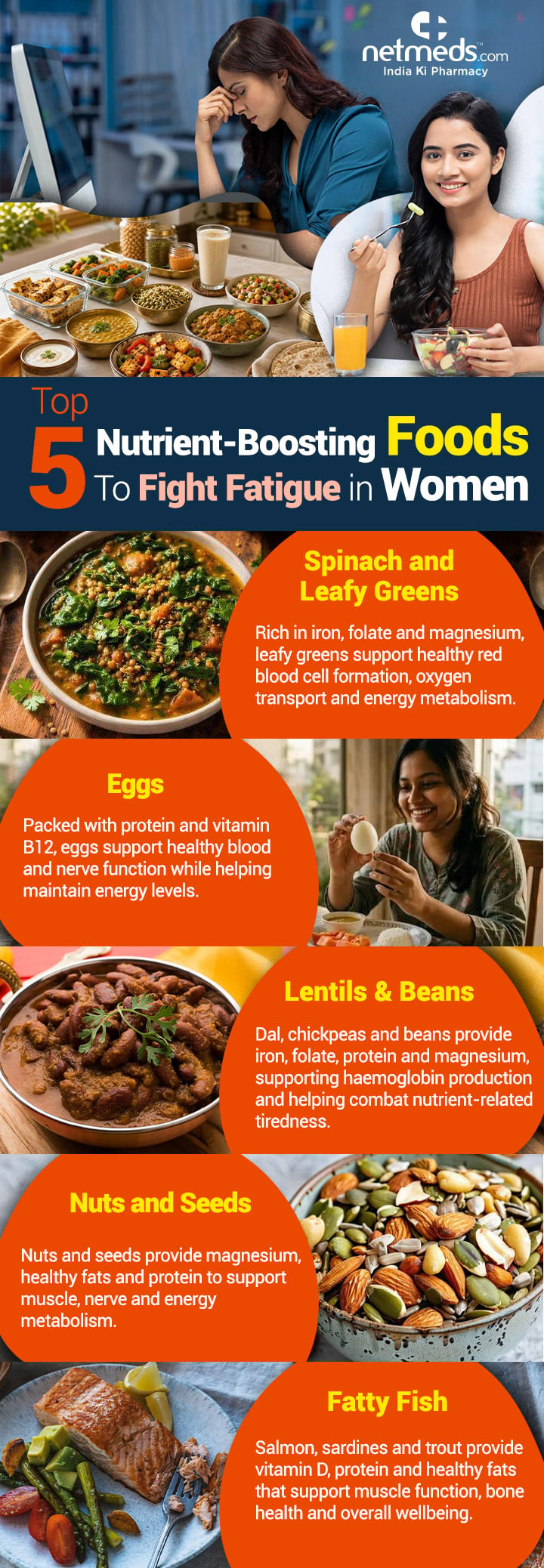
But remember food can support energy; it cannot diagnose or treat the underlying cause of unexplained fatigue. If you are constantly exhausted, especially if you have heavy periods, breathlessness, dizziness or other concerning symptoms, consult a healthcare professional and consider getting evaluated for nutritional deficiencies or other medical causes.
References:
1.NIH Office of Dietary Supplements – Iron: Information on iron functions, dietary sources and iron deficiency.
2.NIH Office of Dietary Supplements – Vitamin B12: Information on vitamin B12 functions, food sources and deficiency.
NIH ODS: Vitamin B12 Fact Sheet
3.NIH Office of Dietary Supplements – Folate: Information on folate, food sources and deficiency.
4.NIH Office of Dietary Supplements – Magnesium: Information on magnesium's functions and dietary sources.
 Previous