Thinking about going vegetarian? Whether you are making the switch for health, environmental or personal reasons, a well-planned vegetarian diet can provide plenty of fibre, vitamins, minerals, antioxidants and plant-based protein.
However, avoiding meat, poultry or fish can make it harder to obtain adequate amounts of certain nutrients. Vitamin B12, iron, vitamin D, calcium, iodine, zinc and omega-3 fatty acids are some nutrients that deserve extra attention.
The good news? You don't necessarily need a cupboard full of supplements. A varied diet should always come first, while supplements can help fill specific nutritional gaps when dietary intake is insufficient, or deficiency risk is higher.
Also Read: 7-Day Indian Vegetarian Diet Plan For Sustainable Weight Loss Goals
Let us explore the best supplements for vegetarians, when they may be useful and how to use them safely.

Why Do Vegetarians Need Supplements?
A balanced vegetarian diet can meet most nutritional requirements when it includes a variety of whole grains, pulses, legumes, vegetables, fruits, nuts, seeds and, depending on the diet, dairy, eggs or fortified alternatives.
However, nutrient availability varies depending on the type of vegetarian diet.
For example, people who consume eggs and dairy generally have more dietary sources of vitamin B12 than vegans. Similarly, plant-based iron is absorbed less efficiently than haem iron from animal foods.
Certain life stages, including pregnancy, breastfeeding and older age, may also increase nutritional requirements.
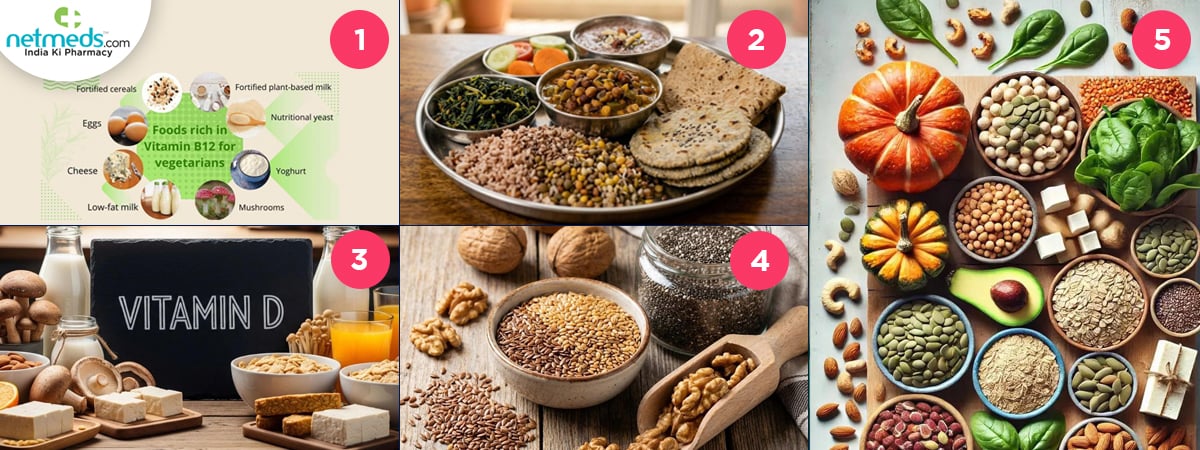
7 Important Supplements For Vegetarians
Vitamin B12
Vitamin B12 deserves particular attention because naturally occurring B12 is found mainly in animal-derived foods.
B12 supports red blood cell formation, neurological function and DNA synthesis. People following vegan diets generally need a reliable source through fortified foods or supplements.
Vegetarians who consume eggs and dairy can obtain some B12 from these foods, although intake may still be inadequate.
Best approach: Consider B12 supplementation if dietary intake is insufficient or blood tests indicate deficiency, preferably with professional guidance.
Iron
Iron is required to produce haemoglobin, the protein that transports oxygen throughout the body. Iron deficiency can cause tiredness, weakness, dizziness and difficulty concentrating.
Vegetarians can obtain iron from lentils, beans, chickpeas, tofu, spinach, sesame seeds and fortified cereals. However, plant-based iron is non-haem iron and is generally less efficiently absorbed.
Pairing iron-rich foods with vitamin C sources such as lemon, tomatoes, oranges or bell peppers can improve iron absorption.
Important: Don't take high-dose iron supplements simply because you feel tired. Supplementation should ideally follow medical assessment or blood testing.
Vitamin D
Vitamin D helps maintain healthy bones, supports calcium absorption and contributes to normal muscle and immune function.
Dietary sources can be limited, particularly for people who consume few fortified foods or have limited sun exposure.
Fortified milk and plant-based beverages, some mushrooms and eggs can provide vitamin D. Supplements may be recommended when dietary intake and sun exposure are inadequate.
Tip: A vitamin D blood test can help determine whether supplementation is appropriate.
Calcium
Calcium is essential for strong bones and teeth and also supports normal muscle and nerve function.
Vegetarians who consume dairy can obtain calcium from milk, yoghurt and cheese. Vegans can choose calcium-fortified plant milks, calcium-set tofu, sesame seeds and certain leafy greens.
A calcium supplement may be considered when dietary intake consistently falls short.
Omega-3 Fatty Acids
Omega-3 fatty acids play important roles in cardiovascular, brain and overall health.
Vegetarians can obtain alpha-linolenic acid (ALA) from flaxseeds, chia seeds, walnuts and hemp seeds. However, the body's conversion of ALA into EPA and DHA is limited.
For people who don't consume fish, an algae-based EPA/DHA supplement may be an option to discuss with a healthcare professional.
Iodine
Iodine is needed to produce thyroid hormones, which regulate metabolism and support normal growth and development.
Vegetarians who don't consume seafood should pay attention to iodine intake. Iodised salt and fortified foods can provide iodine.
However, excessive iodine can also be harmful, so iodine supplements should not be taken unnecessarily.
Zinc
Zinc contributes to immune function, wound healing, protein synthesis and normal growth.
Vegetarian sources include beans, lentils, nuts, seeds, whole grains and dairy products.
Plant foods contain phytates that can reduce zinc absorption. Soaking, sprouting, fermenting or cooking legumes and grains can help improve mineral availability.
A zinc supplement may be appropriate when dietary intake is inadequate, or deficiency has been diagnosed.
Don't Forget Protein
Supplements aren't a substitute for a balanced vegetarian diet.
Include a variety of protein-rich foods such as:
Dal and lentils
Chickpeas and beans
Soybeans and tofu
Eggs, if consumed
Nuts and seeds
Whole grains
Eating a variety of plant-based protein sources throughout the day can help provide essential amino acids.
Who May Need Extra Nutritional Support?
Supplement needs vary from person to person. Particular attention may be necessary for:
Vegans
People following restrictive or repetitive diets
Pregnant or breastfeeding women
Older adults
People with diagnosed nutrient deficiencies
Individuals with conditions affecting nutrient absorption
If you experience persistent tiredness, weakness, numbness, hair loss, frequent infections or other unexplained symptoms, consult a healthcare professional rather than simply taking multiple supplements.
Tips For Taking Vegetarian Supplements Safely
Check the label: Look for vegetarian or vegan certification where relevant.
Avoid megadoses: Taking excessive amounts of certain vitamins and minerals can be harmful.
Check for interactions: Some supplements can interfere with prescription medicines.
Consider testing: Blood tests can help identify deficiencies such as B12, iron or vitamin D.
Choose quality products: Select reputable supplements with clear ingredient and dosage information.
Conclusion
Going vegetarian doesn't mean missing out on essential nutrition. A diverse diet containing legumes, whole grains, vegetables, fruits, nuts, seeds, dairy or fortified alternatives can provide many of the nutrients your body needs.
However, vitamin B12, iron, vitamin D, calcium, iodine, zinc and omega-3 fatty acids deserve particular attention depending on your dietary pattern and individual nutritional needs.
The smartest approach is simple: build meals around nutrient-rich foods, identify genuine nutritional gaps and use supplements strategically rather than automatically.
Remember, supplements should complement a healthy vegetarian diet, not replace it.
References:
- NIH Office of Dietary Supplements – Vitamin B12
- NIH Office of Dietary Supplements – Iron
- NIH Office of Dietary Supplements – Vitamin D
- NIH Office of Dietary Supplements – Calcium
- NIH Office of Dietary Supplements – Omega-3 Fatty Acids
- NIH Office of Dietary Supplements – Zinc
- NIH Office of Dietary Supplements – Iodine
 Previous