


Cold-pressed juices are often marketed as a healthier alternative to conventional juices, with claims that they contain more nutrients, antioxidants, and live enzymes. The appeal comes partly from the way they are made: instead of rapidly spinning blades, a hydraulic or slow-pressing mechanism crushes fruits and vegetables and extracts their liquid. There is some science behind the process, but several popular claims go further than the evidence allows. The nutritional value depends on the ingredients, processing, storage, and, importantly, what happens to the fibre.
In this read, let’s understand how much a cold-pressed juice can be good for your health and why you should consume it.
(Shop From Our Wide Range Of Health Supplements)
What Is Cold-Pressed Juice?
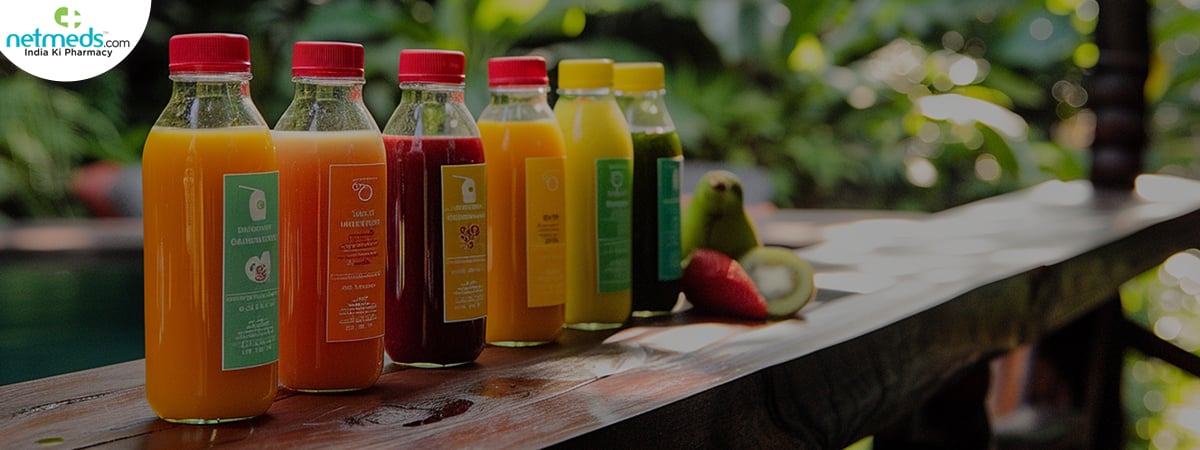
Cold-pressed juice is produced by mechanically extracting liquid from fresh fruits or vegetables without applying external heat during extraction. Under FSSAI's definition, non-thermally processed or cold-pressed fruit juice is obtained directly through mechanical extraction from sound, ripe and fresh fruit and may undergo appropriate non-thermal processing. Unlike a smoothie, which retains the pulp and fibre of the whole food, most cold-pressed juices separate a substantial amount of the insoluble fibre from the liquid. The term cold-pressed therefore describes a processing method, not a guarantee of superior nutrition. Cold pressing can produce a fresh, nutrient-containing drink, but it does not automatically make juice healthier than whole fruits and vegetables.
Also Read: Vegetable Juices Versus Fruit Juices: Benefits, Differences And Recipes To Try
Does Cold Pressing Preserve More Nutrients?
Heat can degrade some heat-sensitive nutrients, particularly vitamin C, which is one reason non-thermal processing technologies are being studied as alternatives to conventional heat treatment. However, that does not mean a cold-pressed juice necessarily contains more nutrients than juice produced using another extraction method. A study comparing cold-pressed and centrifugal extraction found no significant difference in vitamin C, total phenolics, carotenoids, or measured antioxidant capacity between the freshly prepared juices. The researchers therefore questioned the claim that cold-pressed juice is automatically nutritionally superior. So, cold pressing may reduce exposure to heat during extraction, but the final nutritional advantage depends on the juice and the entire processing chain.
What Happens To Fibre?
Fibre is one of the biggest nutritional differences between whole fruit and juice. When fruit is pressed, much of its solid material is separated from the liquid. This means that even a juice made entirely from fresh fruit generally provides less dietary fibre than eating the fruit itself. This matters because fibre contributes to fullness and influences how quickly carbohydrates are digested. Dietary guidance therefore generally recommends that fruit intake come primarily from whole fruit rather than juice. A smoothie made by blending the whole edible fruit can retain considerably more of the original fibre than a strained juice.
Also Read: On Weight Loss Journey? 10 Foods You Should Avoid As Recommended By a Nutritionist
Does Cold-Pressed Juice Have Less Sugar?
Not necessarily. Cold pressing does not remove the naturally occurring sugars from fruit. If several fruits are used to make one large glass of juice, their sugars become concentrated into a drink that can be consumed much faster than eating the equivalent whole fruits. There is also an important distinction between naturally occurring sugars in whole fruit and the sugars present in fruit juice. WHO classifies the sugars naturally present in fruit juices and concentrates as free sugars and recommends keeping free-sugar intake below 10% of total energy intake, with a further reduction to below 5% suggested for additional health benefits. This does not make 100% fruit juice equivalent to a sugary soft drink. It means that juice should still be considered within the overall sugar and energy intake of the diet.
Also Read: Diabetes Care: Manage Blood Sugar Levels With Smart Carbohydrate Choices
Can Cold-Pressed Juice Help With Detox?
There is no good evidence that drinking cold-pressed juice detoxifies the body in the way commercial juice cleanses often suggest. The liver, kidneys, lungs,s and gastrointestinal system already have important roles in processing and eliminating waste products. Drinking vegetable- or fruit-based juice can provide nutrients and contribute to fluid intake, but there is no established need for a juice cleanse to remove unspecified toxins. Juice-only diets can also make it difficult to obtain adequate protein, fibre and other nutrients if followed for extended periods.
Also Read: ABC Juice Benefits For Skin, Immunity And Heart Health. Top 5 Reasons To Drink It
Does Cold-Pressed Juice Stay Fresh Longer?
Cold pressing itself does not make juice immune to spoilage or nutrient loss. Exposure to oxygen, light, temperature, and storage time can affect nutrients and other compounds. In one study, cold-pressed juices stored at around 28°C showed deterioration in vitamin C, phenolics, carotenoids, and antioxidant measures within 48 hours. Refrigeration slowed these changes, although several nutritional measures began declining during longer storage. Freshly prepared juice should therefore be refrigerated promptly and consumed according to its producer's stated storage guidance rather than assuming that “cold-pressed” means long-lasting.
Is Cold-Pressed Juice Safe?
Freshly squeezed or cold-pressed juice may be unpasteurised. Mechanical extraction does not necessarily destroy harmful microorganisms. Contaminated raw produce can introduce bacteria into the juice, and refrigeration alone does not make contaminated juice safe. FSSAI standards recognise cold-pressed juices as a distinct category and require applicable microbiological and product standards. People at higher risk from foodborne illness, including pregnant women, young children, older adults and people with weakened immune systems, should be particularly careful with untreated juice. FDA guidance recommends choosing pasteurised or otherwise treated juice for these groups.
Also Read: 5 Reasons Why Beetroot Is A Blessing To Your Skin, Hair
How to Make Cold-Pressed Juice a Sensible Choice
· If you enjoy cold-pressed juice, it can fit into a balanced diet. A few practices make the choice more sensible:
· Prefer vegetable-heavy combinations rather than very fruit-heavy blends.
· Avoid unnecessary added sugar or syrups.
· Treat juice as a beverage or part of a meal, not as a replacement for whole fruits and vegetables.
· Keep whole fruits and vegetables as the main source of plant foods.
· Refrigerate fresh juice promptly.
· Check whether commercially sold juice is pasteurised or otherwise treated for safety.
· Be cautious of products making claims such as detox, cures inflammation or melts fat.
·Check the ingredient and nutrition information rather than relying only on the words cold-pressed or natural.
Frequently Asked Questions
Is pressed juice healthier than regular juice?
Pressed juice may not automatically be healthier than regular juice. But cold pressing keeps juice away from heat. Cold-pressed juice may or may not have more nutrients than juice made by other methods.
Does pressed juice contain fibre?
Pressed juice contains some soluble and suspended components, but it removes much of the insoluble fibre during pressing. Whole fruits and many smoothies usually give fibre.
Does pressed juice help with weight loss?
Pressed juice alone may not make people lose weight. Depending on the ingredients and the size of a glass, pressed juice can give a lot of carbohydrates and calories while feeling less filling than whole fruit.
Can I drink pressed juice every day?
Moderate amounts of 100% cold-pressed juice can fit into a balanced diet. However, drinking cold-pressed juice should not replace eating whole fruits and vegetables.
Is pressed juice safe during pregnancy?
Check if pressed juice has been pasteurised or otherwise treated. Pregnant women should avoid cold-pressed juice because of the risk of foodborne infection.
Is pressed juice better than eating whole fruit?
Whole fruit usually has advantages in fibre and satiety. Pressed juice can give some of the vitamins, minerals and plant compounds that fruit has, but it should not replace whole fruit nutritionally.
Conclusion
Pressed juice can be a handy way to get some nutrients from fruits and vegetables, but science does not back using it as a shortcut or detox treatment. The best everyday approach is still a diet of whole fruits, vegetables, and other minimally processed foods, with cold-pressed juice used in moderation when it fits a person’s dietary needs.
References:
(https://doi.org/10.1016/j.heliyon.2019.e01917)
(https://pubmed.ncbi.nlm.nih.gov/31286079/)
https://pmc.ncbi.nlm.nih.gov/articles/PMC6587058/)
https://doi.org/10.1093/nutrit/nuae036)
https://pubmed.ncbi.nlm.nih.gov/38679915/)
https://pmc.ncbi.nlm.nih.gov/articles/PMC11723140/)
https://doi.org/10.1002/fci2.70017
https://iadns.onlinelibrary.wiley.com/doi/10.1002/fci2.70017
https://www.who.int/publications/i/item/9789241549028
https://www.who.int/tools/elena/interventions/free-sugars-adults-ncds)
https://www.fda.gov/food/buy-store-serve-safe-food/what-you-need-know-about-juice-safety
https://www.fda.gov/food/people-risk-foodborne-illness/fruits-veggies-and-juices-food-safety-moms-be
https://fssai.gov.in/upload/uploadfiles/files/Compendium_Food_Additives_Regulations_29_10_2021.pdf
https://fssai.gov.in/upload/advisories/2024/06/665eb7e80327aAdvisory%20100_percent%20Fruit%20juices.pdf
 Previous


