


Do you feel tired all day, even after a restful sleep? This persistent exhaustion may not be due to stress or a hectic work schedule. Yes, chronic fatigue impacts your daily activities, making you feel overwhelmed doing regular tasks. Surprisingly, vitamin deficiencies are often major culprits. And the good news is that blood tests can help you identify these deficiencies in an early phase, thereby helping you restore energy
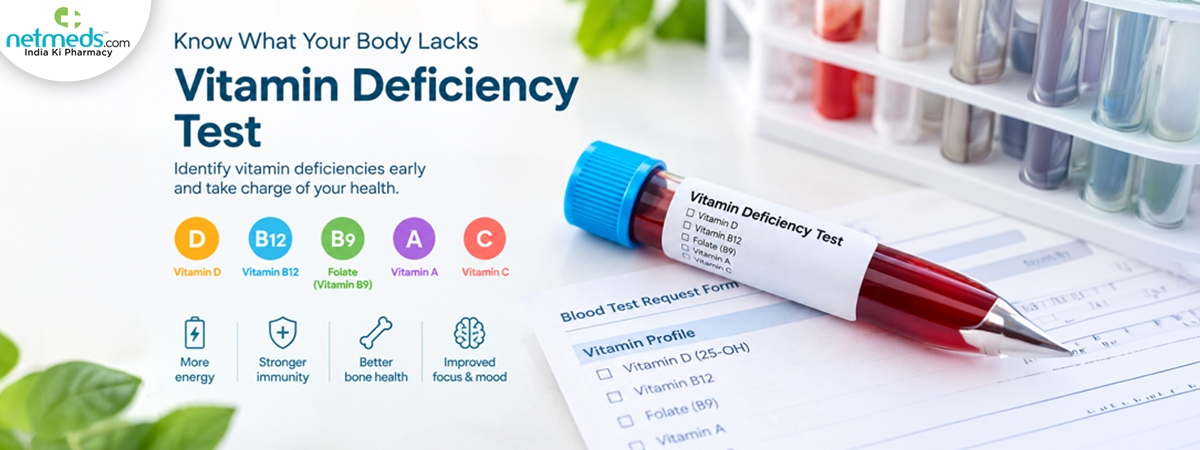
(Find Out What Is Causing Your Fatigue, Book Your Diagnostic Tests Today)
If you frequently feel exhausted, a healthcare provider may recommend certain vitamin deficiency tests and blood tests to identify possible nutritional deficiencies and other underlying causes.
What Is Fatigue?
Fatigue is more than just feeling sleepy. It is categorised by lack of energy, weakness, poor concentration and focus. If tiredness persists for weeks or impedes with your regular activities, it is best to seek advice from your physician.
Nutritional deficiencies are one of the possible causes, but fatigue alone cannot confirm that you have a vitamin deficiency.
Tests to Consider for Constant Exhaustion
Depending on your symptoms, diet, medical history and risk factors, your doctor may recommend the following tests.
Vitamin B12 Test
Vitamin B12 deficiency causes fatigue, weakness and lack of concentration. If left unattended, it may also result in numbness, tingling or other neurological symptoms.
A serum vitamin B12 blood test can help determine your B12 status. Moreover, those following vegetarian or vegan diets, people with digestive issues and those who are taking certain medications are at a higher risk of B12 deficiency.
Also Read: Vitamin B12 For Women: Health Benefits, Deficiency, Food Sources And Supplements
Vitamin D Test
Vitamin D is a vital nutrient that strengthens bones, improves muscle function and is involved in several important bodily processes. Low vitamin D levels are associated with muscle weakness and fatigue.
A 25-hydroxy vitamin D blood test (25(OH)D) is commonly assessed to determine vitamin D status.
Folate Test
Folate (vitamin B9) is an important nutrient required for healthy red blood cell formation and DNA synthesis. Folate deficiency can lead to megaloblastic anaemia, which may cause tiredness, weakness and shortness of breath.
A serum folate test may be recommended when a doctor suspects folate deficiency or anaemia.
Iron Profile
Although iron is a mineral rather than a vitamin, iron deficiency is an important nutritional cause of tiredness. Some of the tests suggested by your healthcare provider include:
Serum ferritin
Serum iron
Total iron-binding capacity (TIBC)
Transferrin saturation
Low iron stores can develop with or without anaemia. People with heavy menstrual bleeding, certain gastrointestinal conditions or inadequate dietary iron intake may be at increased risk.
Complete Blood Count (CBC)
A complete blood count (CBC) is not a vitamin test, but it is considered a useful tool for investigating unexplained fatigue. This blood test measures various blood components like haemoglobin and red blood cells. A low haemoglobin level may indicate anaemia, which can cause tiredness, weakness, dizziness and breathlessness.
Based on CBC results, your healthcare provider may decide whether further testing for iron or vitamin B12 deficiency is needed.
Other Tests Your Doctor May Consider
If vitamin and mineral deficiencies do not explain your symptoms, other investigations may be considered.
Thyroid Function Tests
Hypothyroidism can cause extreme fatigue, feeling unusually cold, weight changes, constipation, dry skin, hair loss and muscle weakness. A TSH test, sometimes along with free T4, can help evaluate thyroid function.
Blood Glucose Tests
High blood glucose levels can result in tiredness and poor energy. Depending on your health status, your doctor may recommend:
Fasting blood glucose
Who May Need Vitamin Deficiency Testing?
Generally, vitamin testing may be considered if you have persistent fatigue along with risk factors such as:
A restricted or fad diet
Heavy menstrual bleeding
Pregnancy or breastfeeding
Certain digestive or absorption disorders
Previous vitamin or mineral deficiency
Taking certain long-term medications
Unexplained anaemia
Symptoms such as numbness, weakness or frequent dizziness
The appropriate tests depend on your individual health history.
When Should You Seek Medical Help?
Consult a healthcare professional if tiredness:
Persists for several weeks
Gets progressively worse
Interferes with work or daily activities
Occurs despite proper sleep
Is accompanied by sudden weight loss
Breathlessness, dizziness or fainting
Is associated with persistent weakness or other concerning symptoms
Remember, never start with high-dose vitamin supplements just because you feel extremely exhausted. Excessive intake of certain vitamins can cause other medical problems. Getting regularly screened and seeking medical advice may help determine whether supplementation is really needed.
How Can You Prevent Nutritional Deficiencies?
Consuming a balanced and wholesome diet may help meet the needs of important vitamins and minerals required for optimising overall health. Add a rich array of foods including:
Fresh vegetables and fruits
Whole grains and millets
Pulses, beans and lentils
Nuts and seeds
Dairy or suitable alternatives
Eggs, fish, poultry or other protein sources, according to your dietary preferences
Those diagnosed with deficiencies or increased nutritional requirements may need supplements under proper medical assistance.
Frequently Asked Questions
Which Vitamin Deficiency Causes Tiredness?
Vitamin B12, folate and vitamin D deficiencies may be associated with fatigue. In addition, iron deficiency, although not a vitamin deficiency, is another common nutritional cause.
What Blood Test Checks For Vitamin Deficiency?
Different blood tests assess different nutrients. Common tests include vitamin B12, 25-hydroxy vitamin D, folate and iron studies.
Should I Get A Vitamin Test If I Am Always Tired?
If fatigue is persistent or unexplained, speak with a healthcare professional. They can determine which tests are appropriate based on your symptoms and health history.
Can Vitamin D Deficiency Make You Tired All Day?
Low vitamin D levels may be associated with fatigue and muscle weakness, but tiredness can have many causes. A 25-hydroxy vitamin D test can assess vitamin D status.
What Is The Best Test For Unexplained Fatigue?
There is no single test that identifies every cause of fatigue. Depending on your symptoms, a doctor may recommend a CBC, iron studies, vitamin B12, vitamin D, folate, thyroid function and glucose testing.
Conclusion
Constant tiredness does not have to be your normal. With the right diagnostic tests and regular follow-up, you can easily find out hidden health issues and take charge of your health. Whether it’s correcting a vitamin deficiency, treating thyroid disorders, or just giving your body the rest and support it needs, prompt diagnosis can make all the difference. So, if you have been running on empty despite your best regardless your best efforts, just don’t push it off as stress or age. Book a fatigue blood test or tiredness test profile today and take the first step toward renewed energy.
References:
https://pmc.ncbi.nlm.nih.gov/articles/PMC4628075/
Vitamin D deficiency and fatigue: an unusual presentation
Kevin Johnson 1, Maryam Sattari 1
Vitamins and Minerals for Energy, Fatigue and Cognition: A Narrative Review of the Biochemical and Clinical Evidence
Anne-Laure Tardy 1,*, Etienne Pouteau 1, Daniel Marquez 2, Cansu Yilmaz 3, Andrew Scholey 4
EFSA Scientific Opinion on principles for deriving and applying Dietary Reference Values. EFSA J. 2010;8:1458. [Google Scholar]
European Commission Commission Regulation (EU) No 432/2012 of 16 May 2012 establishing a list of permitted health claims made on foods, other than those referring to the reduction of disease risk and to children’s development and health. Off. J. Eur. Union. 2012;136:1–40.
Griffiths J.K. Vitamin deficiencies. In: Magil A.J., Hill D.R., Solomon T., Ryan E.T., editors. Hunter’s Tropical Medicine and Emerging Infectious Disease. 9th ed. Elsevier; London, UK: 2013. pp. 997–1002.
Rippin H.L., Hutchinson J., Jewell J., Breda J.J., Cade J.E. Adult Nutrient Intakes from Current National Dietary Surveys of European Populations. Nutrients. 2017;9:1288. doi: 10.3390/nu9121288.
Pedroza-Tobias A., Hernandez-Barrera L., Lopez-Olmedo N., Garcia-Guerra A., Rodriguez-Ramirez S., Ramirez-Silva I., Villalpando S., Carriquiry A., Rivera J.A. Usual Vitamin Intakes by Mexican Populations. J. Nutr. 2016;146:1866S–1873S. doi: 10.3945/jn.115.219162.
Ministry of Health of Turkey . Dietary Guidelines. Publication n°1046. Ministry of Health of Turkey; Ankara, Turkey: [(accessed on 2 January 2020)]. Available online: https://dosyasb.saglik.gov.tr/Eklenti/10922,17ocaktuberingilizcepdf.pdf?0.
Dietary Guidelines Advisory Committee . Scientific Report of the 2015 Dietary Guidelines Advisory Committee: Advisory Report to the Secretary of Health and Human Services and the Secretary of Agriculture. U.S. Department of Agriculture, Agricultural Research Service; Washington, DC, USA: 2015.
Bailey R.L., Gahche J.J., Miller P.E., Thomas P.R., Dwyer J.T. Why US adults use dietary supplements. JAMA Int. Med. 2013;173:355–361. doi: 10.1001/jamainternmed.2013.2299.
Sekhri K., Kaur K. Public knowledge, use and attitude toward multivitamin supplementation: A cross-sectional study among general public. Int. J. Appl. Basic Med. Res. 2014;4:77–80. doi: 10.4103/2229-516X.136780.
Ryan R.M., Frederick C. On energy, personality, and health: Subjective vitality as a dynamic reflection of well-being. J. Pers. 1997;65:529–565. doi: 10.1111/j.1467-6494.1997.tb00326.x.
Aouizerat B.E., Gay C.L., Lerdal A., Portillo C.J., Lee K.A. Lack of energy: An important and distinct component of HIV-related fatigue and daytime function. J. Pain Symptom Manag. 2013;45:191–201. doi: 10.1016/j.jpainsymman.2012.01.011.
van Steenbergen E., van Dongen J.M., Wendel-Vos G.C., Hildebrandt V.H., Strijk J.E. Insights into the concept of vitality: Associations with participation and societal costs. Eur. J. Public Health. 2016;26:354–359. doi: 10.1093/eurpub/ckv194.
 Previous