


Summer is the time of vacations, endless outdoor dining, street food and cold drinks. These summer routines, together with intense temperatures, create the perfect environment for foodborne illnesses. Bacteria and germs can multiply more rapidly in warmer months, especially in food that is poorly stored or unhygienic. As a result, food poisoning cases increase during the summer season. From stale foods to contaminated water and poorly stored meals, even a small mistake can lead to stomach infections and gut problems.
To Replenish Fluid Lost And Stay Hydrated, Shop From Our Wide Range of Electrolyte Drinks
Explore this article to learn more about the symptoms, causes, and the right foods to eat to help manage food poisoning.
What Is Food Poisoning?
Food poisoning is a foodborne illness caused by taking contaminated food or water. Pathogens like bacteria, viruses, parasites, or toxins enter the human body through infected food and upset the digestive system. Most commonly causing microorganisms include:
Salmonella
E. coli
Listeria
Norovirus
Campylobacter
These microorganisms multiply rapidly in summer due to heat and humidity, especially when food is stored outside the refrigerator.
Why Food Poisoning Is More Common in Summer?
Hot climate triggers bacterial growth in food. Foods that are kept at room temperature for longer periods of time become stale and unsafe for consumption.
Also Read: Food Poisoning: Causes, Symptoms And Treatment
Common Causes of Food Poisoning
Food poisoning develops when you eat food or water contaminated with pathogens like bacteria, viruses, parasites, or their toxins. In the summer season, the intense heat acts as an incubator. Some of the common causes of food poisoning during the warmer months include:
Temperature Abuse
Whether it is a salad at a picnic or a curry left on the kitchen counter, food kept out in the heat is the breeding ground for bacteria like Staphylococcus aureus. These bacteria produce toxins that are not destroyed by reheating.
Contaminated Cut Fruits/Salads
Pre-cut fruits and raw vegetable salads are dangerous summer culprits. If the knife used to cut them was uncontaminated or washed with spoiled water, bacteria like Salmonella or E. coli can easily spread on the exposed part in the heat.
Cross-Contamination During Grilling
Summer picnics are the time of enjoying barbecues, which can often lead to cross-contamination. Using the same cutlery or knife for raw chicken and then using them to serve the cooked meat spreads harmful pathogens directly to your plate.
Unsafe Street Food and Water
Drinking contaminated water or beverages with ice made from unpurified water is a leading cause of viral gastroenteritis and bacterial infections.
Common Symptoms of Food Poisoning
Generally, symptoms may show within a few hours or take up to a couple of days, depending on the cause.
Nausea
Vomiting
Abdominal pain or cramps
Fever
Fatigue
Poor appetite
Headache
Signs of Dehydration to Watch For
Food poisoning often leads to fluid loss through excessive vomiting and diarrhea. Warning signs of dehydration to look out for include:
Dry mouth
Dark yellow urine
Excessive thirst
Dizziness
Sunken eye
Fatigue
Low urine output
Children and elderly people are highly prone to dehydration and may require prompt medical care.
Foods That Commonly Cause Food Poisoning in Summer
Certain foods spoil faster in heat and should be handled carefully.
Dairy products like milk, paneer, curd, cream, and cheese spoil quickly without refrigeration.
Improperly cooked chicken, fish and meat can transmit harmful pathogens.
Street foods exposed to unhygienic preparations and surroundings can elevate the risk.
Pre-cut watermelon, papaya, and pineapple can become contaminated easily.
Cooked rice left outside for hours may develop bacterial toxins.
Sandwich spreads like mayonnaise, dips and salads spoil rapidly in hot temperatures.
What to Eat During Food Poisoning?
The digestive system becomes easily sensitive during food poisoning. Eating light, hydrating, and easily digestible foods helps speed up recovery.
Maintain Hydration
Good hydration is key in helping the body combat the effects of food poisoning. Severe vomiting and diarrhea can cause dehydration, so sucking on ice chips or taking small sips of water or electrolyte drinks is the best way to prevent dehydration during food poisoning.
Also Read:5 Natural Ways To Heal After A Bout Of Food Poisoning
Some of the liquid options include:
Non-caffeinated drinks: ginger ale, lemonade or buttermilk
Decaffeinated tea
Chicken or vegetable broth
Eat Bland Food
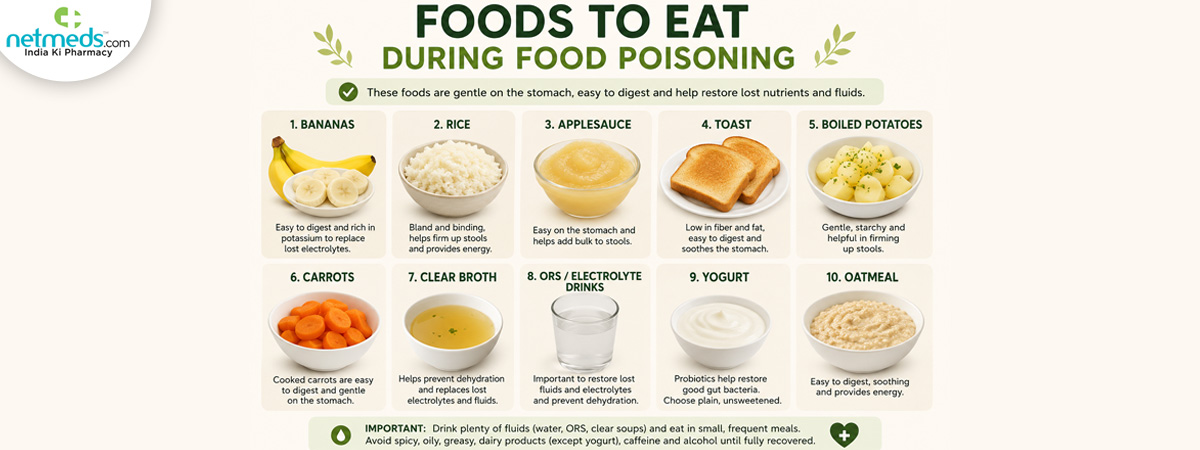
It is essential to eat foods that are gentle on your tummy and gastrointestinal tract. Choose bland, low-fat, low-fibre foods. Fatty and spicy foods are harder to digest, especially when the stomach is upset. Foods that are gentle on the stomach include:
Bananas are rich in potassium and a dense source of energy. They are gentle on the stomach and help replace lost potassium.
Soft, well-cooked white rice is easy to digest and helps bind stools.
Dry foods like toast and rusk reduce nausea and are easy on digestion.
Probiotics in curd help restore healthy gut bacteria balance and increase good bacterial growth.
Tender coconut water helps replenish fluids and prevent dehydration.
Soft and bland veggies like carrots and melons provide energy without irritating the stomach.
Indian comfort foods like idli, idiyappam, rice porridge or kichadi are easy to digest and offer a quick source of energy.
Apple or apple sauce contains pectin, which may help manage diarrhea.
Ginger or peppermint tea may reduce nausea and bloating.
Vegetable broth or light soups keep the body hydrated and nourished.
Foods to Avoid During Recovery
Certain foods can worsen symptoms and irritate the stomach.
Spicy foods
Fried foods
Oily snacks
Caffeine
Alcohol
Carbonated drink
Processed foods
Raw vegetables
Rich dairy products
It is best to slowly reintroduce regular meals once symptoms improve.
When to See a Doctor?
Seek immediate medical care if you experience:
Blood in vomit or stool
Severe dehydration
Persistent vomiting
Diarrhea lasting more than 3 days
Difficulty breathing
Extreme weakness
Young children, pregnant women, elderly individuals, and people with weak immunity should not ignore symptoms.
Tips to Prevent Food Poisoning in Summer
Following these simple precautionary measures may help avert risk:
Wash your hands before eating.
Drink clean, filtered and boiled water.
Refrigerate leftover foods quickly.
Discard stale foods.
Wash fruits and vegetables thoroughly.
Eat freshly cooked meals prepared at home.
Avoid raw or undercooked meat.
Carry homemade food during travel.
Check expiry dates before consumption.
Food safety becomes especially important during hot months.
Conclusion
Food poisoning during summer is common but largely preventable. Intense temperatures create a favourable environment for bacteria to multiply quickly, increasing the risk of food and water contamination. Identifying early symptoms, staying hydrated, and eating gentle foods can support faster recovery.
References:
https://www.niddk.nih.gov/health-information/digestive-diseases/food-poisoning/symptoms-causes
https://www.researchgate.net/publication/348557320_Food_Poisoning_causes_precautions_diagnosis_and_treatment_A_brief_review
https://www.mayoclinic.org/diseases-conditions/food-poisoning/symptoms-causes/syc-20356230
 Previous