The parties are over, the crowds have gone home, and honestly, it is hard to remember what your regular routine even looks like. You are drained, barely keeping your eyes open, and wondering how you are supposed to get back to normal after all that festive chaos. Late nights, endless meals, family marathons, non-stop shopping, and “just one more” rich dessert… no wonder your energy tank is running on empty.
Here is the truth: you don’t need a complicated plan, expensive detox kits, or trendy wellness hacks to get back on track. A few simple shifts in your daily habits can bring your energy back, lift your mood, and help you shake off that tiredness post-party season.
Think about it, staying up too late, skipping meals, reaching for heavy foods and sweets, forgetting to drink water… it all adds up. Plus, there is the stress of hosting and traveling while juggling your regular workload, which can really wipe you out.
Instead of grabbing energy drinks or squeezing in harsh diets, just go back to basics: solid sleep, proper nutrition, hydration, and gentle movement. That is what helps you recover better after festivals.
Also Read: Detox After Diwali. Easy Homemade Recipes To Flush Out Toxins
So Why Do You Feel So Tired After Festivities?
Festive fatigue isn’t a medical condition, but it feels real. You know, that sluggishness, mental fog, and zero motivation after days packed with celebrations. The main culprits? Disrupted sleep thanks to late nights, overeating rich foods (especially carbs and fat), not drinking enough fluids, running around with chores and errands, and just plain mental overload from all the social commitments and stress.
When you cram your calendar and overload your body, especially during the holidays, you are bound to feel wiped out.
How Festive Celebrations Mess With Your Energy?
Staying up late means less sleep, less recovery. Constant travel or socializing ends up messing with your body clock. All the dancing, walking, standing, and shopping; hello, physical exhaustion. Heavy meals and weird eating schedules leave you sluggish. Alcohol and caffeine? Both mess with your sleep and hydration. If it is hot or crowded, you lose fluids faster. Too many social interactions and noise can just make your brain tired.
There is research showing that all this fuels dehydration, drains your energy reserves, stresses your muscles, and strains your mind. Poor sleep even messes with your appetite, brings up your stress hormones, slows muscle repair, and makes you groggy all day.
Trying to “fix” your holiday binge with tough workouts or extreme fasting isn’t the answer. Just focus on resetting your regular, healthy habits.
What Not To Do When Trying to Recover?
Skip the crash diets and don’t starve yourself. Chugging coffee or energy drinks to make up for lack of sleep just makes things worse. Avoid hardcore workouts if you are still tired. Don’t ignore thirst or live off sugary drinks. And don’t jump right back into overloaded schedules before giving yourself time to rest.
If you are still exhausted for weeks, or it starts messing with your day-to-day life, or you notice other weird symptoms like breathlessness, sudden weight loss, persistent fever, or unusual weakness, talk to a doctor. Sometimes ongoing fatigue is a sign of bigger problems, like anaemia, thyroid issues, or sleep disorders.
When Should You Get Medical Help?
If you keep feeling tired, even after you have sorted your sleep, hydration, and nutrition, and it keeps dragging on for weeks or interfering with your routine, check with your doctor.
Head for urgent care right away if the tiredness comes with:
Chest pain or trouble breathing
Passing out or confusion
Bad dehydration
Persistent vomiting or diarrhea
Sudden weakness
Unusual bleeding
A pounding headache or weird heartbeats
Long-term fatigue isn’t always just about partying too hard, it could be linked to things like anaemia, thyroid problems, diabetes, infection, medications, sleep disorders, depression, and more.
Ready to feel better? Here are five simple ways to recharge your body naturally after all the festivities:
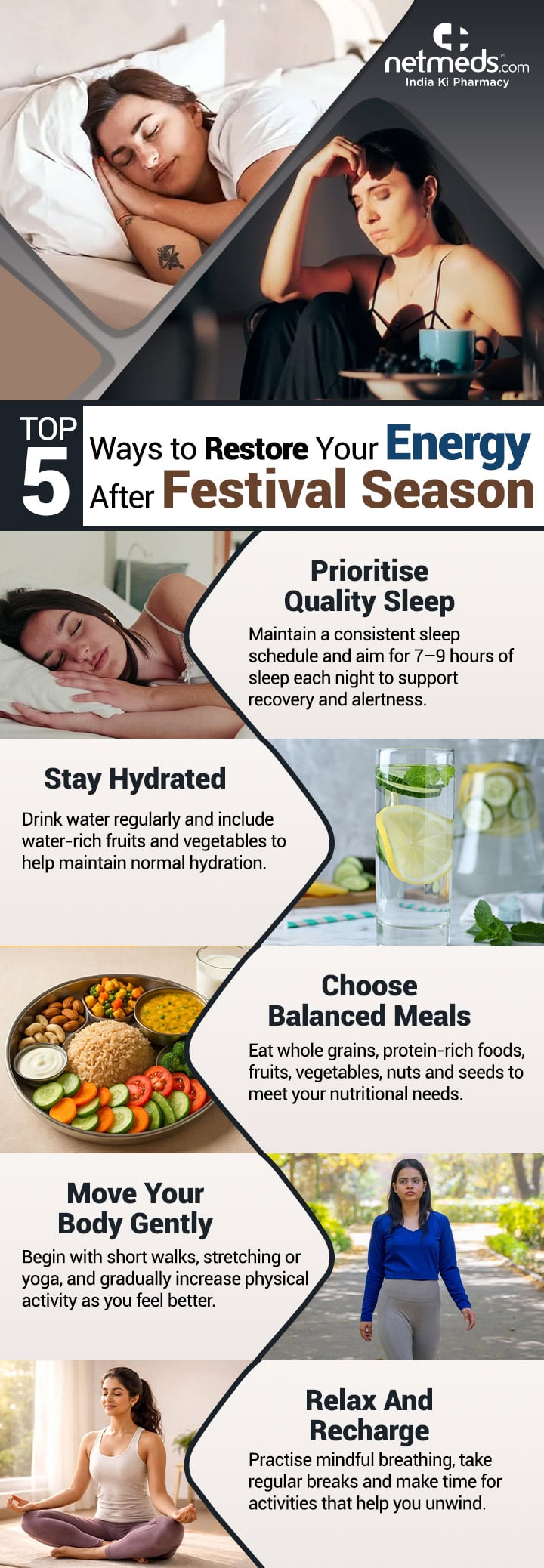
Festivals bring fun, memories, and togetherness, but the recovery part matters just as much. Forget about quick fixes. Just give yourself time to get back into your normal rhythm: better sleep, balanced meals, good hydration, gentle movement, and stress care. That is what really helps your body bounce back.
And honestly, don’t ignore persistent tiredness. Sometimes, it needs a doctor’s attention, not just patience.
References:
Boosting Energy and Managing Fatigue — Harvard Health
https://www.health.harvard.edu/topics/boosting-energy-managing-fatigue
The Sleep and Recovery Practices of Athletes — PMC
https://pmc.ncbi.nlm.nih.gov/articles/PMC8072992/
Sports Performance Recovery — Australian Institute of Sport
https://www.ausport.gov.au/clearinghouse/evidence/sports-performance-recovery
Nutrition for a Healthy Life — World Health Organization
https://www.who.int/europe/news-room/fact-sheets/item/nutrition---maintaining-a-healthy-lifestyle
Eating Well with Fatigue — NHS
Overview of Exercise and Recovery — Merck Manual
https://www.merckmanuals.com/professional/special-subjects/exercise/overview-of-exercise
Fluid Replacement for the Physically Active — National Athletic Trainers’ Association
https://www.nata.org/sites/default/files/2025-08/fluid_replacement_for_the_physically_active.pdf
Rest as a Health Strategy — WPA
https://www.wpa.org.uk/health-wellbeing/articles/rest-health-strategy
 Previous