Protein is a key nutrient that supports body tissues, immune function, and overall well-being. While lean meat sources like eggs, fish, skinned chicken, and legumes are popular protein-loaded foods, cheese is another complete, wholesome option that offers protein along with minerals like calcium, phosphorus, and vitamin B12.
(To Optimise Your Overall Health And Well-Being, Shop From Our Best-Selling Protein Supplements)
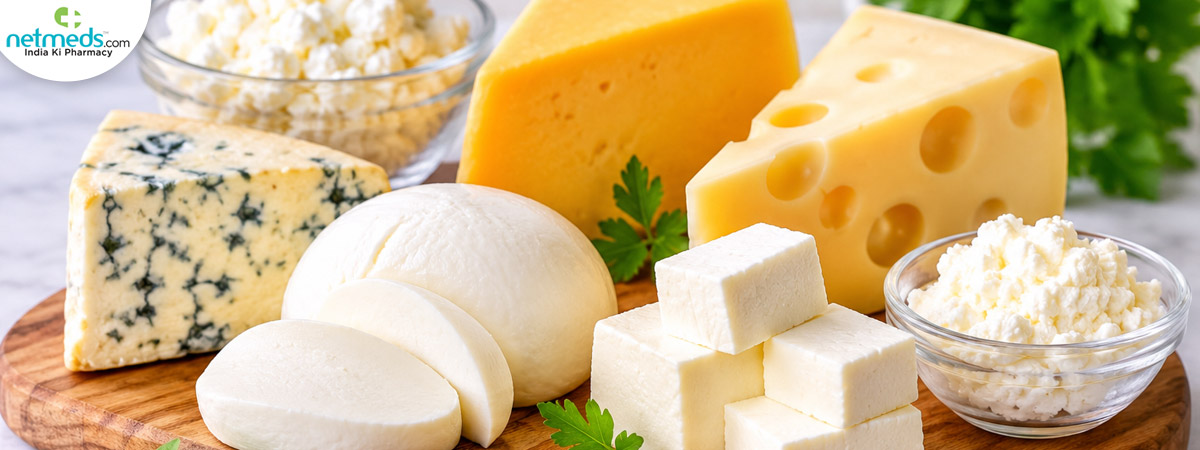
But does cheese have more protein than lean meat? Can cheese really be a good substitute for meeting your daily protein needs?
Yes, cheese offers high-quality, complete protein, as it’s made from milk, which naturally contains both casein and whey. While the exact proportion of protein may differ slightly based on the type of cheese, most cheeses contain protein, making them an easy and tasty way to meet your daily requirements.
Dive into this article to explore the nutritional differences between cheese and lean meat, their health benefits, ways to include them in your diet, and potential side effects.
Does Cheese Have More Protein Than Lean Meat?
No. Generally, lean meat contains more protein per 100 grams than most varieties of cheese. Cheese is an abundant source of complete protein, meaning it contains all nine essential amino acids needed by the body. However, lean meat such as chicken breast, turkey, and lean beef typically provides a higher amount of protein with less fat, depending on the cut and cooking method.
For Instance:
Chicken breast provides approximately 31 grams of protein per 100 grams when cooked.
Cheddar cheese provides approximately 25 grams of protein per 100 grams.
Mozzarella provides approximately 22 grams of protein per 100 grams.
Though, certain hard cheeses can offer protein comparable to some meat choices, lean meat typically contain more quantity of dense protein.
Nutritional Value of Cheese vs Lean Meat
Comparing the protein content of cheese and lean meat per 100 grams of food
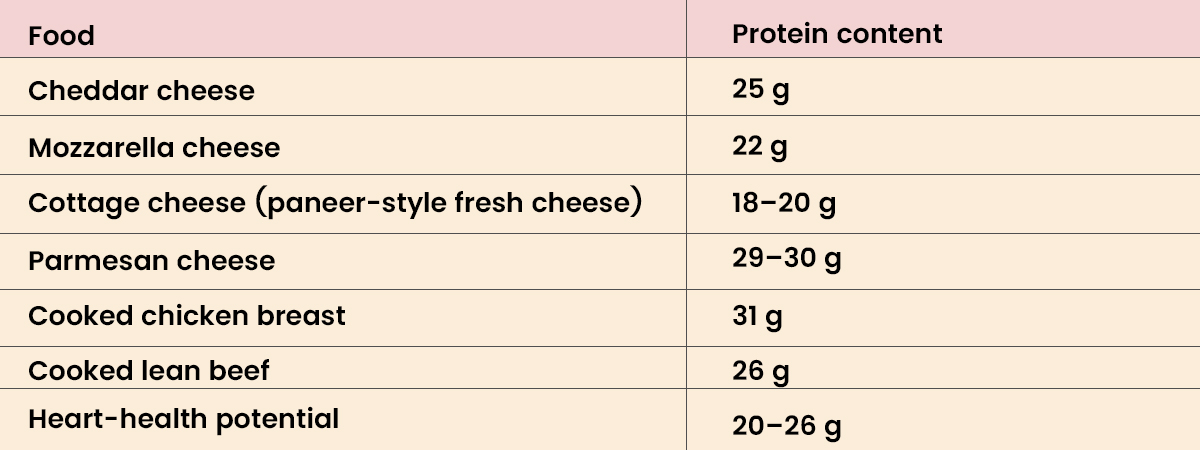
The values are approximate and may vary with type, brand, moisture content, and manufacturing process.
Note: Parmesan and some hard cheese varieties can offer the same amount of protein comparable to lean meat. However, chicken breast generally offers more protein per serving with less saturated fat.
Also Read: Cheese: Why You Should Eat These 5 Varieties For Nutrition And Weight Loss
What Are the Health Benefits of Eating Cheese?
Promotes Muscle Growth/Repair
Cheese contains casein, which is a slow-digesting milk protein that offers key amino acids to the body. It promotes muscle mass, growth, and tissue repair, especially when paired with regular physical workouts.
Strengthens Bones and Teeth
Being rich in calcium and phosphorus, adding cheese to your diet regimen helps maintain stronger bones and teeth. In addition, enough calcium also helps maintain normal muscle function.
Manages Weight
Protein-rich foods can increase the feeling of fullness, help control unwanted hunger pangs, and reduce overall calorie intake. Including moderate portions of protein-rich cheese in balanced meals may help you feel satiated and manage weight. However, cheese is calorie-dense, so portion control is important.
Improves Heart/ Nerve Function
Cheese supplies vitamin B12, which helps maintain healthy nerve cells and supports red blood cell production. Rich in calcium, it contributes to normal muscle contraction and nerve signalling.
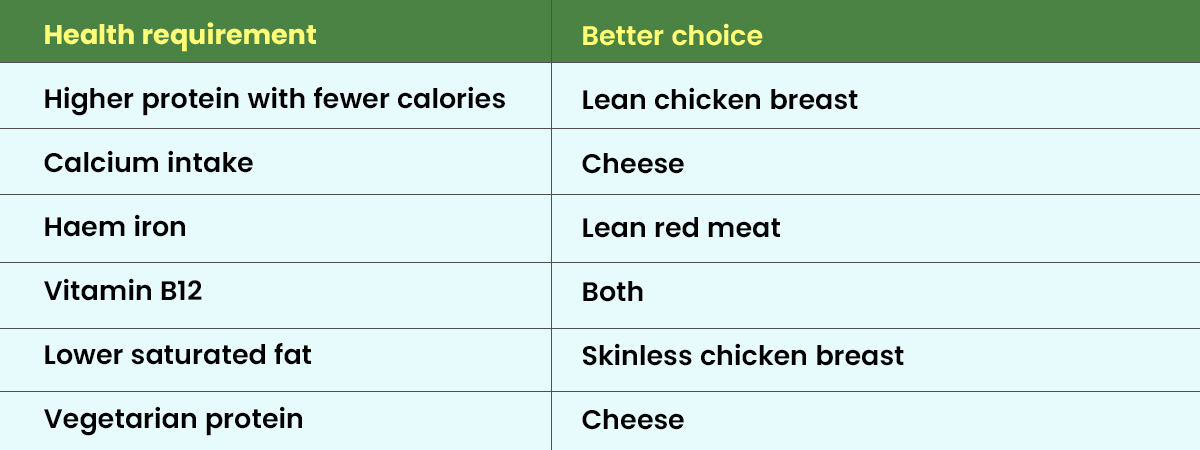
Cheese vs Lean Meat: Which Is Healthier?
What Are the Different Ways to Include Cheese in Your Diet?
Cheese is a versatile ingredient and can be added to regular meals to improve their flavour and nutritional value. Here are some healthy ways to enjoy cheese:
Breakfast: Add grated cheese to whole-wheat vegetable sandwiches or omelettes.
Salads: Add mozzarella cubes to fresh vegetable and sprouts salads.
Healthy snacks: Relish cottage cheese with fruits, nuts, or seeds as wholesome, filling snacks.
Whole-grain meals: Add a small quantity of cheese to whole-wheat wraps, pasta or homemade pizzas.
Remember to choose fresh, minimally processed cheese varieties and combine them with vegetables, whole grains, and other protein-rich foods.
Also Read: Feta, The Cheesy Way To Good Health
What Are the Side Effects of Eating Too Much Cheese?
Rich in calories and fat, eating large portions of cheese regularly without balancing overall calorie intake may contribute to unwanted weight gain.
Full-fat cheese is packed with saturated fat. Excessive consumption may increase LDL (bad) cholesterol levels, potentially raising cardiovascular disease risk.
A few cheese varieties contain considerable amounts of sodium. Consuming too much sodium can contribute to elevated blood pressure.
People with lactose intolerance may experience bloating, gas, abdominal discomfort, and diarrhoea after consuming certain dairy products. However, aged cheeses generally contain less lactose than fresh cheeses.
Some people are allergic to cow's milk protein and may experience reactions after consuming dairy cheese. Skin rashes, vomiting, swelling, and breathing difficulties are common allergic reactions.
Who Should Limit Cheese Consumption?
- People with high cholesterol should go for lower-fat cheese varieties.
- Those suffering from hypertension should choose low-sodium options.
- People managing their weight should monitor portion sizes.
- Individuals with milk allergies should avoid dairy cheese.
- People with lactose intolerance should choose suitable low-lactose options based on their tolerance.
Frequently Asked Questions
Is cheese a better source of protein than chicken?
No. Cooked chicken breast generally provides more protein per 100 grams than most cheese varieties and contains less saturated fat.
Which cheese has the highest protein content?
Parmesan is one of the protein-rich cheese varieties, providing approximately 29–30 grams of protein per 100 grams.
Is cheese good for muscle building?
Yes. Cheese provides complete protein and essential amino acids that support muscle growth and repair. However, it should be combined with other protein sources and regular resistance training.
Can I eat cheese every day?
Yes, moderate portions of cheese can be included in a balanced diet. Choose varieties lower in saturated fat and sodium, depending on your health requirements.
Is paneer healthier than chicken for protein?
Chicken generally provides more protein per 100 grams and fewer calories than regular paneer. However, paneer is a valued vegetarian protein source and also provides calcium.
Conclusion
Cheese and lean meat are both nutritious sources of high-quality protein, but their nutritional benefits differ. While cheese provides protein, calcium, phosphorus and vitamin B12, lean meat generally offers more protein per 100 grams with less saturated fat.
Including moderate portions of cheese alongside lean meat, fish, eggs, pulses and other protein-rich foods can help maintain a balanced diet. Always choose the right type of foods according to your nutritional needs, health conditions and dietary preferences.
References:
https://pmc.ncbi.nlm.nih.gov/articles/PMC6521004/
Comparison of Major Protein-Source Foods and Other Food Groups in Meat-Eaters and Non-Meat-Eaters in the EPIC-Oxford Cohort
Keren Papier 1,*, Tammy YN Tong 1, Paul N Appleby 1, Kathryn E Bradbury 2, Georgina K Fensom 1, Anika Knuppel 1, Aurora Perez-Cornago 1, Julie A Schmidt 1, Ruth C Travis 1, Timothy J Key 1Leitzmann Vegetarian nutrition: Past, present, future. Am. J. Clin. Nutr. 2014;100:496–502. doi: 10.3945/ajcn.113.071365
Davey G.K., Spencer E.A., Appleby P.N., Allen N.E., Knox K.H., Key T.J. EPIC–Oxford:lifestyle characteristics and nutrient intakes in a cohort of 33 883 meat-eaters and 31 546 non meat-eaters in the UK. Heal. Nutr. 2003;6:259–269. doi: 10.1079/PHN2002430.
Crowe F.L., Appleby P.N., Travis R.C., Key T.J. Risk of hospitalization or death from ischemic heart disease among British vegetarians and nonvegetarians: Results from the EPIC-Oxford cohort study. Am. J. Clin. Nutr. 2013;97:597–603. doi: 10.3945/ajcn.112.044073.
Crowe F.L., Appleby P.N., Allen N.E., Key T.J. Diet and risk of diverticular disease in Oxford cohort of European Prospective Investigation into Cancer and Nutrition (EPIC): Prospective study of British vegetarians and non-vegetarians. BMJ. 2011;343:d4131. doi: 10.1136/bmj.d4131.
Appleby P.N., Allen N.E., Key T.J. Diet, vegetarianism, and cataract risk. Am. J. Clin. Nutr. 2011;93:1128–1135. doi: 10.3945/ajcn.110.004028.
Key T.J., Appleby P.N., Crowe F.L., Bradbury K.E., Schmidt J.A., Travis R.C. Cancer in British vegetarians: Updated analyses of 4998 incident cancers in a cohort of 32,491 meat eaters, 8612 fish eaters, 18,298 vegetarians, and 2246 vegans1234. Am. J. Clin. Nutr. 2014;100:378S–385S. doi: 10.3945/ajcn.113.071266.
Lousuebsakul-Matthews V., Thorpe D.L., Knutsen R., Beeson W.L., Fraser G.E., Knutsen S.F. Legumes and meat analogues consumption are associated with hip fracture risk independently of meat intake among Caucasian men and women: The Adventist Health Study-2. Public Health Nutr. 2014;17:2333–2343. doi: 10.1017/S1368980013002693.
Thorpe D.L., Knutsen S.F., Beeson W.L., Rajaram S., Fraser G.E. Effects of meat consumption and vegetarian diet on risk of wrist fracture over 25 years in a cohort of peri- and postmenopausal women. Public Health Nutr. 2008;11:564–572. doi: 10.1017/S1368980007000808.
Chiu T.H., Lin M.-N., Pan W.-H., Chen Y.-C., Lin C.-L. Vegetarian diet, food substitution, and nonalcoholic fatty liver. Tzu Chi Med. J. 2018;30:102–109. doi: 10.4103/tcmj.tcmj_109_17.
 Previous