Dadimadi Ghrita is a classical Ayurvedic medicated ghee formulation prepared using cow's ghee, pomegranate and selected medicinal herbs. In Ayurveda, ghrita preparations are traditionally used as vehicles for herbal ingredients and are valued for their nourishing properties. Dadimadi Ghrita is primarily associated with traditional applications involving Pandu Roga (a condition commonly correlated with anaemia), digestive impairment and certain abdominal complaints.
The formulation combines ingredients such as Dadima (pomegranate), Dhanyaka (coriander), Chitraka, Shunthi (dry ginger) and Pippali with clarified butter. These ingredients have different traditional uses, while modern research has investigated their individual phytochemicals for antioxidant, digestive and other biological activities. However, research on individual ingredients does not establish that the complete Dadimadi Ghrita formulation produces the same effects in humans.
Dadimadi Ghrita is listed in Ayurvedic formulary references, but its composition and recommended administration should be checked against the particular formulation and manufacturer. Evidence from modern clinical studies specifically evaluating Dadimadi Ghrita remains limited, and it should not replace medical assessment or established treatment for anaemia, persistent abdominal pain or other health conditions.
Disclaimer: This article is for educational purposes only. Dadimadi Ghrita should be used under the guidance of a qualified Ayurvedic practitioner, particularly if you have anaemia, a digestive disorder, a chronic health condition or take prescription medicines.
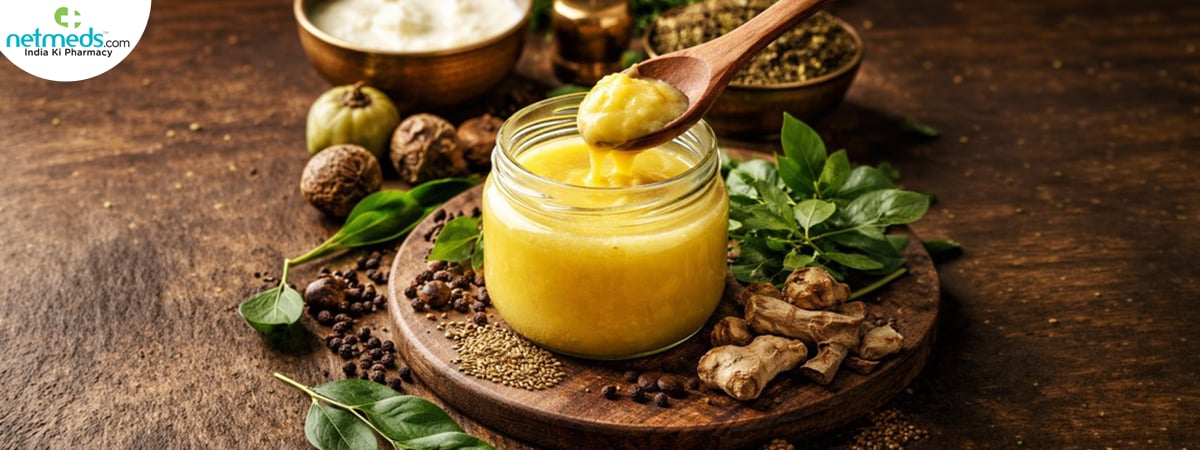
What Is Dadimadi Ghrita?
Dadimadi Ghrita, also written as Dadimadi Ghruta or Dadimadi Ghritham, is a traditional Ayurvedic formulation belonging to the Ghrita Kalpana category of medicated ghee preparations. The term combines Dadima, meaning pomegranate, with Ghrita, meaning clarified butter.
The formulation is described in classical Ayurvedic literature and the Ayurvedic Formulary of India. Traditional references associate it with Pandu Roga, Agnimandya (reduced digestive capacity) and Parinama Shula (pain associated with digestion). Other traditional indications are described in classical texts, but these should not be interpreted as modern clinical diagnoses or proof of effectiveness.
In Ayurvedic practice, medicated ghee is prepared by processing selected herbal ingredients with ghee and a liquid medium. The aim is to incorporate constituents from the medicinal ingredients into the fat-based preparation.
Dadimadi Ghrita Product Description
Dadimadi Ghrita is generally available as a semisolid or soft, golden-yellow to yellow-brown medicated ghee, depending on its ingredients, manufacturing process and storage conditions. Commercial products may be sold in jars or containers.
The formulation contains a ghee base and a combination of herbs traditionally associated with digestion, appetite and nourishment. The exact appearance, aroma, texture and ingredient proportions may differ between manufacturers.
When selecting a product, check the full ingredient list, manufacturer details, batch number, expiry date, storage instructions and quality certifications. A product's traditional indications should not be taken as a guarantee that it will treat a particular disease.
Ingredients Of Dadimadi Ghrita
The Ayurvedic Formulary formulation lists the following principal ingredients and quantities. Commercial products may differ, so check the product label before use.
Dadima: Punica granatum
Pomegranate seeds: 192 g
Pomegranate is traditionally valued for its astringent taste and nutritional properties. Its polyphenols and other plant compounds have been investigated for antioxidant activity.
Dhanyaka: Coriandrum sativum
Coriander fruits or seeds: 96 g
Coriander is traditionally used to support digestion and appetite. Its essential oils and plant compounds have been studied for several biological activities.
Chitraka: Plumbago zeylanica
Root: 48 g
Chitraka is traditionally classified as a digestive stimulant in Ayurveda. It is a potent ingredient and may cause irritation or toxicity if used improperly.
Shunthi: Zingiber officinale
Dry ginger rhizome: 48 g
Ginger has a long history of traditional digestive use. Its constituents, including gingerols and shogaols, have been studied for digestive and anti-inflammatory effects.
Pippali: Piper longum
Fruit: 24 g
Pippali is traditionally used to support digestion and appetite. Piperine and related compounds have been investigated for various pharmacological effects.
Goghrita: clarified cow's butter
Ghee: 960 g
Ghee acts as the fat base of the preparation and helps carry fat-soluble constituents from the herbs.
Jala: Water
Water: 3.072 litres
Water serves as the liquid medium during the traditional preparation process.
Method Of Preparation
Dadimadi Ghrita is prepared using the traditional Ayurvedic method of medicated ghee preparation, known as Sneha Kalpana. The precise procedure should follow the applicable formulary and quality-control standards.
Clean, identify and process the prescribed herbal ingredients according to the formulation's specifications.
Powder and ground the appropriate ingredients with water to form a paste, known as Kalka.
Combine the herbal paste, ghee and prescribed liquid medium in a suitable vessel.
Heat the mixture under controlled conditions to facilitate the preparation of medicated ghee while allowing the water to evaporate.
Monitor the preparation for the appropriate consistency.
Filter the finished preparation and cool and store it in suitable containers for future use.
The heating process, ingredient proportions and completion criteria are important for the formulation's quality. Therefore, home preparation without appropriate knowledge and controls is not recommended.
Medicinal Qualities Of Dadimadi Ghrita
Dadimadi Ghrita is traditionally valued for its association with digestive function and nourishment. Its ingredients have different properties:
Digestive support: Ginger, coriander and Pippali have traditional uses relating to appetite and digestion.
Antioxidant potential: Pomegranate contains polyphenols and other plant compounds investigated for antioxidant activity.
Fat-based delivery: Ghee serves as the preparation's base and may influence the extraction and delivery of certain fat-soluble constituents.
Traditional therapeutic use: Classical Ayurvedic references associate the formulation with Pandu Roga, Agnimandya and selected abdominal complaints.
These characteristics provide a rationale for traditional use, but they do not prove that Dadimadi Ghrita treats anaemia, improves iron levels or resolves digestive disease in every patient. Evidence from studies of isolated ingredients cannot be directly applied to the complete formulation.
Ayurvedic Properties Of Dadimadi Ghrita
In Ayurveda, Dadimadi Ghrita is understood through the properties of its ingredients, the ghee base and its traditional indications.
Rasa (taste): The formulation contains ingredients with different tastes, including the astringent and other taste qualities traditionally associated with pomegranate and the pungent qualities of ginger, Chitraka and Pippali.
Agni and digestion: Chitraka, Shunthi and Pippali are traditionally described as Deepana (supporting digestive fire) and/or Pachana (associated with digestion and processing).
Ghrita as the base: Ghee is traditionally considered nourishing and is used as a carrier for medicinal ingredients.
Traditional indications: Dadimadi Ghrita is listed in Ayurvedic formulary sources for Pandu Roga, Agnimandya and Parinama Shula.
Ayurvedic concepts such as Agni and Dosha balance belong to a traditional medical framework and should not be equated directly with modern physiological diagnoses.
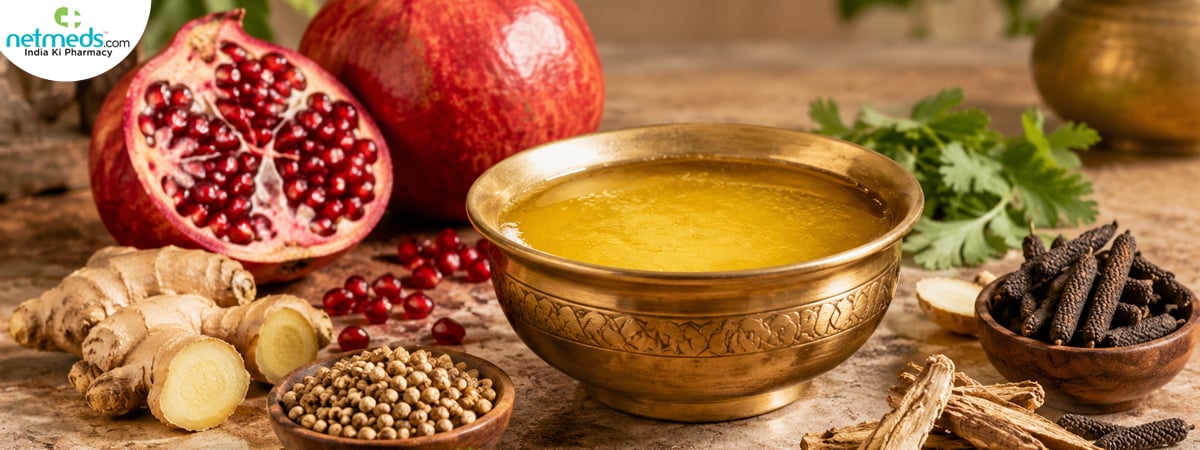
10 Potential Health Benefits And Traditional Uses Of Dadimadi Ghrita
The following benefits describe traditional uses and possible scientific relevance. Direct clinical evidence for Dadimadi Ghrita itself is limited, so the scientific perspective distinguishes ingredient research and proposed mechanisms from benefits proven in human trials.
Treats Anaemia-Related Conditions
Modern scientific perspective: Pomegranate and other plant ingredients contain various nutrients and phytochemicals, but their presence does not establish that Dadimadi Ghrita corrects iron deficiency or raises haemoglobin. Anaemia has several causes, and treatment depends on identifying the underlying problem.
Ayurvedic perspective: Dadimadi Ghrita is traditionally indicated for Pandu Roga, a condition often compared with anaemia. In Ayurvedic practice, its use is considered within a broader assessment of digestion, nutrition and the person's overall health.
Also Read: Anemia: 5 Awesome Natural Remedies To Boost Your Iron Levels
Aids Digestion
Modern scientific perspective: Ginger and coriander have been studied for their potential digestive effects, but research on these individual ingredients does not establish that Dadimadi Ghrita treats indigestion or other gastrointestinal disorders.
Ayurvedic perspective: Ingredients such as Shunthi, Pippali and Chitraka are traditionally used for their Deepana and Pachana properties. Dadimadi Ghrita is consequently associated with supporting digestive function in appropriate clinical contexts.
Also Checkout: Digestive Health: 5 Amazing Herbs For Uplifting Gut Health And Function-Infographic
Improves Appetite
Modern scientific perspective: Some culinary herbs, including ginger, have been investigated for effects on gastrointestinal symptoms. There is insufficient robust clinical evidence to conclude that Dadimadi Ghrita reliably improves appetite in people with reduced food intake.
Ayurvedic perspective: The formulation's digestive herbs are traditionally associated with stimulating Agni and supporting appetite. A practitioner may consider the formulation when reduced appetite is assessed as part of an appropriate Ayurvedic treatment plan.
Remedies Abdominal Complaints
Modern scientific perspective: Abdominal pain can result from many causes, including gastritis, ulcers, gallbladder problems and intestinal disorders. There is not enough clinical evidence to recommend Dadimadi Ghrita as a treatment for unexplained abdominal pain.
Ayurvedic perspective: Classical references associate Dadimadi Ghrita with Parinama Shula and Gulma, traditional categories involving abdominal discomfort or related complaints. These indications require individual assessment and should not delay investigation of persistent or severe pain.
Also Read: Irritable Bowel Syndrome: 5 Incredible Ayurvedic Herbs To Relieve IBS
Provides A Fat-Based Vehicle For Herbal Ingredients
Modern scientific perspective: Ghee provides a lipid medium that can influence the extraction and delivery of certain fat-soluble plant constituents. However, the extent to which this affects absorption or clinical outcomes depends on the particular formulation and its ingredients.
Ayurvedic perspective: Ghrita is an established dosage form in Ayurveda, traditionally used to incorporate herbal ingredients into a ghee base. Its use is based on the properties attributed to the fat and the medicinal ingredients together.
Offers Antioxidants
Modern scientific perspective: Pomegranate contains polyphenols and other compounds studied for antioxidant activity, while ginger and coriander also contain bioactive constituents. These laboratory findings do not prove that taking Dadimadi Ghrita prevents oxidative-stress-related diseases or slows ageing in humans.
Ayurvedic perspective: Dadima and the other herbs are valued within traditional formulations for their combined qualities. Ayurveda considers the formulation as a whole rather than attributing all its effects to a single compound.
Also Read: What Are Antioxidants? Health Benefits, Uses, And Sources Explained
Supports Nutritional Care When Clinically Appropriate
Modern scientific perspective: Adequate nutrition is essential for healthy blood-cell production and general wellbeing, but Dadimadi Ghrita should not be regarded as a complete nutritional treatment. Confirmed anaemia may require iron, vitamin B12, folate or other treatment depending on its cause.
Ayurvedic perspective: The formulation's traditional association with Pandu Roga places it within an Ayurvedic approach to health conditions involving nourishment and digestive function. A qualified practitioner should assess whether it is appropriate alongside dietary advice and necessary medical treatment.
Relieves Spleen-Related Conditions
Modern scientific perspective: An enlarged or diseased spleen can occur with infections, liver disease, blood disorders and other conditions. There is no sufficient clinical evidence that Dadimadi Ghrita treats splenic disease, and suspected spleen problems require medical evaluation.
Ayurvedic perspective: Some classical product references list Plīha Roga among the traditional indications for Dadimadi Ghrita. This historical indication should not be interpreted as proof that the formulation can treat an enlarged spleen or a modern splenic diagnosis.
Promotes Cardiovascular Health
Modern scientific perspective: Some constituents of pomegranate and herbs used in the formulation have been investigated for biological effects relevant to cardiovascular health. However, there is insufficient direct clinical evidence that Dadimadi Ghrita prevents or treats heart disease.
Ayurvedic perspective: Classical references include Hridroga among the formulation's traditional indications. Hridroga is a broad Ayurvedic category and should not be equated with a specific modern heart diagnosis; the formulation must not replace evidence-based cardiac treatment.
Being Studied As Part Of Integrative Ayurvedic Care
Modern scientific perspective: A published clinical-trial protocol describes the planned use of Dadimadi Ghrita alongside standard care in a study involving sickle cell anaemia. A protocol explains how a study is designed; it is not proof that the intervention is effective or safe, and the effects of Dadimadi Ghrita cannot be isolated when it is combined with other treatments.
Ayurvedic perspective: This research reflects interest in studying classical formulations within integrative healthcare. Any such use should involve qualified practitioners, suitable monitoring and continued standard medical care rather than replacing established treatment.
Dadimadi Ghrita Dosage
Dadimadi Ghrita dosage depends on the formulation, product strength, age, health status, intended use and the practitioner's assessment.
An Ayurvedic Formulary reference lists a dose of 48 g, while some government drug lists provide a range of 10–15 g for Dadimadi Ghrita. These differences illustrate why a dosage quoted from a reference should not automatically be used for self-treatment.
Take the preparation only in the dose prescribed by a qualified healthcare professional.
Follow the manufacturer's instructions and the practitioner's advice on timing and the appropriate accompanying liquid.
Do not increase the dose to treat persistent symptoms or a laboratory abnormality.
Do not use Dadimadi Ghrita as a replacement for prescribed iron supplements or other treatment for anaemia.
Dadimadi Ghrita Side Effects
High-quality safety data for Dadimadi Ghrita as a complete formulation are limited. Possible concerns include:
Digestive discomfort: The rich, fat-based preparation may cause nausea, fullness or discomfort in some people.
Allergy: Individuals sensitive to milk-derived ingredients or any of the herbs may experience a reaction.
Ingredient-specific risks: Chitraka is a potent ingredient and can cause irritation or toxicity if improperly prepared or used.
Excess calorie intake: Ghee is calorie-dense, which may matter for people managing their overall energy intake or blood lipids.
Delayed treatment: Relying on the formulation for anaemia or abdominal symptoms may delay diagnosis and effective treatment.
Stop taking the product and seek medical advice if you experience a suspected adverse reaction. Severe abdominal pain, fainting, breathing difficulty, blood in stools or other urgent symptoms require prompt medical attention.
Precautions While Using Dadimadi Ghrita
Consult a qualified practitioner: Obtain advice before starting the formulation, especially if you have an existing medical condition.
Do not self-treat anaemia: Anaemia may result from iron deficiency, vitamin deficiencies, blood loss or chronic disease; diagnosis and treatment should be guided by a healthcare professional.
Pregnancy and breastfeeding: Do not use medicinal doses during pregnancy or breastfeeding without appropriate professional advice.
Existing digestive or liver conditions: Discuss use with your healthcare provider if you have persistent gastrointestinal symptoms, gallbladder disease or another condition that may affect your tolerance of a high-fat preparation.
Check for interactions: Share your complete list of medicines and supplements with your doctor or Ayurvedic practitioner.
Check product quality: Choose a reputable manufacturer and check the ingredients, batch number, expiry date and storage directions.
Avoid excess dosing: A dose listed in a classical text or government formulary is not automatically appropriate for every person or every commercial product.
Continue prescribed treatment: Do not stop or replace iron therapy, medicines or other treatment prescribed for an established medical condition.
Conclusion
Dadimadi Ghrita is a classical Ayurvedic medicated ghee made with pomegranate, digestive herbs and a ghee base. Traditional references associate it with Pandu Roga, digestive impairment and selected abdominal complaints. Its ingredients have been investigated for a range of biological activities, but modern evidence directly establishing the effectiveness of the complete formulation remains limited.
The formulation should therefore be understood as a traditional Ayurvedic preparation with potential areas for further research, not as a proven cure for anaemia, digestive disorders or heart disease. Anyone considering Dadimadi Ghrita should consult a qualified practitioner, particularly if they have ongoing symptoms or take prescription medicines. Appropriate diagnosis, quality-controlled products and safe use are essential.
References
Dadimadi Ghrita: A Comprehensive Review of a Classical Ayurvedic Polyherbal Formulation — International Journal of Ayurveda and Pharma Research Read the review
Dāḍimādi Ghṛta — Formulation Composition, Method of Preparation and Traditional Uses — Ayurwiki Read the formulation reference
IMPPAT: Indian Medicinal Plants, Phytochemistry and Therapeutics — Dāḍimādi Ghṛta View ingredients and traditional indications
Efficacy of an Ayurvedic Intervention as an Adjunct to Standard Care in Preventing Acute Pain Crises in Sickle Cell Anemia: Protocol for a Randomized Controlled Trial — JMIR Research Protocols Read the clinical-trial protocol
Efficacy of Ayurveda Regimen as an Adjunct to Hydroxyurea in Sickle Cell Disease: Protocol for a Prospective, Randomized, Open-Label, Blinded End Point Exploratory Study — PubMed Read the study protocol
Dadimadi Ghritam — Classical Ingredients and Traditional Indications — Arya Vaidya Kalpashala View the manufacturer's formulation information
Dadimadi Ghrita — Product Information — Nagarjuna Ayurveda View product details
Essential Drug List — Dadimadi Ghrita and Other Ayurvedic Formulations — Rajasthan Medical and Health Department View the government reference list
 Previous