Dry fruits are often valued as a wholesome and healthy snack, as they are loaded with an impressive profile of dietary fiber, vitamins, minerals, antioxidants, and healthy fats. However, those with diabetes may wonder whether eating dry fruits can spike blood sugar levels, especially because a few varieties contain a concentrated source of natural sugars.
Are dry fruits good for diabetes? Absolutely, certain dry fruits can be added as part of a well-planned diabetes diet when consumed in moderate portions. Almonds, walnuts, pistachios, dried fruits like apricots, and prunes offer several nutritional benefits. However, dates, raisins, and figs need thoughtful planning as their natural sugar and carbohydrate content can instantly add up.
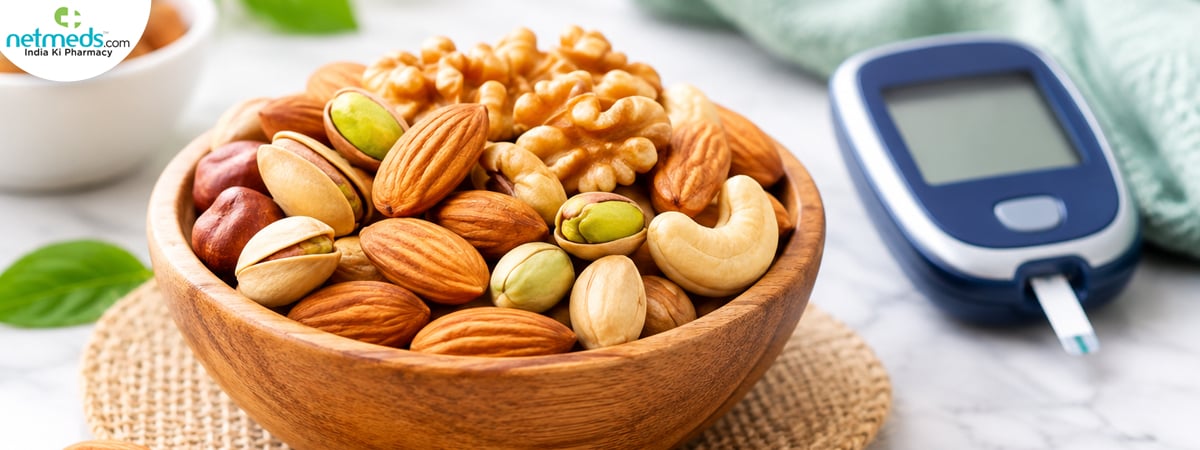
Remember, the key is to choose the right varieties, avoid sugar-coated products and pay attention to portion sizes. Explore this article to unravel the benefits of dry fruits for diabetes, recommended serving, ways to include them in your diet, and possible side effects.
What Are the Best Dry Fruits for Diabetes?
Not all dry fruit varieties have the same nutritional composition. A few are rich in healthy fats, protein, and dietary fiber, while others contain concentrated natural sugars.
Almonds
Almonds are packed with fibre, protein, magnesium and monounsaturated fats. They promote heart health, satiety and serve as a perfect low-carbohydrate snack.
Walnuts
Walnuts are rich in essential omega-3 fatty acids, antioxidants and healthy fats. They optimise cardiovascular health and may help improve overall dietary quality.
Pistachios
Pistachios are an amazing source of plant-based protein, fiber, healthy fats, potassium, and antioxidants. They make a satisfying snack and can be included in a balanced diabetes-friendly diet.
Cashews
Cashews are an abundant source of magnesium, copper, protein, and healthy fats. They supply essential nutrients but should be eaten in moderation because they are energy-dense.
Dried apricots contain dietary fibre, potassium, iron and antioxidants. Choose varieties without added sugars and consume small portions because drying concentrates their natural sugars.
Raisins
Raisins are rich in dietary fibre, potassium and antioxidants. However, their concentrated natural sugar content makes it vital to control portions, particularly for people with diabetes.
Dried Figs
Dried figs contain fibre, calcium and potassium. They may support digestive health and provide essential minerals, but their carbohydrate content needs to be considered.
Dates
Dates provide potassium, fibre and antioxidants. Although nutritious, they are naturally high in carbohydrates and should be consumed in small quantities.
Also Read: Are Dates Good For Diabetes Benefits And Their Impact On Blood Sugar Levels
Health Benefits of Dry Fruits for People with Diabetes
Support Blood Sugar Management
Dried fruits such as almonds, walnuts, and pistachios pack vast reserves of dietary fiber, protein and healthy fats. These key nutrients keep you satiated, slow down gastric emptying time, prevent blood sugar spikes, and can slow the digestion process when added as part of a wholesome diet.
Tweaking refined carb-dense snacks with a handful of unsalted nuts may boost overall health and the nutritional quality of your diet.
Promotes Heart Health
Diabetics are at a higher risk of developing cardiovascular complications. Walnuts, almonds and pistachios contain unsaturated fatty acids that maintain lipid profile when they are replaced with snacks rich in saturated fats.
Manages Weight
Dry fruits like almonds and walnuts offer protein, dietary fiber and healthy fats that keep you satiated for longer. This may reduce unwanted binge eating, reduce overall calorie intake, and support weight management. However, they are calorie-dense, so portion control is essential.
Promotes Gut Health
Fibre-rich dry fruits, including almonds, pistachios, dried figs and apricots, help regularise bowel movements, prevent constipation and enhance overall digestive health.
Antioxidant Protection
Almonds, walnuts, pistachios and dried fruits contain powerful antioxidants and plant compounds that help protect cells against oxidative stress. This is particularly relevant because oxidative stress is associated with inflammation and several metabolic complications.
Boosts Brain Health
Walnuts are imbued with plant-based omega-3 fatty acids, while almonds contain vitamin E and healthy fats. These key nutrients contribute to overall brain function and nervous system health when added as part of a balanced diet regimen.
The American Diabetes Association recommends that dry fruits are nutritious foods, not treatments for diabetes; they cannot replace prescribed medicines or insulin.
What is the daily recommended intake of dry fruits a Person with diabetes should eat daily?
People with diabetes can include dry fruits in their daily diet regimen, but the recommended intake depends on their total calorie and carbohydrate requirements, blood glucose levels, and overall meal plan.
Dry fruit Suggested portion
Almonds 5–6 pieces
Walnuts 2–3 whole kernels
Pistachios 10–15 pieces
Cashews 4–5 pieces
Dried apricots 1–2 pieces
Raisins 1 tablespoon
Dried figs ½–1 small piece
Dates ½–1 small date
Note: These are not a universal daily prescription. Do not consume all these quantities together. Go for a combination of moderate servings based on your individual meal plan.
The American Diabetes Association highlights that just two tablespoons of raisins or dried cherries can provide approximately 15 grams of carbohydrates. Therefore, people with diabetes should account for dried fruits in their daily carbohydrate intake.
7 Ways to Add Dry Fruits to a Diabetes-Friendly Diet
Simple and practical ways to enjoy dry fruits without consuming excessive calories or carbohydrates.
Sprinkle chopped almonds or walnuts, or dates over breakfast cereals like oatmeal or millet porridge.
Combine a nut trail mix of almonds, walnuts, and pistachios for a nutritious mid-morning snack.
Add chopped nuts to plain, unsweetened yoghurt for a protein-loaded and probiotic-rich snack.
Sprinkle chopped walnuts or almonds over vegetable salads for added crunch and healthy fats.
Blend a small quantity of almonds and dates with unsweetened milk and cinnamon without adding sugar to make a wholesome smoothie.
Add finely chopped nuts to homemade multigrain or seed-based snacks instead of sugar-coated ingredients.
Mix almonds and walnuts with pumpkin, sunflower or chia seeds for a nutrient-rich snack.
Side Effects of Eating Too Many Dry Fruits
Dried fruits such as raisins, dates, and figs contain concentrated natural sugars. Eating excess quantities can increase carbohydrate intake and spike blood glucose levels.
Nuts contain healthy fats but are also calorie-dense. Eating large quantities regularly may contribute to weight gain and make blood sugar management more challenging.
Consuming large amounts of fibre-rich dry fruits may cause bloating, gas, abdominal discomfort or diarrhoea, particularly when fibre intake increases suddenly.
Some people may experience nut allergies after consuming almonds, walnuts, cashews or pistachios. Symptoms can include itching, skin rashes, swelling, and breathing difficulties. Salted and flavoured nuts may contain high amounts of sodium. Excessive sodium intake can affect blood pressure, particularly in people with diabetes and hypertension.
Frequently Asked Questions
Which dry fruit is best for diabetes?
Almonds, walnuts, and pistachios are good choices because they contain fibre, protein, and healthy fats with relatively low carbohydrate content.
Can diabetics eat almonds daily?
Yes, people with diabetes can eat almonds daily in controlled portions. Around 5–6 almonds can be included as part of a balanced diet.
Are raisins good for diabetes?
Raisins contain fibre and antioxidants but are a concentrated source of natural sugars. People with diabetes should consume small portions and monitor their blood glucose response.
Are soaked almonds better for diabetes?
Soaking almonds may soften their texture, but there is no strong evidence that soaked almonds offer better blood sugar control than regular almonds. Both can be included in moderation.
Which dry fruits should diabetics avoid?
People with diabetes do not necessarily need to completely avoid all dry fruits. However, they should limit sugar-coated nuts, sweetened dried fruits, and large portions of raisins, dates, and figs.
Conclusion
Dry fruits can be added as part of a balanced and nutritious diabetes meal plan, when carefully selected and consumed in moderate portions. Almonds, walnuts and pistachios are particularly valuable choices because they provide fibre, protein, healthy fats and essential minerals. Dried fruits such as raisins, dates, figs and apricots can also be enjoyed occasionally in small portions.
The key to managing diabetes is maintaining a balanced diet, controlling carbohydrate intake, staying physically active, and monitoring blood glucose levels regularly
References:
https://pmc.ncbi.nlm.nih.gov/articles/PMC5537788/
Nuts and Dried Fruits: An Update of Their Beneficial Effects on Type 2 Diabetes
Pablo Hernández-Alonso 1,2, Lucía Camacho-Barcia 1,2, Mònica Bulló 1,2,*, Jordi Salas-Salvadó
https://www.ijmrhs.com/medical-research/dry-fruits-and-diabetes-mellitus.pdf
Widmer R.J., Flammer A.J., Lerman L.O., Lerman A. The Mediterranean diet, its components, and cardiovascular disease. Am. J. Med. 2015;128:229–238. doi: 10.1016/j.amjmed.2014.10.014.
Ros E. Health Benefits of Nut Consumption. Nutrients. 2010;2:652–682. doi: 10.3390/nu2070652.
Chang S.K., Alasalvar C., Shahidi F. Review of dried fruits: Phytochemicals, antioxidant efficacies, and health benefits. J. Funct. Foods. 2016;21:113–132.
Ros E. Nuts and CVD. Br. J. Nutr. 2015;113(Suppl.):S111–S120. doi: 10.1017/S0007114514003924.
Casas-Agustench P., Salas-Huetos A., Salas-Salvadó J. Mediterranean nuts: Origins, ancient medicinal benefits and symbolism. Public Health Nutr. 2011;14:2296–2301.
Salas-Salvadó J., Casas-Agustench P., Salas-Huetos A. Cultural and historical aspects of Mediterranean nuts with emphasis on their attributed healthy and nutritional properties. Nutr. Metab. Cardiovasc. Dis. 2011;21(Suppl. 1):S1–S6. doi: 10.1016/j.
Sofi F. The Mediterranean diet revisited: Evidence of its effectiveness grows. Curr. Opin. Cardiol. 2009;24:442–446. doi: 10.1097/HCO.0b013e32832f056e.
Alasalvar C., Shahidi F. Dried Fruits: Phytochemicals and Health Effects. Wiley-Blackwell; Oxford, UK: 2013. Composition, phytochemicals, and beneficial health effects of dried fruits:
US Department of Agriculture, Agricultural Research Service, Nutrient Data Laboratory USDA National Nutrient Database for Standard Reference, Release 28 (revised), Version Current: May 2015. [(accessed on 3 March 2017)];
Halvorsen B.L., Carlsen M.H., Phillips K.M., Bøhn S.K., Holte K., Jacobs D.R., Blomhoff R. Content of redox-active compounds (ie, antioxidants) in foods consumed in the United States. Am. J. Clin. Nutr. 2006;84:95–135. doi: 10.1093/ajcn/84.1.95.
 Previous