Microplastics are tiny plastic particles which are less than 5 mm in size and have quietly entered our food chain. From drinking water, packaging, to everyday kitchen cookware and utensils, these invisible contaminants are becoming a growing health hazard.
What Are Microplastics?
Microplastics are found everywhere. From the air we breathe, the water we drink, to the food we have, these tiny fragments of plastic are smaller than a strand of human hair. Yes, they are all around us, getting easily into our human body without us even knowing it. A broad range of foods, such as salt, sugar, fruits, vegetables, and tea bags, can slowly release large amounts of microplastics into our bloodstream, which then enter vital organs like the brain, liver, kidneys, heart, and other organs, contributing to fatal chronic diseases. Researchers from Columbia University (published in the Journal of the National Academy of Sciences) found that, surprisingly, around 2,40,000 nanoplastics are present in one litre of plastic-bottled water.
Buy Our Top-Selling Nutrition Supplements Today For Uplifting Your Health And Well-being!
As per a study published in the Science of the Total Environment journal,2024 microplastic contamination also starts in our kitchens, where processes like heating, cooling, mixing, slicing and storing occur as part of food preparation.
Why do they matter?
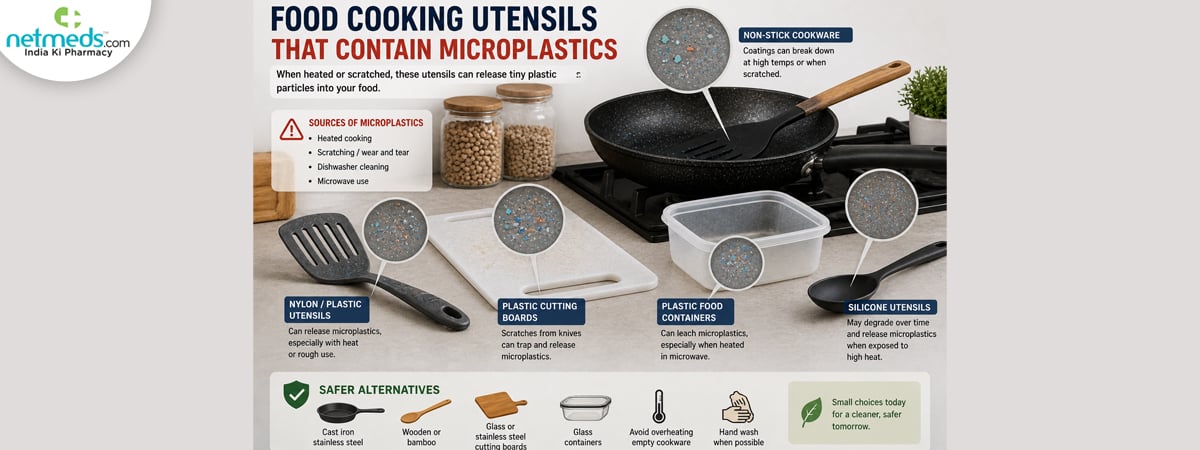
They can carry harmful chemicals that can disrupt normal hormonal balance, which is associated with an increased risk of inflammation and long-term health complications. The concern isn’t just one-time exposure; it’s daily accumulation over years. Based on these studies, we have curated a few kitchen items that could increase your microplastic exposure
5 Ways Microplastics Enter Your Meals
Heating Food in Plastic Containers
Heating food in plastic, even “microwave-safe” container scan release microplastics into your meal.
Common culprits:
Leftover storage boxes
Takeaway containers
Plastic wraps
The heat can readily accelerate plastic breakdown, and more particles pass into food
Also Read: World Food Day 2020: Sustainable Cooking And Eating Practices For Healthy Living
Tea Bags and Packaged Drinks
Many tea bags are made with plastic fibers that release particles when steeped in hot water. In addition, bottled water contains microplastics, and processed juices may have contamination from plastic packaging.
Plastic Cutting Boards /Utensils
Plastic boards are a major source of microplastics. When you chop through food on a plastic cutting board, especially meat, you can easily include up to 196 microplastic particles into your food, say scientists. This occurs due to the friction between the knife and the plastic. And the risk increases when the board is scratched, old or worn out and used for heavy chopping.
Food Stored in Plastic for Long Periods
Storing hot or oily food in plastic containers can lead to gradual leaching.
High-risk foods:
Oils
Spicy curries
Acidic foods like tomato-based dishes
Processed / Packaged Foods
Ultra-processed foods often encounter plastic at multiple stages, such as:
Packaging
Processing equipment
Storage
The more processed the food, the higher the exposure risk.
How to Fix Your Kitchen?
You don’t need a complete renovation, but just smart swaps and habits may help.
Switch to Safer Materials
Use glass containers and ceramic cookware for reheating and storing hot foods.
Stainless steel utensils are safe for cooking and storing food.
Never Heat Food in Plastic
Use glass or steel for reheating and avoid plastic wraps in microwave cooking.
Upgrade Your Cutting Board
Use wooden or bamboo boards for chopping vegetables and meat, as these materials are not only safer for food but also more sustainable. Change worn-out boards regularly.
Choose Loose Leaf Tea
Avoid plastic tea bags for brewing tea; instead, use loose-leaf tea, which can prevent plastic leaching. Also, use steel strainers.
Also Read: What Is Zero-Waste Cooking? How It Benefits You And the Environment
Reduce Packaged Food Intake
Prefer fresh, home-cooked meals and minimise the intake of processed and packaged foods, as these foods contain the highest amounts of microplastics.
Conclusion
Microplastics are a modern-day invisible exposure, but safe and healthier kitchen habits can significantly reduce the risk. The main priority is to minimise daily exposure. Small modifications like switching containers or avoiding heating food in plastic containers can make a huge difference to your overall health.
References:
https://pmc.ncbi.nlm.nih.gov/articles/PMC7171031/
Microplastics: an emerging threat to food security and human health
Gabriel Enrique De-la-Torre 1,✉
https://blog.mdpi.com/2024/03/28/microplastics-in-food/
https://pubs.acs.org/doi/10.1021/envhealth.3c00052
 Previous